












- WIADOMOŚCI
Poland completed first mission to the International Space Station

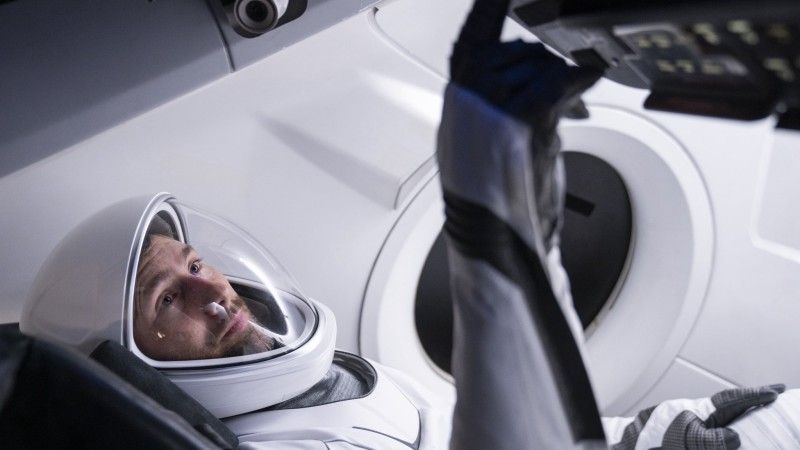
Photo. Axiom Space/Sławosz Uznański-Wiśniewski
A month ago, the Ax-4 mission involving Polish scientist Dr. Sławosz Uznański-Wiśniewski came to an end. The mission was a unique opportunity to verify research hypotheses, test new technologies, and obtain data necessary for the development of key areas of science. It was also an opportunity to develop Polish technologies, transfer knowledge, and build a competitive advantage on international markets.
On June 25, the Ax-4 mission was launched from Cape Canaveral in Florida. Four astronauts were on board the SpaceX Dragon capsule, including Dr. Sławosz Uznański-Wiśniewski. He became the second Pole in space and the first to visit the International Space Station. This was not only a historic moment for Polish astronautics, but also a symbolic step towards Poland’s full participation in international space projects.
After 19 days in orbit, the Dragon crew capsule named “Grace” safely returned to Earth, splashing down off the coast of California on July 15, 2025. During the mission, the crew completed 230 rounds of the Earth, covering over 13 million kilometers. On the ISS, the Polish astronaut conducted 13 experiments prepared by national scientific teams in cooperation with ESA and the Polish Space Agency.
The experiments covered a variety of fields such as neurophysiology, biotechnology, materials engineering, as well as research on the human immune system, digestive system, and microbiome. There were also experiments in the field of artificial intelligence and autonomous systems. Uznański-Wiśniewski spent over 105 hours on research work.
The Polish part of the Ax-4 mission also had an educational and inspirational dimension. As much as 20% of the mission time was devoted to activities promoting science – live broadcasts from the ISS, “Lessons from Orbit” and teaching materials for schools. Thanks to this, the mission reached thousands of young people, sparking their curiosity and interest in space.

Photo. Axiom Space
However, it was the technological and economic dimension of the mission that was most important. Poland’s participation in the project enabled our companies to gain so-called “flight heritage” – experience and prestige associated with testing technology in space conditions. The technologies developed as part of this mission have the potential to be used in medicine, security systems, and biotechnology, among other areas.
The mission has once again demonstrated that Poland can be an equal partner in international space projects. This is not only the success of one astronaut, but of the entire scientific and technological sector, which has proven its readiness to participate in such advanced ventures. Poland has not only joined an elite group, but has also set its own ambitious path for development in this field.
More about Sławosz Uznański-Wiśniewski
Dr Sławosz Uznański-Wiśniewski is a project astronaut at the European Space Agency (ESA), a scientist and a doctor of electronics. He worked at the European Organization for Nuclear Research (CERN). His research focuses on the design of high-reliability electronic systems. He comes from Łódź, where in 2008 he graduated with honors from the Łódź University of Technology with a master’s degree in engineering.

Photo. ESA
To become a project astronaut for the European Space Agency, Uznański-Wiśniewski had to beat over 22,000 candidates from all over Europe in a year-and-a-half-long selection process. Candidates underwent a variety of tests on their knowledge of space and space technologies, intelligence and computational skills, ability to solve complex, unusual problems under time pressure, mental resilience, and ability to remain calm under stress.


