












- ANALIZA
- W CENTRUM UWAGI
Trump slams the EU: you are paying for a war against yourselves. And he is right

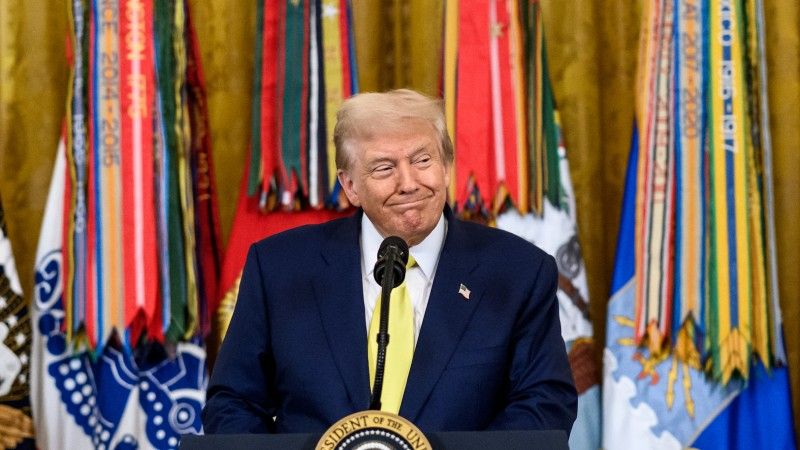
During his speech at the UN on September 23, President Donald Trump called on EU countries to “immediately” stop buying Russian energy resources, claiming that Russia had received €1.1 billion from the EU in fossil fuel sales in one year. Is the EU really still dependent on the Kremlin for energy, more than three years after the start of full-scale war in Ukraine?
During the UN General Assembly, President Trump reiterated that the US is ready to impose powerful secondary tariffs to stop the war. However, for these tariffs to be effective, European countries, all of you here, would have to join us and adopt exactly the same measures,” he said.
Trump: Putin has disappointed me
They must immediately stop all energy purchases from Russia. We will discuss this today with all the European countries gathered here.
US President Donald Trump
The US president has already raised the issue of European purchases of Russian energy resources several times. In mid-September, he claimed that he was ready to impose “serious sanctions” on Moscow if NATO members stopped buying Russian oil and imposed tariffs of more than 50% on China for purchasing energy from Moscow.
„I am very disappointed with Putin. He fought fiercely, lost about a million soldiers (…) They gained almost no territory. I’m not going to call anyone a paper tiger, but Russia has spent many millions of dollars on bombs, missiles, ammunition, and lives. And they have gained virtually no territory,” said the US president.
Trump’s observed political shift toward a much more favorable stance toward Ukraine — though it may be very unstable — shows frustration with the protracted conflict, which Trump promised to end in just „24 hours” from the start of his second term.
This is increasingly translating into pressure on EU and NATO countries to immediately stop importing any energy resources from Russia. „Just think about it: they are financing a war against themselves. Who the hell has ever heard of that?” Trump asked. And unfortunately, this is only a partial distortion of the truth.
Von der Leyen: You're right, Donald
Trump is absolutely right. We are working on it. We have already drastically reduced gas supplies from Russia. We have completely abandoned Russian coal and also drastically reduced oil supplies, but some oil is still coming to Europe.
EC President Ursula von der Leyen
Ursula von der Leyen also stressed that she wants European countries to end imports of Russian oil by the end of this year. We have imposed sanctions on ports that receive LNG from Russia, for example. We want to impose tariffs on oil supplies that still reach the European Union,” she emphasized.
Starting in 2022, Europe has made a tremendous effort to cut itself off from Russian raw material supplies, primarily gas, as quickly and as much as possible. According to official data, Moscow’s share of pipeline gas imports to the EU fell from over 40% in 2021 to around 11% in 2024 over a three-year period. The import gap was filled by Norway, Qatar, Azerbaijan, and… the US, among others.
According to EU data, Oslo became the largest supplier of gas to the EU in 2024, providing over 33% of all imported raw materials. The US came second (16.5%), followed by Algeria (14.4%). According to official data, only 18.9% of gas comes from Russia (including 7.3% in the form of LNG).
Brussels often boasts about its quick and decisive departure from Russian raw materials – and rightly so, because in many ways it was an example of solidarity, despite divergent national interests. The end (or reduction) of energy cooperation with Russia was particularly painful for Germany, Italy, Austria, France, and Hungary (in 2019, Central European countries accounted for 23% of Gazprom’s total exports).
By 2025, the EU had adopted 19 packages of sanctions against Russia. In practice, this means that for more than 11 years (counting from 2014 and the annexation of Crimea), every 6-12 months, the EU has managed to negotiate a common position of the 27 member states on the Kremlin’s policy.
Considering that the sanctions cover such key issues as the freezing of Russian assets (and the transfer of 90% of the accumulated interest to Ukraine ), economic restrictions on financial services, energy resources, and technology, as well as regulations to prevent the circumvention of sanctions,this is a huge achievement for Brussels. Not to mention €173.5 billion earmarked to support Kyiv , starting in 2022.
However, nothing is perfect—especially in international politics.
Russian LNG has replaced Russian gas pipelines
According to data from the Centre for Research on Energy and Clean Air (CREA) , imports of Russian gas via pipelines have indeed fallen by a colossal 90% compared to levels before the full-scale invasion of Ukraine. At the same time, analysts point out that this was mainly due to payment problems, sabotage of energy infrastructure, and the expiration of the transit agreement. The sanctions imposed have not had a significant effect.
At the same time, Russian LNG imports to the EU increased by 67%. Since February 24, 2022, the EU has paid Russia $105.6 billion for gas imports, which is 75% of Russia's entire military budget for 2024.
CREA
As analysts point out, 87% of all Russian LNG imports to the EU went to ports in Spain (5.7 billion m3), France (7.7 billion m3) or Belgium (5.1 billion m3), and from there the raw material was most likely distributed to other European countries. Russia is heavily dependent on the EU market for gas exports, which account for 52% of its LNG export revenues. In the third year of the invasion, the EU paid $8.5 billion for Kremlin LNG.
Despite a series of sanctions, Russia’s revenues in the third year fell by only 8% compared to the year before the invasion of Ukraine. Since the invasion, Russia has earned an estimated €847 billion from fossil fuel exports worldwide,” the CREA report noted.
In the third year of the invasion, the EU paid €21.9 billion for Russian fossil fuel imports, representing a mere 1% year-on-year decline. EU imports from Russia in the third year of the invasion exceeded the €18.7 billion in financial aid provided to Ukraine in 2024.
CREA
Through the back door
According to a Greenpeace Belgium report, the Belgian port of Zeebrugge is the largest hub for Russian LNG imports in the EU, accounting for about a quarter of total Russian LNG imports into the European Union.
It is estimated that between 2022 and 2024, Yamal LNG earned a total of $40 billion, contributing approximately $9.5 billion to the Russian budget in profit tax. (...) From 2022 to June 2025, the EU countries importing the most Russian LNG – France, Spain, Belgium, and the Netherlands – spent more on its import (€34.3 billion) than on support for Ukraine (€21.2 billion).
Greenpeace Belgium
President Trump is right. The EU forum has long discussed the purchase of not only LNG, but also Russian oil „under a different brand,” most oftenmade in India andmade in Turkey. New Delhi is eager to buy cheap raw materials from the Kremlin and resell them to other interested parties, and then it is no longer the Kremlin’s blood oil… right?
Russia uses a „shadow fleet” to transport oil, which accounts for 61% of its total oil exports by sea, worth €83 billion. The G7+ countries imported €18 billion worth of petroleum products from six refineries in India and Turkey, of which an estimated €9 billion came from Russian crude oil,” adds CREA. In September, India increased its purchases of Russian oil by 10-20% compared to August. The main European buyers of Indian diesel are France, Turkey, Belgium, and the Netherlands.
Less subtle are the Hungarians and Slovaks, who are openly negotiating with the European Commission to continue purchasing gas and oil from Moscow, arguing that this is for energy security and their unwillingness to follow an ” ideological decision .” At the same time, both countries have rejected Croatia’s offer to use the Adria oil pipeline as an alternative to cooperation with the Kremlin.
Initially, the US president announced that his request would ensure Budapest’s complete renunciation of Kremlin energy resources. Unfortunately, a short, private conversation with the Hungarian prime minister was enough for Donald Trump to agree with him: \[Orban – ed. note E24\] is my friend, so it \[giving up Russian oil and gas – ed. note E24\] is more difficult for them. And for Slovakia too (…) I just don’t want people to blame them.” Do exceptions prove the rule?
Business is business
The Commission President’s short answer appealed to Trump (he described her as a „very influential, intelligent woman”). However, leaving aside questions of political ethics (if such a thing exists), when it comes to ending the war in Ukraine, President Trump is certainly even more pleased with the prospect of a large flow of American LNG exports to EU countries.
Since 2023, the United States has remained the world's largest exporter of LNG, ahead of Australia, Qatar, and Russia—and the main destination for exports is none other than Europe and Turkey (53% combined). And although Asia's share of total US LNG exports is growing (33% in 2024) and that of the Old Continent is declining (by 19%), the EU remains a significant market. In 2024, LNG exports from the US to the EU amounted to approximately $13 billion.
In the case of Turkey (a NATO member), Trump has already secured a 20-year contract for LNG supplies to Ankara , worth $43 billion. And although Energy Secretary Chris Wright assures us that „America does not need a customer for LNG,” he also clearly indicates that all liquefied gas in the EU should be replaced with American raw materials (or supplies from other sources).
The deal seems clear: Washington is ready to support Europe’s efforts to end the war in Ukraine by imposing appropriate sanctions, but EU countries cannot invest in Russian raw materials on the side. However, it is also in the Americans« interest for the EU to decide to impose tariffs of over 50% on China. This is to be a sign of support – as allies of the US – for tightening the screws on the Middle Kingdom, which Washington currently sees as the greatest threat to American hegemony in the world. Moscow has long played third or even fourth fiddle here.
According to Politico , discussions on the 19th EU sanctions package included the potential addition of Chinese companies to the target list. However, this was to be well below Trump’s demands for tariffs, and the Chinese companies that had been added in the past did not satisfy the US president.
At the same time, however, according to the newspaper’s high-ranking sources, Trump’s drastic demands on the EU may serve as a convenient smokescreen. The EU and NATO’s inability to meet them quickly may be a strategy to delay action against Russia and shift the blame onto allies.
Whatever President Trump’s tactics may be—and given the seriousness of the situation, let’s hope there are some—the EU’s decision to stop importing Russian raw materials is a key issue for the energy security of our region. Even after several years of bloody war beyond our eastern borders, we have no guarantee that, in the event of a truce, individual European governments will not be tempted to return to business as usual with the Kremlin. Ultimately, cheap Russian gas and oil do not have to travel across the Atlantic to reach us. Blood minerals are within easy reach—all we have to do is look away and reach for them.


