












- WIADOMOŚCI
- ANALIZA
A few kilometers from the catastrophe. Russian offensive in the Pokrovsk area

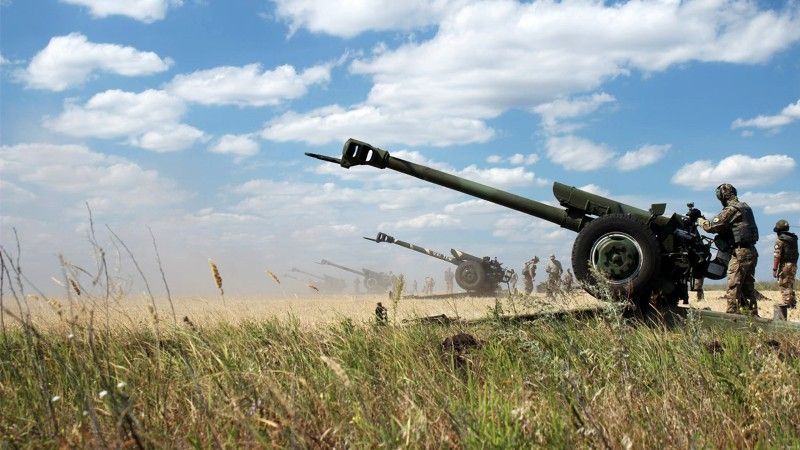
Photo. Нацгвардія України/Wikipedia
On staff maps of the Donbas region, Pokrovsk had for many months been one of those points where the front line appeared relatively stable. In recent days and hours, however, the situation in the area has deteriorated significantly. Russian assault groups, operating in small, flexible teams supported by unmanned reconnaissance, have begun penetrating deep into Ukrainian positions, exploiting lapses in coordination and natural “seams” between formations.
This is not the classic frontal assault seen in the first months of the invasion, when tanks and infantry tried to smash through enemy defenses en masse. This time, the method is infiltrative — more akin to surgical incisions than a hammer striking a single line. As a result, Russian units have moved closer to key roads — including route T0514, linking Dobropillia with Kramatorsk — and have taken control of several settlements north of Pokrovsk.
The situation is so dynamic that within the next 24–72 hours there could be a decisive turning point: either the Ukrainians will manage to seal the breach and push the enemy back, or the Russians will turn a tactical success into an operational breakthrough. For the Ukrainian side, the problem is not only the fact that the enemy has penetrated deep into the defense, but also the speed with which these breaches are being widened. In the absence of sufficient operational reserves, any counterattack requires shifting forces from other sectors, which in turn creates new weak points. Lt. Col. (Res.) Maciej Korowaj notes that the attack is being carried out using new structures of Russian motorized rifle regiments.
ANALIZA OPFOR - Nowe rosyjski pułki pokazały swoją skuteczność - to bardzo niebezpieczna sytuacja na froncie na północ od Pokrowska.
— ppłk rez. Maciej Korowaj (@Maciej_Korowaj) August 11, 2025
Meldunek...
Rosjanie wykorzystują nowe struktury pułków strzelców zmotoryzowanych 255. i 242. z 20 Dywizji Strzelców Zmotoryzowanych do działań… pic.twitter.com/5l1aoshKVd
In the northern approaches to Pokrovsk, the Russians are conducting intense artillery bombardments aimed both at destroying infrastructure and forcing Ukrainian defenders to abandon fortified positions. Particularly dangerous are attacks on road junctions and side dirt roads, which under normal conditions serve as reserve supply routes. Cutting off one or two such roads sharply reduces the defenders’ logistical capabilities, making the delivery of ammunition, fuel, or the evacuation of wounded risky or even impossible.
In the Myrnohrad sector, the situation is similar — small Russian assault groups carry out rapid raids, often using armored vehicles solely as transport to the infantry drop-off point. Once in position, the infantry operates in close cooperation with drone operators, who adjust mortar and artillery fire in real time. As a result, Ukrainian positions are systematically “picked off” with single, precise strikes, forcing defenders to withdraw to successive lines, often without the ability to retake lost ground.
South of Pokrovsk, toward Dobropillia, Russian offensives have a slightly different character — less intense, but aimed at cutting off side routes that could be used to redeploy Ukrainian reserves to the northern sector. This appears to be part of a larger operational plan: instead of a frontal assault on the city itself, the enemy is attempting to gradually “tighten the noose” by controlling access roads and isolating individual defensive sectors.
The Ukrainians claim that despite losses and tactical setbacks, the front line is still being held, and some Russian infiltration groups have been destroyed. However, reports from the front — including those published by Ukrainian war correspondents — point to serious problems in maintaining a coherent defensive line and to the high cost of dislodging the enemy from occupied positions. In many cases, regaining territory required several days of fighting and significant losses in personnel and equipment, further depleting already limited reserves.
Pokrovsk as the backbone of logistics
Pokrovsk is not just another town on the map — it is the central hub of the supply system in this part of the front. Before the war, it had about 60,000 inhabitants; today, it is home mainly to military and logistical infrastructure. The city sits on a key road and rail junction, vital for deliveries toward Chasiv Yar, Kostyantynivka, and Kramatorsk. The area also hosts important industrial facilities, including Ukraine’s only operational coking coal mine, whose activity, though limited, still matters for the national economy.
Losing Pokrovsk would have multidimensional consequences. Supply to units defending Kostyantynivka and Chasiv Yar would be cut off or severely hindered, and the Russian army would gain a convenient staging base for attacks on Kramatorsk and Sloviansk. Moreover, capturing the city would carry strong propaganda value — in Moscow, it would be presented as proof of lasting progress, bolstering the Kremlin’s position in any potential peace or ceasefire negotiations.
The Russian offensive is multi-layered. Operationally, it is about controlling a communication corridor and shortening their own supply lines in the Kramatorsk area. Topographically, this is an area of great logistical importance — seizing the road junction provides flexibility in maneuvering forces and facilitates artillery support.
Equally important, however, is the political and propaganda aspect. In Russia, every kilometer gained in the Donbas is showcased as proof of the effectiveness of the “special military operation,” and taking a larger city like Pokrovsk would be presented as a breakthrough. Psychologically, losing such a center would affect the morale of both soldiers and civilians in Ukraine, further complicating mobilization and recruitment.
Voices from the front: Warnings from Krotevych and Myroshnykov
In assessing the current situation around Pokrovsk, the voices of those who know the front not from reports but from direct experience are invaluable. Bohdan Krotevych, a veteran and former head of Mariupol’s defense, emphasizes that in Ukraine’s current reality, the key is not so much seizing the initiative at all costs as preserving the army’s combat capability over the long term. In his view, any unprepared, costly strike in the absence of adequate operational reserves leads to burning out units at a rate the state cannot replenish. Krotevych draws on his own experience in Mariupol, where maintaining an intense tempo of fighting for too long without rotation and support ended in the defenders’ effective destruction, despite their determination and courage. “If we don’t stabilize the line now, we will pay for it not only with territory, but with the lack of people to hold that line” - he wrote.
Пане Президенте,
— Bohdan Krotevych (@BohdanKrotevych) August 11, 2025
Я щиро не знаю, що саме Вам доповідають, але інформую: на лінії Покровськ – Костянтинівка без перебільшення повна пізда. І ця пізда наростає вже давно, погіршуючись з кожним днем.
Ті командування, які зараз призначають (чи вже призначили), щоб «виправити… pic.twitter.com/1BDAVhEfnb
Similar concerns are voiced by Bohdan Myroshnykov, a war correspondent who has been documenting the situation in the Donbas for months. His reports often depict a less “polished” picture of the front than official General Staff communiqués — with chaotic last-minute redeployments, a lack of full coordination between different sector commands, and the enemy exploiting every gap in the defense system. Myroshnykov notes that the Russians have mastered the use of so-called “seams of responsibility” — points where different formations meet, often with differing command structures. In such spots, small assault groups of a dozen or so soldiers, supported by drone operators, can punch into the defensive line for several kilometers, causing confusion and forcing defenders into chaotic withdrawals.
Crucially, Myroshnykov stresses that even if such groups are pushed back, the balance is troubling: retaking ground costs far more than losing it. This refers not only to the loss of soldiers, but also to ammunition, equipment, and the time needed to rebuild positions. His reports often show Ukrainian units, after a successful counterattack, in a state of extreme exhaustion, with reserves — in manpower and resources — dramatically depleted. “This is a war of attrition — if we act impulsively, the enemy will only accelerate a process that already works in his favor,” - he comments.
Both Krotevych and Myroshnykov — though they represent different roles — are essentially speaking about the same problem: the lack of strategic patience in conditions where the enemy has a resource advantage and can methodically destroy even the best-prepared lines. These warnings sound like a joint appeal for the prudent use of forces, avoiding unnecessary losses, and above all prioritizing the stabilization of the defense — before the line at Pokrovsk begins to crack irreversibly.
Possible scenarios for the situation’s development
The first and most desirable scenario from Kyiv’s perspective assumes halting the Russian offensive at the current line, and even regaining some of the positions lost in recent days. This would require the rapid deployment of fresh reserves, preferably well-trained and coordinated with existing units in the area. The key would be improved communication and unified command to eliminate chaos at sector junctions. If the front could be stabilized, Pokrovsk would continue to serve as a central logistics hub, and the Russian strike would end in only a local propaganda success without broader operational impact. However, even in this variant, the defense would remain under constant pressure, and holding the city would require continuous replenishment of resources, which over the long term would deplete Ukraine’s mobilization reserves.
An intermediate scenario, perhaps the most likely, assumes holding the front line but shifting the main defense to new positions. This would mean losing several additional settlements and parts of the forward area, thereby shortening reaction time to further enemy attacks. In practice, the front would be under constant artillery and drone fire, forcing the Ukrainian side to carry out regular, costly unit rotations to prevent complete exhaustion. Politically, such “bleeding” of the defense could gradually weaken the will to resist, especially if society began to perceive the situation as a slow but inevitable retreat. Logistically, holding Pokrovsk in this variant would require the uninterrupted operation of the entire supply system, which — given the current intensity of Russian drone attacks on rear infrastructure — would be a daunting task.
The worst-case scenario assumes that the current Russian actions are only the first stage of a larger operation aimed at a full operational breakthrough in the Pokrovsk area. In this case, the enemy could use the current breach to execute a wide envelopment of the city from the north or south, cutting it off from main roads and rail lines. From a tactical standpoint, this would be a classic encirclement maneuver, forcing Ukrainian forces to withdraw to avoid being trapped in a pocket. The result would be the loss not only of Pokrovsk and Myrnohrad, but also of a significant portion of the logistics infrastructure serving the Donbas. This, in turn, could necessitate a reorganization of the entire defensive line as far back as Kramatorsk and Sloviansk, opening the way for further Russian offensive operations.
One cannot rule out a variant falling between these three. The Russians may opt for gradually pushing Ukrainian forces back without risking deep encirclement, counting on constant pressure and reserve depletion to naturally weaken the defense. Such a scenario would be the most exhausting in the long term — both militarily and economically — as it would require the continuous presence of large forces in the area while hindering the planning of larger Ukrainian offensive operations. From the Kremlin’s perspective, this is the ideal “war of attrition,” in which time and logistics work in favor of the side with greater resources. The only question is whether such a scenario is possible in light of the upcoming talks between U.S. President Donald Trump and Russian Federation President Vladimir Putin.
The meeting between the two leaders is scheduled for August 15 in Alaska — a symbolic location, as it is geographically the closest point of U.S. territory to Russia, yet far from European capitals. According to Trump, the main topic of the talks will be finding a formula for a ceasefire in the Russo-Ukrainian war, with the U.S. president not ruling out “territorial exchange” as part of a compromise.
In Kyiv, these declarations are understandably causing concern — Ukraine has not been invited to the table, and its absence means the risk that the future of the front will be discussed by those who are not fighting on it. In this context, Russian actions in the Pokrovsk area take on new significance: every kilometer gained, every road cut, and every town seized can become a bargaining chip in Putin’s hands. Ukrainian media note that for the Kremlin, entering talks with Trump as the “offensive side” is crucial — even a limited success in the Donbas could serve as an argument that the terms of peace must reflect “the current state on the map.”


