












- WIADOMOŚCI
China enters Algeria’s air force

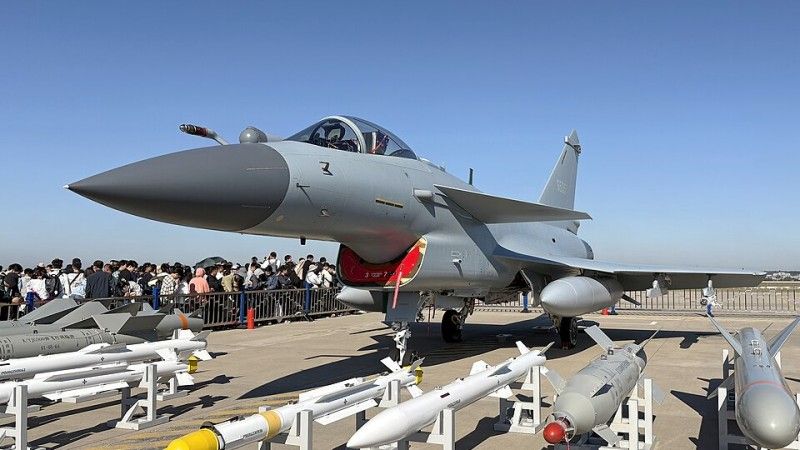
Photo. 颐园居 / Wikimedia Commons
Algeria may become the first African state to operate Chinese J-10C multirole fighters and KJ-500 airborne early warning aircraft. If confirmed, deliveries beginning in 2027 would mark one of the most important changes in North African air power in years.
This would be significant because Algeria’s combat aviation has been built mainly around Russian systems. The Algerian Air Force already operates Su-30MKA fighters, Su-35s, Su-34M strike aircraft and is reportedly introducing Su-57s. The possible acquisition of Chinese aircraft would not replace Russia, but it would reduce Algeria’s dependence on Russian supply chains at a time when Moscow’s defence industry is under pressure from the war in Ukraine.
The J-10C gives Algeria a modern fourth-and-a-half-generation fighter with AESA radar, PL-15 long-range air-to-air missiles and the ability to conduct interception, strike, maritime and air-defence suppression missions. For Algiers, this is not only another aircraft. It is a way to diversify suppliers and obtain modern capability without relying on Western political conditions.
The KJ-500 may be even more important. An airborne early warning and control aircraft changes how an air force operates. It allows real-time coordination between fighters, air-defence systems, radars and command centres. In Algeria’s case, this would strengthen surveillance over the Mediterranean, the Sahara and the country’s southern borders.

The problem will be integration. Algeria would have to connect Chinese aircraft and command systems with a force still dominated by Russian platforms. Training, maintenance, datalinks, weapons, software and logistics will become more complicated. But Algeria has the defence budget to absorb this complexity, with annual military spending estimated at around $21–25 billion.
For China, the political meaning is clear. Beijing is no longer exporting only cheaper equipment to Africa. It is offering advanced combat aircraft, airborne command systems and a networked air warfare model. If Algeria confirms the deal, China will gain a major reference customer in North Africa, close to the Mediterranean and within a region watched closely by Europe, NATO and Russia.
For Algeria, the deal would strengthen its position against regional rivals, especially Morocco, and support a broader strategy of military autonomy. Algiers wants Russian weapons, Chinese systems, selective engagement with the United States and freedom from dependence on any single supplier. That is the real point of this possible acquisition. And again, China and Russia are showing their military presence (power) in Africa.


