












- ANALIZA
- WIADOMOŚCI
Türkiye wants to enter Lebanon after UNIFIL. A new front in the rivalry with Israel and France?

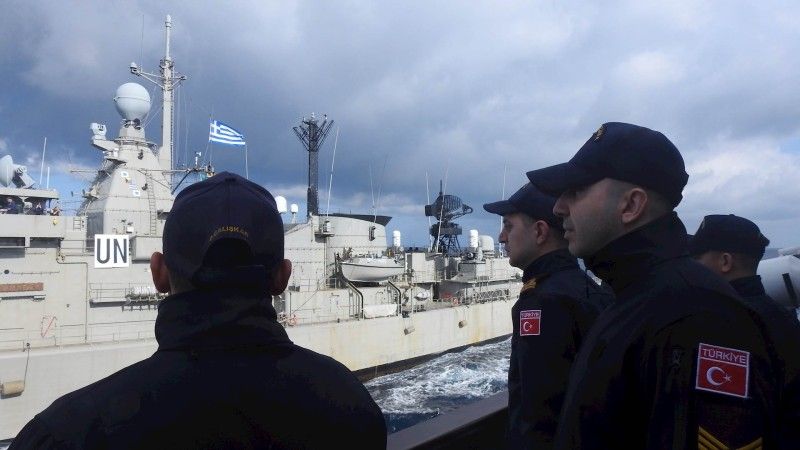
Photo. Official X Account of the Republic of Türkiye Ministry of National Defence
During a recent meeting in Ankara, Turkish President Recep Tayyip Erdoğan declared his readiness to Lebanese President Joseph Aoun to participate in all future security initiatives in Lebanon. This primarily concerns increasing Türkiye’s political and military influence in Lebanon in light of the planned termination of the UNIFIL peacekeeping mission.
It is worth emphasising, however, that the specific structure and scale of the future mission have not yet been presented. It is also unclear under what banner the force would operate – whether under the aegis of a new UN mission, as part of an international coalition of states, or under another arrangement, such as a bilateral agreement with Beirut. Therefore, at this stage, Ankara’s declaration is merely a political signal – albeit an important one – and, at the same time, the real beginning of the negotiation process regarding the future security format in the region. However, it should be noted that such declarations position Ankara as a direct rival to Israel, France, and Iran, each seeking to maintain or expand its influence in the region.
The end of UNIFIL or the beginning of a long withdrawal process?
The mandate of the UNIFIL peacekeeping force will not be extended, following a unanimous decision by the UN Security Council taken under intense pressure and amid demands from the United States and Israel. The mission operates, among other things, under UN Security Council Resolution 1701 of 2006, which authorised the international force to support stabilisation and peacekeeping operations.
However, it should be emphasised that, after the mandate expires on 31 December 2026, the Blue Helmets will not leave the country overnight; rather, a period of gradual withdrawal will begin. According to the resolution, the drawdown and withdrawal of the force, comprising nearly 10,800 personnel and associated military equipment, will take approximately one year, starting in 2027. During this time, responsibility for ensuring exclusive control over the territory—including in the so-called pilot zones—should gradually be assumed by the Lebanese Armed Forces, whose task would also be to disarm Hezbollah and stabilise relations with the new authorities in Syria.
The most serious challenge, however, remains not the withdrawal of UNIFIL forces but the creation of a „security vacuum” after 2026. It should be noted that the lack of an effective control mechanism separating the Lebanese Armed Forces, Hezbollah structures, and the Israeli military could, over time, lead to the destabilisation of the entire region, not just individual states.

Who will replace UNIFIL? A call for a new mission
International consultations are currently underway on a model to replace the peacekeeping force. The following options are being considered:
- a new mission or mechanism within the UN,
- an ad hoc international mission, e.g., a coalition led by France in cooperation with Italy or Spain,
- a broader international coalition that could include NATO-backed countries, such as Türkiye, as well as European, Arab, and Islamic states,
- a mission more focused on support and training, e.g., with strong Turkish participation, offering training support, drones, and equipment for the Lebanese Armed Forces,
- a purely observational mechanism without a significant combat component, such as one of the smaller options proposed by the UN Secretary-General, comprising only 215 unarmed military observers and light battalions.
France has openly declared its desire to build a new coalition, which runs counter to the interests of other third-party countries seeking to draw Lebanon into their spheres of influence. Türkiye’s involvement in stabilisation efforts in Lebanon directly implies Ankara’s entry into a sphere of influence in which it competes with France. Such actions could, in a sense, strengthen Türkiye’s position in the Muslim world, while simultaneously threatening the influence of other players, particularly Western countries such as France.
US and Israeli pressure to end UNIFIL’s mandate
Available sources repeatedly confirm that last year’s UN Security Council decision not to extend UNIFIL’s mandate was made under intense pressure and at the express request of the United States and its ally, Israel. However, there are no direct statements from the US or Israeli governments detailing the reasons for this opposition. Nevertheless, it is possible to deduce the broader context from which the desire to end the mission arose.
UNIFIL’s current format has failed to prevent a massive escalation of the conflict and has proved relatively ineffective. The mission’s weaknesses to date have been noted not only by the United States but also by other actors. For example, during a debate in the Grand National Assembly of Türkiye, UNIFIL was criticised for „merely observing” the bombing of Lebanon instead of taking concrete steps that could stabilise the situation in the country.
Hopes pinned on a new agreement with the United States are also increasingly being discussed. On 26 June 2026, the United States brokered a „framework agreement” between Israel and Lebanon, which provides for the withdrawal of Israeli forces in exchange for the disarmament of Hezbollah fighters. Diplomats hope that implementing this direct agreement could render the current UN presence „unnecessary”. Instead of maintaining international forces, the US-promoted agreement emphasises new solutions, such as the creation of „pilot zones” in southern Lebanon. The Lebanese Armed Forces (LAF) would assume exclusive control of these areas, completely excluding the presence of any non-state armed forces, such as Hezbollah.
In short, from the perspective of the United States and Israel, the UNIFIL mission has run its course, and both countries are now focusing on a new security framework based on the disarmament of Hezbollah and effective control by the Lebanese Armed Forces over the south of the country.
Türkiye’s interests: From Syria to the Eastern Mediterranean
Ankara’s presence in Lebanon is part of a broader geopolitical strategy. Türkiye seeks to expand its role from Syria to the entire Eastern Mediterranean. Joining security initiatives in Lebanon after the UNIFIL mission concludes would allow Türkiye to become one of the main architects of the emerging regional order in the Middle East. These actions are aimed at countering Israeli domination and counterbalancing Iranian influence, especially in the face of the weakening of the „Iranian axis”. Ankara has long sought to position itself as a stabilising force and „security provider”, offering humanitarian aid, participation in the country’s reconstruction (e.g., by providing container homes), and extensive military and equipment support, as reflected in its relations with the Lebanese Armed Forces.
It is worth noting, however, that the situation in Lebanon is much more complex for Türkiye than in Syria. While Türkiye has a decisive influence on the new Syrian government, especially President Ahmad al-Sharaa, its room for manoeuvre in Lebanon will remain relatively limited. This is due to the country’s complex sectarian divisions and the strong presence of other influential players, including the Gulf states and France.
Türkiye vs France: Cooperation or a struggle for influence?
Both France and Türkiye have expressed interest in participating in a force intended to replace UNIFIL. The potential presence of Turkish troops will undoubtedly lead to direct competition for influence between Ankara and Paris. However, it is unclear what the ultimate command structure of the potential mission will be, i.e., whether Paris will accept a strong Turkish component or whether Ankara will accept a role subordinated to French command. The final structure of this mechanism has not yet been determined. Lebanese officials will therefore have to conduct extremely delicate diplomatic manoeuvres to demonstrate that strengthening military cooperation with Türkiye will not harm their relations with France and other Western partners. Operational cooperation may be necessary due to the emerging security vacuum, but a struggle for political influence in Beirut is inevitable.

Israeli recognition of a Turkish presence on its northern border
One of the main obstacles to Turkish ambitions in Lebanon, however, is not France but Israel. The Israeli authorities firmly oppose any permanent or significant Turkish military presence in southern Lebanon.
Israel’s distrust of Erdoğan’s policies is clearly visible. The Turkish president has been extremely harsh in his criticism of the Israeli offensive, directly accusing Israel of committing „crimes against humanity”. Israel, in turn, is seeking to establish missions and mechanisms to ensure Hezbollah’s effective disarmament and the withdrawal of its forces. The likelihood that Israel will use its influence to block Ankara is high, especially since it previously opposed Türkiye’s participation in the International Stabilisation Force in the Gaza Strip. Türkiye, in turn, wants to prevent Lebanon from shifting directly from Iranian influence to Israeli influence as a result of Israeli pressure and territorial withdrawal.
Iran: Loss of influence or an attempt to exploit Türkiye?
Iran’s reduced involvement opens up new opportunities for other players. At the same time, relations between Beirut and Tehran have deteriorated significantly. Lebanese President Joseph Aoun has openly and harshly criticised Iran for using his country as a „bargaining chip” in negotiations with the United States. Tehran, in turn, rejects the agreements promoted by Washington and demands the return of Israeli troops to their pre-war positions.
Simultaneously, Türkiye’s current actions are largely an attempt to exploit the weakening of the „Iranian axis” in Lebanon. Ankara’s goal, however, does not seem to be to replace Iran completely, but rather to strengthen its position in the region. From Tehran’s perspective, this could also be beneficial. In a situation where Arab and Western states seek to secure Lebanon, Türkiye, despite being a geopolitical rival, could act as a „buffer”, preventing Israel or the United States from gaining complete control over Lebanon.
What component could Türkiye deploy?
Türkiye’s potential military involvement in Lebanon could take various forms. Analysing the available options and Ankara’s existing cooperation in the region, three main operational components can be identified:
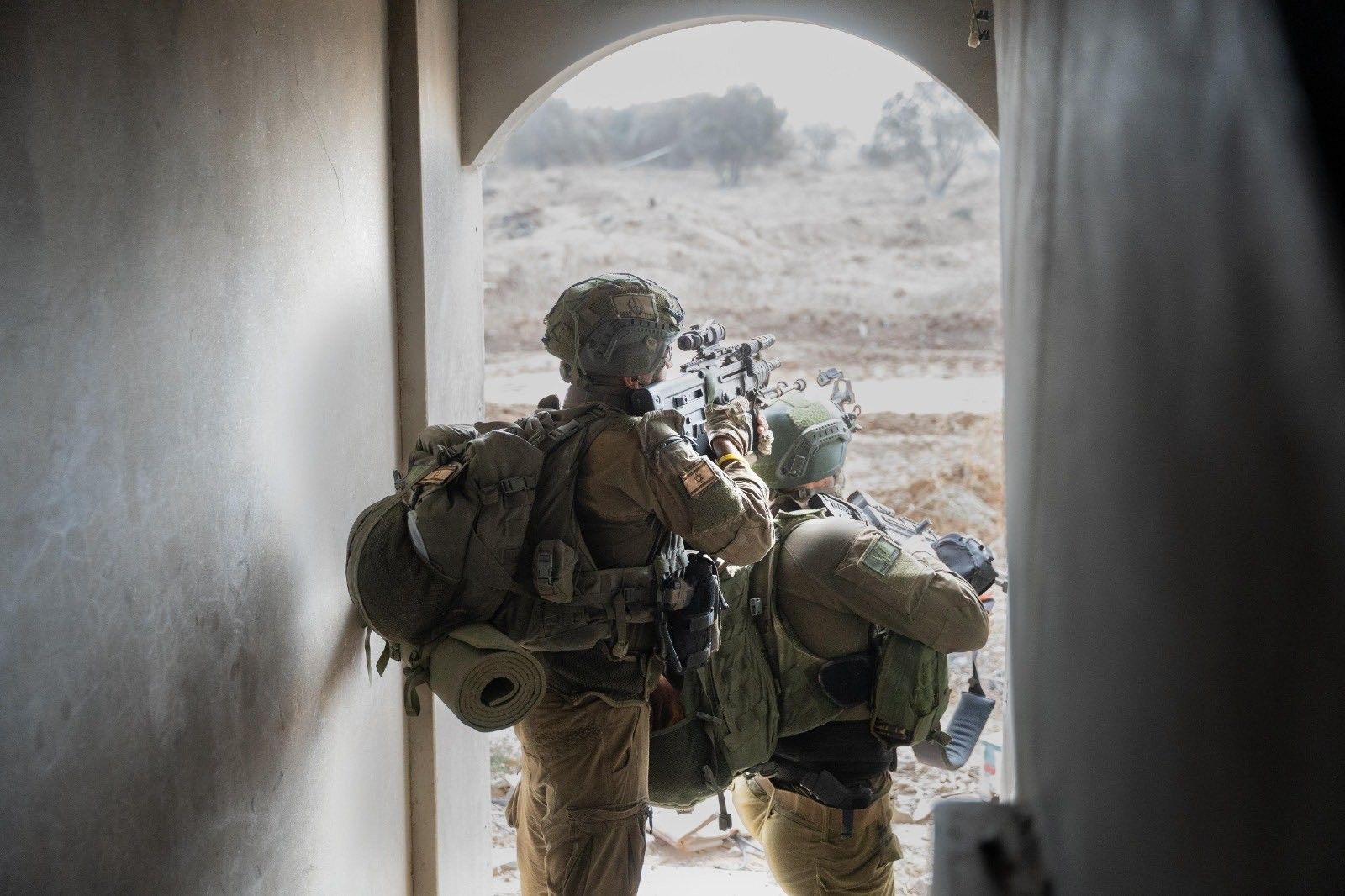
Land Component: This would encompass tasks such as patrols and surveillance of the territory, infrastructure protection, securing designated areas, and direct operational cooperation with the Lebanese Armed Forces (LAF). Mine clearance and engineering support would also be considered, in line with the UN requirements outlined in plans for the new mission. However, this option is the most politically risky as Turkish troops, including infantry battalions, would be deployed directly between Israeli forces, Hezbollah structures, and the local population.
Naval Component: Türkiye already has significant experience in this area, having contributed ships and sailors to the Maritime Task Force (MTF) within UNIFIL and supported the Lebanese Armed Forces Navy in monitoring territorial waters and securing the coast. Ankara could deploy frigates, corvettes, patrol vessels, and maritime control units. A naval component would be politically safer for the Turkish military, but in the current situation, it could lead to heated disputes with Israel over the extent of control over Lebanese supply routes and territorial waters.
Training and Advisory Component: This is the most likely scenario. Turkish diplomacy has declared its willingness to significantly increase support for the financially struggling Lebanese Armed Forces. This component would include the training of soldiers, operational advice, logistical support, and, above all, extensive equipment deliveries. According to the announcement, if Beirut officially requests it, Türkiye could provide armoured vehicles, naval platforms, communications systems, and reconnaissance drones (UAVs), among other items. This would enable Ankara to participate in the future security mechanism without immediately assuming responsibility for the physical separation of the conflicting parties.

Conditions for the success of Türkiye’s participation
To prevent Türkiye’s potential participation in the stabilisation mission from becoming another inflammatory factor, fundamental conditions must be met, including, above all, the formal consent of the Lebanese authorities and broad political support. Lebanon emphasises the inviolability of its sovereignty, and Beirut expects the mission to support the Lebanese Armed Forces, not act against them. It is worth emphasising that Türkiye will need to agree on its role and scope of operations not only with the Lebanese Armed Forces (LAF) but also with other actors involved in the dispute, including the United States and France, in order to avoid accidental clashes.
Lebanese diplomacy is also treading on thin ice, seeking to strengthen relations with Ankara while avoiding antagonising the West. An indirect channel of communication with Iran would also be essential. This requires a clear separation between border-monitoring functions and the controversial forced disarmament of Hezbollah, which poses a serious challenge to Lebanese and international forces. Failure to meet any of these conditions could result in the Turkish mission becoming simply another party to the conflict rather than an instrument of stabilisation.
Conclusions
Ankara’s current diplomatic offensive and President Erdoğan’s firm declaration that Türkiye is ready to participate in all initiatives aimed at ensuring Lebanon’s sovereignty do not yet constitute a final decision to send Turkish troops to the Middle East.
Türkiye’s broad and open-ended proposal is, above all, a strategic geopolitical move. Its primary goal is not only to replace Iran’s influence in the Levant but also to decisively strengthen its position as a key architect of a new regional order in the Middle East. Simultaneously, Ankara’s offer of military, training, and equipment support for the Lebanese Armed Forces can be seen both as an entry point and as an attempt to secure a strong position at the negotiating table, where the future of southern Lebanon and the Eastern Mediterranean will be decided following the conclusion of the UNIFIL mission.


