












- WIADOMOŚCI
Lebanon as the Sine Qua Non of an Iran-US Agreement

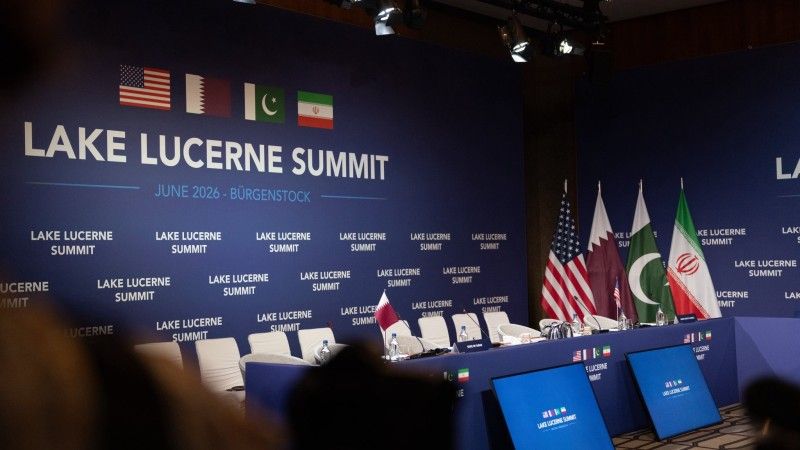
Photo. Swiss Federal Department of Foreign Affairs (FDFA) Official Website
The Middle East is entering a new phase of strategic rivalry. Just a few months ago, the nuclear program remained the main topic of talks between the United States and Iran, but it is becoming increasingly clear that developments on the Lebanese front will determine the fate of the entire negotiation process.
This is where the interests of the United States, Iran, Israel, and Hezbollah clash, and any further escalation of the conflict in the region could undermine the fragile agreements reached at the negotiating table. For this reason, southern Lebanon is now becoming not only a battleground but also the most important test of the effectiveness of diplomacy between Washington and Tehran. If the Lebanese front is not stabilized, the technical talks in Switzerland may prove to be a diplomatic construct without a solid foundation.
A Paradigm Shift: Lebanon as the Sine Qua Non of an Agreement
The contemporary security architecture of the Middle East is undergoing a rapid transformation. Washington’s traditional focus on Iran’s nuclear program has been replaced by the urgent need to stabilize the Levantine front, which Hezbollah has inadvertently drawn into the ongoing conflict involving the United States, Israel, and Iran. Beirut, once a peripheral theatre of war, has thus become „ground zero” – the geopolitical nexus upon which the durability of any agreement between the US and Tehran depends. After the fall of the Assad regime in 2024, Lebanon remained the last bastion of Iranian influence in the Mediterranean. This fact has given it existential significance for the parties to the conflict, including non-state actors.
For Iran, Hezbollah remains the most important instrument of influence in the Levant. It is not merely an ideological ally or a local actor in Lebanese politics, but a key element of regional deterrence against Israel. From Tehran’s perspective, weakening Hezbollah would mean losing one of the most important bargaining chips in its confrontation with Israel and the United States. For this reason, Iran has directly linked progress on the nuclear issue to de-escalation in southern Lebanon, with every operation conducted by the Israel Defence Forces (IDF) resulting in an immediate suspension of technical dialogue, a pattern that was already evident during the first days of the talks in Switzerland. At the same time, any major Israeli operation against Hezbollah is treated not only as a local military event but also as a violation of the broader logic of the agreement.
Hezbollah thus acts as a kind of instrument of global blackmail. By exploiting this, Iran has created a feedback mechanism whereby any escalation in Lebanon automatically translates into the threat of a renewed closure of the Strait of Hormuz. Beirut’s security is gradually becoming a cornerstone of global energy stability and an element of a broader geopolitical game. For Tehran, Hezbollah’s survival as a viable military force in the face of geostrategic encirclement is currently more important than the short-term benefits of sanctions relief, which, in a sense, forces the United States to prioritize negotiations on the Lebanese issue. In this sense, Lebanon has become a test of US credibility for Iran: if Washington is unable to contain Israel, then from Tehran’s perspective, it is difficult to speak of real political guarantees.

A Prerequisite and the „First Real Test” of the Agreement
The Islamabad Memorandum of Understanding between the US and Iran explicitly calls for an immediate and permanent cessation of hostilities on all fronts, with particular emphasis on Lebanon, as well as respect for its territorial sovereignty. For now, this appears to be a non-negotiable condition for finalizing any agreement with Washington.
Evidence of Lebanon’s central role in the peace process is the establishment of a special ”Lebanese De-Escalation Cell” during the talks in Switzerland, tasked with implementing several key measures aimed at maintaining the ceasefire and stabilizing the region:
- Supervising the Cessation of Hostilities: The primary goal of the mechanism is to ensure and enforce a complete cessation of hostilities in Lebanon, as stipulated in the US-Iran Memorandum of Understanding.
- Deterring Escalation: The Cell’s mission is to prevent a relapse into hostilities in Lebanon.
- Crisis and Information Management: The unit was also established in response to growing concerns about the possibility of conflicting statements, ambiguities regarding the ceasefire terms, and individual disagreements that could reignite conflict across the region.
This new mechanism directly involves the United States, Iran, and the Lebanese government, while its creation and operation are facilitated by mediators from Qatar and Pakistan. The smooth functioning of the Cell is considered so crucial that Iranian Foreign Minister Abbas Araghchi described it as „the first real test” of the durability and credibility of the US-Iran agreement. Importantly, no comparable mechanism has been established within the framework of the current US-Iran negotiations to oversee the implementation of nuclear-related provisions.

Hezbollah’s Position on the US-Iran Agreements and the Peace Process.
Although Hezbollah is neither a party to nor a signatory of the interim agreement (Memorandum of Understanding) between the US and Iran that established the de-escalation cell, the group’s leader, Naim Qassem, praised Iran for including Lebanon in the agreements with the United States, considering it a strategic success that forced Israel to halt its aggression.
However, the group officially denies Israel’s accusations of violating the ceasefire and firmly opposes any plans to withdraw from southern Lebanon and establish so-called pilot zones, describing such plans as capitulation to Israeli conditions. The organization calls direct talks between Lebanon and Israel „unacceptable” and calls on the Lebanese government to abandon them, arguing that armed resistance on the battlefield, not diplomacy, protects the country from Israeli ambitions. It is worth emphasizing that the official Lebanese delegation, attempting to resolve the southern border issue, has no authority or control over Hezbollah, and the organization’s leaders are reluctant to discuss its status while hostilities continue. Hezbollah has also declared that it will remain on high alert and respond militarily to any Israeli aggression.
Lebanese President on the Agreement
Lebanese President Joseph Aoun’s reaction to the US-Iran agreement is two-pronged. On the one hand, he appreciates the opportunity for peace, and on the other, he firmly defends the country’s sovereignty against Tehran’s attempts to subordinate it.
President Aoun also welcomed the fact that the US-Iran memorandum included – at Iran’s firm request – a requirement to cease hostilities on Lebanese territory. In this context, it appears that the interests of the official Lebanese authorities and Hezbollah overlap.
However, he categorically opposed treating Lebanon as a puppet in the hands of foreign powers, transforming the talks into a struggle for sovereignty. He openly declared: „Lebanon’s future lies in the hands of the Lebanese people, not Iran or Israel.” He emphasized that while Lebanon cooperates with Iran, it does not consent to Tehran dictating terms or speaking on its behalf, adding that Lebanon will not become „another country’s war zone.”
President Aoun’s government has also actively distanced itself from the idea of Lebanon serving merely as leverage or a bargaining chip in broader regional US-Iran negotiations. At the same time, it has warned Iranian-backed Hezbollah that if it chooses to keep the country at war, it will ultimately harm the very community it claims to protect.

The Nuclear Issue Is Receding into the Background
For Washington, the effectiveness of the current talks depends on separating several levels of conflict: nuclear, sanctions-related, maritime, and Lebanese. For Tehran, however, these levels are intertwined. Iran can treat the Strait of Hormuz, Hezbollah, and Lebanon as elements of a single pressure strategy. Therefore, the closure or threat of closure of trade routes and escalation in Lebanon become elements of the same negotiation game.
In this sense, Lebanon is not just a sideshow to the Iranian-American talks. It is a practical test. If calm on the Israeli-Lebanese border cannot be maintained, it will be difficult to build the trust necessary to resolve more complex issues.
This means that for negotiators, the most pressing operational problem is not technical control over uranium enrichment, but the risk of immediate escalation in Lebanon. In other words, nuclear diplomacy can only continue if the Lebanese front does not spiral out of control. It can therefore be assumed that this country has ceased to be a peripheral element of the regional puzzle and has become the central testing ground for the durability of the entire peace process.
Israel as a Potential Deal-Breaker
Lebanon’s role complicates the negotiations, as Israel is not a signatory to the US-Iran agreement and openly ignores it, continuing its military offensive and airstrikes in southern Lebanon to establish a buffer zone and eliminate Hezbollah. Israel’s actions in Lebanon threaten US diplomatic efforts, provoking unprecedented frustration in Washington with its Middle Eastern partner. The Trump administration has sharply criticized Prime Minister Benjamin Netanyahu, fearing that a prolonged military campaign in Lebanon would undo the historic breakthrough in relations with Iran.
However, Israel is not bowing to US pressure. It wants to maintain its freedom of action against Hezbollah, steadfastly refusing to withdraw its troops from southern Lebanon for several key reasons, which appear to be both military and geopolitical in nature:
- Ensuring the security of northern Israel and establishing a buffer zone: Prime Minister Benjamin Netanyahu has consistently emphasized that troops will remain in southern Lebanon „as long as necessary” to restore security in northern Israel. Maintaining a buffer zone in Lebanese territory is viewed by the Israeli command as an absolute and „existential necessity” to protect Israeli communities from attack.
- Complete destruction and disarmament of Hezbollah: Israel refuses to withdraw until Hezbollah’s military infrastructure is completely destroyed and the organization itself is disarmed and deprived of the possibility of reconstruction. Israel demands clear evidence of Hezbollah’s withdrawal from the south and a gradual transfer of control of this territory to the Lebanese army. According to the proposals, Israeli forces will withdraw „zone by zone” only after Hezbollah has left the area, allowing displaced civilians to return.
- Rejection of the US-Iran memorandum: Israel is not a signatory to the ceasefire agreement brokered by the US and Iran. It feels excluded from the diplomatic process and officially ignores its provisions regarding respect for Lebanese sovereignty. Radical ministers in the Netanyahu government, such as Itamar Ben-Gvir and Israel Katz, have explicitly stated that Israeli troops will remain in the safe zones for an „unlimited period of time,” adding that the blood of Israeli soldiers and the safety of Israeli citizens will not be sacrificed on the altar of American diplomacy.
- Deliberately torpedoing US-Iran peace talks: Another, broader motive cannot be ruled out. Israel has no political or military interest in the success of the US-Iran negotiations. From Tehran’s perspective, Israel’s continued military operations risk undermining the broader US-Iran peace process. By refusing to withdraw its troops, the Netanyahu government may be deliberately seeking to sabotage the talks, including arrangements concerning Iran’s nuclear program that it views as unfavourable.
See also 

Lebanon: Between Sovereignty and Foreign War
In conclusion, the biggest loser in the ongoing conflict in the Middle East may be the Lebanese state itself. Beirut is under three forms of pressure: Israeli military pressure, Iranian influence through Hezbollah, and US-Iranian diplomacy, which treats Lebanon as one element of a broader agreement. As a result, Lebanon remains a state whose future is the subject of debate among external actors, but whose institutions have limited ability to impose a solution on their own.
Lebanon has become the key to peace not because it is the strongest actor in the region, but because it sits at the intersection of all the major fault lines shaping the Middle East. This is the paradox of the current situation, in which an agreement formally intended to protect Lebanon’s territorial integrity may simultaneously perpetuate its dependence on regional arrangements.
Ultimately, the success of any agreement between Washington and Tehran may depend not only on nuclear diplomacy, but also on whether peace can be maintained on the Lebanese front.


