












- WIADOMOŚCI
- ANALIZA
Collective security after the war in Ukraine: the future of Central and Eastern Europe

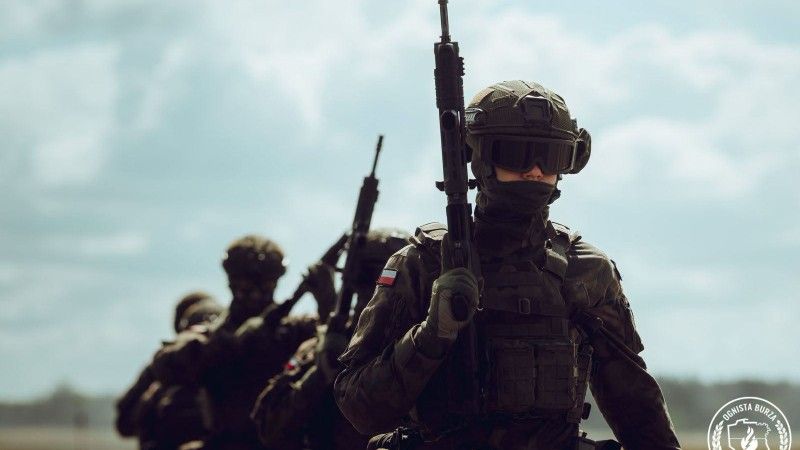
Russia remains the main source of instability in Central and Eastern Europe. At the same time, pressure from Moscow has pushed the Western states to closer cooperation, although this cooperation is still not always coherent. The future regional architecture will depend on whether NATO, the European Union, regional formats and national systems can work together in practice, and not only at the level of political declarations.
The security environment of Central and Eastern Europe has changed in a structural way. The annexation of Crimea in 2014, the full-scale Russian aggression against Ukraine in 2022 and further militarisation of the area between the Baltic Sea and the Black Sea showed that geopolitical rivalry in Europe did not disappear after the Cold War. It was rather moved aside for some time. States of the region again have to base their security on territorial defence, military readiness and the capacity to resist long political pressure. The Russian Federation remains the main source of destabilisation and uses conventional force together with nuclear intimidation, sabotage, cyber operations, information pressure and economic instruments.
However, Russian pressure also produced effects which were opposite to some initial assumptions of the Kremlin. NATO became larger, defence spending increased and Ukraine moved much closer to Western institutions. The eastern flank also gained a bigger political and military role. The NATO Summit in Ankara in 2026 confirmed that Russia will be considered a long-term threat and that deterrence needs new capability targets, stronger industrial production and a more balanced share of responsibilities between the United States, European Allies and Canada. From the point of view of Central and Eastern Europe, it is not enough to count Allied units deployed in the region. It is also necessary to know if they can be reinforced, supplied and supported by civilian infrastructure during a crisis.
Collective security is better understood as a group of mechanisms which have to complement each other. NATO remains the central structure of collective defence because it combines political guarantees with military planning, command arrangements and Allied presence. The European Union has other instruments, including regulatory power, industrial financing, infrastructure programmes, sanctions, energy policy, civil protection and enlargement. The United Nations and the OSCE still provide legal, diplomatic and monitoring frameworks. Their practical effectiveness is, however, limited when the aggressor can block decisions or prevent access to the conflict area.
See also 

NATO and the European Union
The first direction of change concerns a more operational relationship between NATO and the European Union. The discussion on European strategic autonomy is often presented as a choice between a stronger Europe and a strong transatlantic Alliance. For the states on the eastern flank, this alternative is largely artificial. Europe needs a greater capacity to act, produce armaments and protect infrastructure, but these efforts should reinforce NATO and not create a second command system. What matters is whether European investments produce forces and capabilities which can be used quickly in existing Allied plans.
Recent European initiatives show that this direction is already visible, although implementation will be more difficult than political announcements. The EU Defence Readiness 2030 agenda, the SAFE lending instrument, the European Defence Industry Programme and projects connected with the protection of the eastern flank are intended to speed up joint procurement and reduce gaps. Integrated air and missile defence, counter-drone systems, long-range fires, space surveillance, secure communications, military mobility and ammunition production have key importance. These priorities correspond with the needs of the region, where warning time can be short and deterrence depends on the ability to move forces across borders before a crisis turns into open aggression.
Infrastructure is another important part of the problem. Roads, railways, ports, fuel networks, bridges and airfields are part of regional defence even if they remain in civilian ownership. The Baltic-Black Sea axis, including routes connecting Poland, the Baltic States and Romania with ports on the Adriatic and Aegean Seas, should be treated as a reinforcement corridor. Border procedures need to be simplified and host-nation support should be prepared earlier. A multinational brigade without fuel, ammunition, repairs and medical support will not be a credible deterrent, even when its formal readiness is high.
The same logic applies to the defence industry. National procurement decisions are necessary, but excessive fragmentation increases costs and weakens interoperability. The region should develop joint programmes where there is a clear operational justification, particularly in ammunition, drones, counter-drone technologies, electronic warfare, battlefield communications and maintenance. Cooperation with Ukraine is especially important because Ukrainian experience offers continuous lessons concerning adaptation, dispersed production and the use of relatively inexpensive systems against a technologically advanced opponent.

Hybrid resilience
The future security architecture cannot be limited only to the military dimension. Russia has shown many times that pressure below the threshold of war can bring strategic effects by using legal uncertainty, social divisions and institutional weaknesses. Cyberattacks, sabotage, interference with transport and energy networks, migration pressure and disinformation may take place at the same time. Their purpose is not always immediate destruction. Such activities can exhaust state services, test decision-making, reduce confidence and create disagreement among Allies about attribution and an adequate response.
This is why the countries of Central and Eastern Europe need a common framework for recognising hybrid activity and moving from technical assessment to political response. The development of early-warning systems, shared intelligence indicators and rapid hybrid-response teams should be accompanied by clearer national procedures defining which authority leads during a complex incident. Cooperation with private companies is indispensable because large parts of the telecommunications, energy, transport and digital infrastructure are not controlled directly by the state. Resilience must therefore be planned across government and society, not solely within defence ministries.
Energy policy remains one of the most important elements of this approach. Reducing dependence on Russian hydrocarbons has limited the possibility of using supply interruptions as direct political pressure. Still, the region faces vulnerabilities connected with the concentration of infrastructure, cross-border dependence and the physical protection of terminals, pipelines, electricity networks and undersea cables. LNG, interconnectors, domestic generation, renewable energy and strategic reserves should be developed together with cyber protection and emergency plans. Complete national self-sufficiency would not be realistic. The aim is rather a system in which failure of one route or facility does not stop the functioning of the state.
The security of the region is also closely connected with the political future of Ukraine, Moldova and Georgia. Ukraine’s gradual integration with the European Union and a closer institutional relationship with NATO should be considered a geopolitical investment in the stability of the whole eastern neighbourhood. This process requires reforms, the strengthening of the rule of law and the creation of sustainable institutions. Nevertheless, leaving these states in a permanent grey zone would preserve the very conditions that Russia has repeatedly exploited. Enlargement policy, security assistance and reconstruction planning should form part of a broader strategy of deterrence.

Reforming collective mechanisms
The weakness of global and pan-European organisations does not mean that they have become unnecessary. The United Nations remains important for international law, humanitarian action and building wider political coalitions. At the same time, the paralysis of the Security Council during the Russian aggression showed very clearly that the organisation cannot be the main guarantor of regional defence when a permanent member is itself the aggressor. Limiting the veto in cases of grave violations of international law is politically difficult, but the discussion itself points to a real institutional problem.
The OSCE retains value in election observation, confidence-building, human rights monitoring and the preservation of channels of communication. Its consensus rule and Russia’s obstruction sharply reduce its effectiveness, particularly in active conflicts. The organisation should place greater emphasis on flexible coalitions of participating states, expert missions and the documentation of violations when a full political mandate is impossible. Maintaining institutional memory and monitoring capacity may become particularly important during a future ceasefire or post-conflict settlement.
Regional formats should support NATO and the EU, not repeat their work. The Bucharest Nine, the Three Seas Initiative, Nordic-Baltic cooperation, bilateral security agreements and some Visegrad projects can be useful when they bring results in military mobility, energy connections, industrial cooperation or civil preparedness. Their value should be judged by implementation and not only by another summit declaration. Central and Eastern European states now have more strategic agency because they recognised the Russian threat earlier and because they spend more on defence. This position should be used to influence common policy, not to build a separate bloc inside Europe.
Civil protection, reinforcement and escalation management
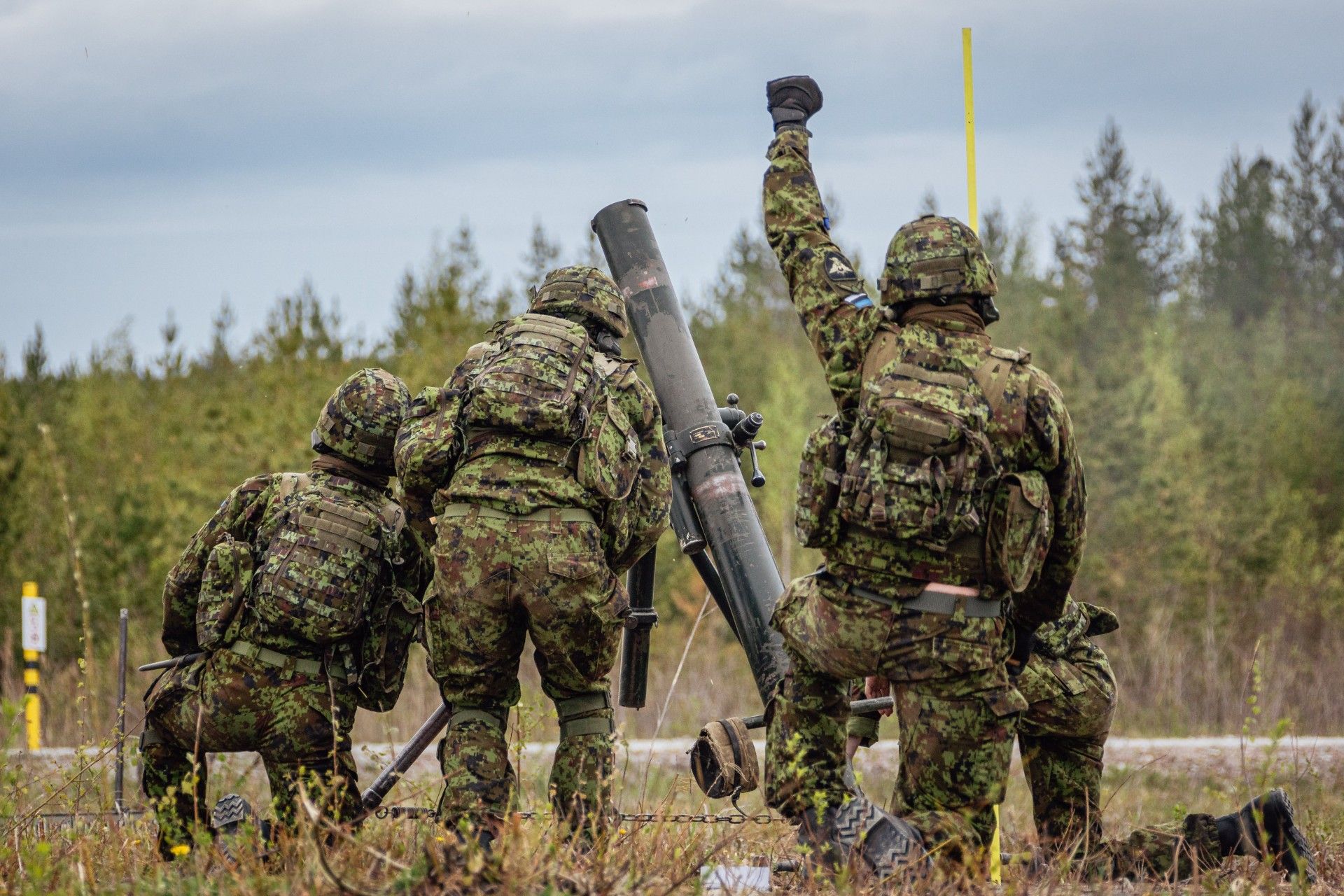
A credible security system also requires rebuilding civil-defence capacity. The war in Ukraine showed that continuity of government, emergency communications, hospitals, energy supply and transport directly influence the ability of armed forces to continue operations. The states of Central and Eastern Europe should connect civilian preparedness with defence planning, including reserve power, distributed stocks, evacuation procedures and exercises with local authorities. Civil protection is not only a humanitarian activity after an attack. It is also part of deterrence, because it limits the political effect of sabotage or limited strikes.
Reinforcement planning must also include escalation management. Russia combines conventional pressure with nuclear signalling in order to create fear and divide Allied governments over the level of acceptable response. NATO should maintain clear political control over escalation while avoiding self-deterrence. This requires credible conventional forces, integrated air and missile defence and a consistent nuclear posture supported by consultation with the states most directly exposed to Russian pressure. The objective is not to mirror every Russian statement, but to demonstrate that intimidation will not prevent the Alliance from defending its territory or supporting partners.
Preparedness should be checked in practice and not only in documents. Exercises need to include the functioning of railways, ports, hospitals, telecommunications and public administration during simultaneous cyber, kinetic and information attacks. National resilience goals should be connected with NATO defence planning and EU infrastructure funding. This would allow gaps to be identified before a crisis, which is still not always done, and investment to be directed to systems whose failure could block reinforcement or reduce public trust.
The most likely future model is not full European autonomy, but it will also not be a return to arrangements from before 2014. It will probably be a layered system: NATO providing collective defence, the EU supporting industry and civilian resilience, regional formats solving selected cross-border problems and national governments remaining responsible for preparedness. Russia can remain a source of pressure for many years, even if fighting in Ukraine becomes less intense. The main question is whether Western institutions will adapt faster than Moscow can find new vulnerabilities. For Central and Eastern Europe, security will depend on military deterrence, infrastructure, social resilience and political solidarity. These elements are closely connected and the weakness of one of them can affect the others.


