












- KOMENTARZ
- WIADOMOŚCI
Central and Eastern Europe becomes NATO’s security test

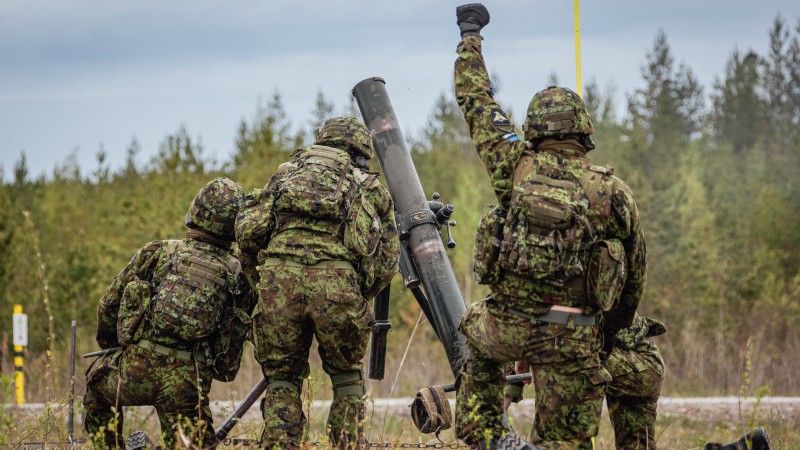
Photo. @NATOJFCBS / X
Central and Eastern Europe is no longer only the eastern edge of the Euro-Atlantic area. It has become the main test of NATO, the European Union and the wider system of collective security. Russia’s war against Ukraine, pressure on Belarus, militarisation of Kaliningrad and hybrid operations across the region show that Europe’s security architecture must be adapted to a conflict environment that is no longer theoretical.
Russia remains the main source of destabilisation in the region. Since the annexation of Crimea in 2014 and especially after the full-scale invasion of Ukraine in 2022, Moscow has forced NATO and the EU to return to the basic question of territorial defence. The eastern flank is no longer a political category. It is a military space stretching from the Baltic Sea, through Poland and Belarus, to the Black Sea.
Moving into the Western World
NATO enlargement after the Cold War was the most important security decision for Central and Eastern Europe. The accession of Poland, Czechia, Hungary, Slovakia, Romania, Bulgaria, Estonia, Latvia and Lithuania gave the region collective defence guarantees and moved it into the Western security system. Russia’s aggression against Ukraine confirmed why this decision was necessary.
The Alliance reacted gradually. After 2014, NATO suspended practical cooperation with Russia, strengthened consultations and returned to deterrence. The Newport summit in 2014 began the adaptation process, but the Warsaw summit in 2016 was more important for the eastern flank because it led to the deployment of battalion-sized battlegroups in Poland and the Baltic states. This showed Moscow that NATO did not accept a division between first- and second-category allies.

The problem is that NATO’s adaptation has never been free of internal disputes. Estonia, Latvia, Lithuania, Poland, Czechia and Romania have usually taken a hard line towards Russia. Other states, including Hungary, Slovakia or Bulgaria at different moments, have shown more cautious or accommodating positions. This matters because NATO’s strength depends not only on military assets, but also on political cohesion.
Belarus is central to Russia’s military planning. Moscow treats Belarus as a buffer, a military corridor and a way to push its western defence line away from Russian territory. The Union State framework, dependence of Belarusian armed forces and Russian control over key military arrangements reduce Minsk’s real sovereignty. For Poland and the Baltic states, this means that the threat does not come only from Russia’s own territory, but also from a state increasingly absorbed into Russia’s military system.
Kaliningrad is another key point. Its location between Poland and Lithuania gives Russia a platform for pressure against NATO’s northeastern flank. Russian missile systems, air defence, naval assets and A2/AD capabilities in the region are designed to complicate allied reinforcement. In a crisis, the problem would not only be whether NATO wants to respond, but whether it can move forces quickly enough through contested air, sea and land corridors.

What's with the Black Sea?
The Black Sea is the second strategic axis. Crimea, the Donbas, Abkhazia and South Ossetia are part of a wider Russian effort to control the space between Europe, the Caucasus and the Middle East. Russian military presence in the Black Sea region affects Ukraine, Romania, Bulgaria, Türkiye and NATO’s southeastern flank. This is why the security of Central and Eastern Europe cannot be reduced only to the Baltic states and Poland.
Russia also uses hybrid tools. Cyberattacks, disinformation, energy pressure, election interference, intelligence operations and the manipulation of Russian-speaking minorities are part of its regional policy. These instruments allow Moscow to test societies below the threshold of open war. For NATO and the EU, this means that resilience is no longer an addition to defence policy. It is one of its core elements.
The European Union is not replacing NATO, but it is becoming more important in security policy. Sanctions against Russia, energy diversification, LNG infrastructure, interconnectors, cyber defence, crisis management missions and support for Ukraine all strengthen the region’s resilience. Since 2022, EU sanctions have aimed to weaken Russia’s economy, restrict access to technology and limit Moscow’s ability to finance the war.
Energy security is now part of defence. Russia repeatedly used gas, oil and infrastructure dependence as political weapons. For Central and Eastern Europe, diversification of supplies, strategic reserves, interconnectors and renewable energy are not only economic projects. They reduce Moscow’s ability to blackmail states and societies.

Ukraine - between Russia and Europe
Ukraine is the central geopolitical question. Its integration with the EU and future security relationship with NATO would change the strategic map of Europe. For Russia, Ukraine is a former imperial space that should not escape Moscow’s control. For Europe, Ukraine is now a state whose survival directly affects the security of Poland, Romania, the Baltic states and the whole eastern flank.
International organisations also require reform. The UN has shown its limits because of the paralysis of the Security Council when a permanent member violates international law. The OSCE still has value in observation, monitoring and dialogue, but its effectiveness is restricted by consensus rules and obstruction by Russia and Belarus. Traditional mechanisms were not built for today’s combination of war, occupation, cyber operations and hybrid pressure.
The future security architecture of Central and Eastern Europe will depend on several factors: NATO’s ability to defend the eastern flank, the EU’s capacity to build resilience, Ukraine’s integration with the West, the containment of Russian influence in Belarus, and the reform of international institutions. Russia wanted to weaken the Western system. Instead, it forced NATO and the EU to rediscover why collective security exists. As of now, Europe can build the forces, infrastructure and political discipline, if needed to defend it.


