












- WIADOMOŚCI
US Navy's new fleet could reach $275 billion price tag

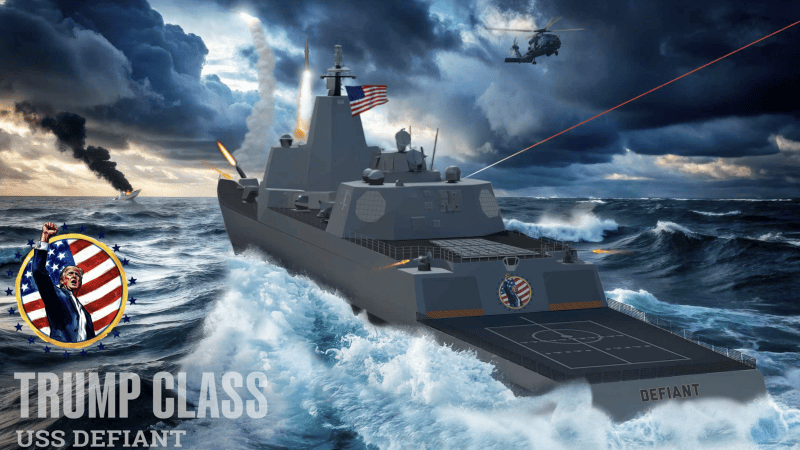
Photo. US Navy
The cost of constructing a new class of warships, named after Donald Trump by his administration, could be significantly higher than initial estimates. The latest analysis by the Congressional Budget Office (CBO) indicates that the 15-unit programme could cost approximately $275 billion, which is over 50 per cent more than previously assumed.
According to the report, the first ship of the new class – USS Defiant – is expected to cost around $23.4 billion. This is a staggering $8 billion more than previous estimates provided by the US Navy. The construction cost for the subsequent 14 units has also risen significantly – from the projected $10.2 billion to over $18 billion per vessel.
In total, this means that creating the „golden fleet” of 15 new battleships announced by Donald Trump could consume around $275 billion. However, if the administration decided to pursue the previously declared goal of building 25 units, the programme’s cost would rise to approximately $455 billion.
One of the primary reasons for the cost increase was the decision to use nuclear propulsion instead of the conventional gas turbines currently utilised on US destroyers and cruisers, among others. While this solution is intended to provide greater autonomy and potentially higher operational readiness, it also significantly increases both the construction and subsequent operating costs.
The Congressional Budget Office also estimates that constructing the first unit will take at least eight years. This is considerably longer than Donald Trump claimed during the programme’s presentation last December, when he announced that construction of two ships would begin within approximately two and a half years.

"Battleships" in name only
Although the administration refers to the new vessels as battleships, in practice, they have little in common with the classic ships of this category known from the first half of the 20th century. Historical battleships were heavily armoured vessels equipped with powerful large-calibre guns. The last American battleship was launched in 1944.
The new ships are intended to be much smaller and will base their combat power primarily on missile systems. According to announcements, they are also to be equipped with advanced systems such as electromagnetic railguns or laser weapons for air and missile defence. However, the problem is that some of these technologies are currently unavailable. The electromagnetic railgun programme was previously cancelled after billions of dollars were spent on years of research and development, while the intended laser systems remain in the development stage.
The programme has sparked controversy in Congress from the outset. Democratic Senator Jeff Merkley, who commissioned the CBO analysis, criticised the scale of the planned expenditure. In his view, allocating hundreds of billions of dollars to a new ship programme is difficult to justify in the face of rising living costs and economic challenges. Senator Patty Murray also reported that funding for the programme was removed from a draft bill providing temporary funding for the federal administration until 11 December. This means the future of the programme remains uncertain and will depend on further decisions by Congress.

A history of failed programmes
Experts point out that the US Navy has faced serious problems in recent years with delivering major shipbuilding programmes on schedule and within budget.
An example is the Constellation-class frigate programme, which was cancelled just a month before the new battleship project was announced. Problems have also plagued the Littoral Combat Ship (LCS) programme for years, with some vessels being decommissioned much earlier than originally planned.
Difficulties have also arisen during the construction of Ford-class aircraft carriers, which have been beset by technical problems and multi-year delays since the programme’s inception. Currently, only the lead ship of this class is in service, while the delivery of subsequent units has been significantly postponed.
Donald Trump has long declared an interest in rebuilding the might of the American surface fleet. His concept was reportedly inspired by „Victory at Sea”, a popular 1950s documentary series depicting the operations of the US Navy during World War II.
Military historians point out, however, that even during the Pacific War, classic battleships began to give way to aircraft carriers, which proved to be far more versatile and effective. Since then, the development of the United States Navy has focused primarily on smaller, multi-role vessels equipped with modern missile systems.
This is also not the first attempt to restore the prominence of battleships. In the 1980s, President Ronald Reagan reactivated fourIowa-class ships as part of the „600-ship Navy” concept. The last of these, USS Missouri, was decommissioned in 1992 after participating in operations during the Gulf War and currently serves as a museum ship in Pearl Harbour.


