












- ANALIZA
- WIADOMOŚCI
Black Sea security and the war in Ukraine

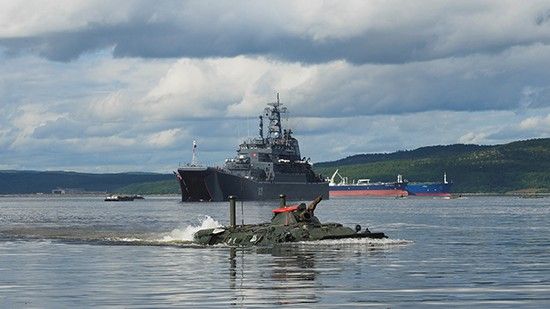
The Russian Federation’s aggression against Ukraine on 24 February 2022 had serious implications for the security of the Black Sea region. Russian actions in the region reduced the Black Sea to a “Russian lake”. To this end, contrary to the provisions of international law, Russia blocked the freedom of navigation of ships in the inland Sea of Azov and the exercise of the right of passage in Ukrainian territorial waters off the coast of Crimea.
Since the beginning of hostilities, the Kremlin has used terrorist acts involving the Black Sea Fleet, launching drifting “anchor” mines into the sea lanes, shelling merchant ships, occupying foreign territories and blocking commercial ports. Examples of this type of action included the shelling of the Turkish bulk carrier “Yasa Jupiter” near Odesa, the Panamanian ship “Namura Queen” in Odesa and the Romanian chemical tanker “Millennial Spirit”, the annexation of Crimea, and the seizure of Mariupol and Snake Island.
In the case of the latter, the seizure took place on the first day of the war, 24 February 2022. This rocky islet, which has no strategic importance, has become a symbol of Ukrainian resistance to the Russians, as exemplified by the sinking of the flagship of the Black Sea Fleet, the missile cruiser Moskva.
The Russian blockade of Black Sea ports is not only exacerbating the collapse of the Ukrainian economy but also contributing to reduced access to food in the world’s most vulnerable countries. It was via the Black Sea routes that Ukraine shipped more than half of its foreign trade. Ukraine is the world’s leading exporter of sunflower oil, the world’s fourth supplier of maize, and the fifth exporter of wheat.

In the first year of the war, more than 24 million tonnes of grain (14 million tonnes of maize, 7 million tonnes of wheat, and 3 million tonnes of sunflower seeds) were in Ukrainian warehouses, putting Ukraine at risk of losing around $6 billion in a year, with no storage space for new crops and the spoilage of existing stocks.
The blockade of Black Sea ports was an instrument of non-military influence. Through hunger-based blackmail, the Russian Federation not only sought financial gain but also sought to force Western countries to lift some of the economic sanctions imposed on it. An end to the maritime blockade was successfully negotiated with the involvement of the United Nations and Turkey on 22 July 2022. The agreement was extended three times. The grain agreement ensured the safe passage of ships carrying grain from Ukrainian ports. To date, the agreement has allowed almost 33 million tonnes of food to be exported through Ukrainian ports. The negotiated agreement covered only three Ukrainian ports: Yuzhno, Odesa, and Chornomorsk; their export capacity was estimated at over 7 million tonnes per month. Goods went to 43 countries, and support was planned to include mainly nations facing a hunger crisis: Egypt, Indonesia, and Bangladesh.
The agreement expired on 17 July 2023, and Russia did not agree to extend it. At the same time, the Kremlin authorities in public statements, such as that of Dmitry Peskov, suggest that it is possible to return to talks on the extension of the agreement, contingent on the fulfillment of the provisions of the agreement obliging the UN to facilitate free access of Russian fertilisers and other products to world markets.

For virtually the entire duration of the grain agreement, Russia has complained about obstacles to fertiliser and grain exports. Although European Union and United States sanctions do not affect crops or fertilisers, restrictions in the financial, insurance, and ship leasing sectors hit Russian exports hard. The Kremlin decided to sign the agreement in return for, among other things, allowing it to export ammonia, an important component of nitrogen fertilisers. The Russian Federation had demanded the resumption of ammonia shipments using a pipeline running through Ukraine to the port of Odesa. Currently, Russia “no longer needs Ukrainian ports for ammonia exports”, as its exports can take place via an alternative route. To this end, a special terminal is being built in Russia for the transport of ammonia, which could replace the pipeline running to Odesa. The terminal is being built on the Taman Peninsula, on the Black Sea.
Anticipating the possibility of the Kremlin withdrawing from the grain agreement, Ukraine has secured a special insurance fund of around $547 million for companies whose ships will come through the Black Sea to Ukraine after Russia withdraws from the agreement. In such a situation, the alternatives for Russian food exports will remain smaller river ports on the Danube or the land route, via European Union countries, including Poland.
It should be noted that food products are not the only goods exported by Ukraine by sea. For example, two companies located in the south of Ukraine secure 45-54% of the world’s needs for neon needed for laser cutting so-called silicon “wafers” for microprocessors. Ukraine is also a leading supplier of wire harnesses for the automotive industry (through the Leoni plant built there by the Germans). Supply restrictions in this sector have affected companies such as Volkswagen, BMW, and Mercedes, reducing vehicle production by up to 700,000 in the first and second quarters of 2022 alone. Safeguarding the waters of the Black Sea against the Black Sea Fleet requires the continued rearmament of Ukraine with long-range anti-ship systems.

The transfer of this type of equipment is already underway, with the UK providing Ukraine with a batch of Brimstone-type short-range “surface-to-surface” missiles, which are also highly suitable against small surface targets. Admittedly, beyond the reach of the Brimstones is the maritime exclusive economic zone, but securing it is possible with external assistance. An example of this is Denmark, which has offered to give Ukraine coastal mobile Harpoon anti-ship missile launchers with a field of fire of almost 300 km. In this way, the Ukrainian armed forces could have at their disposal 24 NSM missiles (12 on launchers and 12 in reserve), which would be sufficient to stop any Russian ship-based landing craft.
It should be noted that the situation of strengthening Ukraine’s defense capabilities, obviously necessary, could lead to a repeat of the “Tanker War” that occurred during the Iraq-Iran war in the 1980s. Then it blocked the flow of oil to Europe, now it could block the flow of grain to Africa.
Taking a long-term view, it must be considered that the blockade of Ukrainian ports does not necessarily end with the war in Ukraine. The Russian Federation may use the instrument of hunger blackmail in other parts of the world, aware of the lack of response from Western countries. After all, similar actions have already taken place, if only about the airspace over, for example, Syria. Since 2024, Russian military activities in the Black Sea have intensified, including missile and drone strikes on Ukrainian ports in Odesa, Pivdennyi, and Chornomorsk. These attacks have disrupted maritime trade and increased insurance costs for commercial shipping, affecting global supply chains. Russia has also expanded its “shadow fleet” to bypass sanctions, using older vessels for energy and commodity exports.
NATO allies and Turkey have responded by increasing surveillance, joint exercises, and regional maritime coordination. Cyberattacks on Ukrainian port infrastructure and logistics networks have further highlighted the hybrid nature of the ongoing conflict. These developments indicate that Black Sea security remains critical not only for Ukraine but also for global food, energy, and trade security.


