












- ANALIZA
- WIADOMOŚCI
Gold and conflict in the Sahel

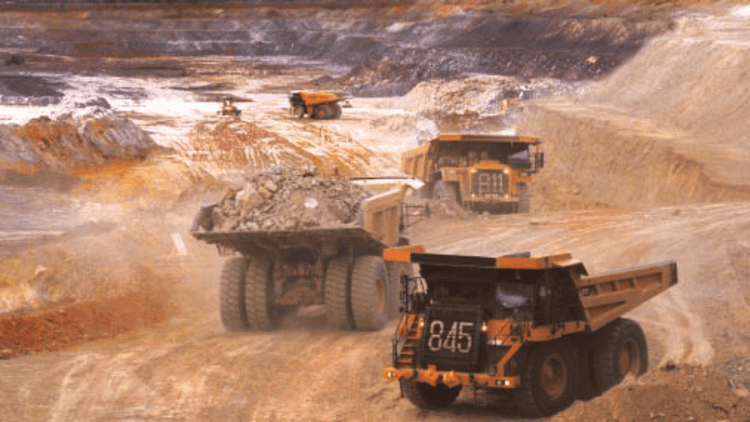
Photo. Iamgold / Wikimedia Commons
Mining areas in Burkina Faso, Mali and Niger have become an increasingly important part of the conflict in the central Sahel. Armed groups are interested not only in gold, but also in the routes, communities and local economies that make extraction possible. As a result, the threat extends far beyond individual mines.
As Héni Nsaibia, ACLED’s Senior Analyst for West Africa, shows in his latest study, nearly 90% of mining-adjacent conflict events recorded between 2015 and June 2026 took place outside mining concessions. Most occurred within approximately ten kilometres of their boundaries. This changes the way in which mining-related violence should be understood. The mine itself is only one element of a much larger conflict environment.
Violence is concentrated around transport routes, nearby settlements, artisanal mining areas and commercial centres. These locations are often easier to attack than industrial facilities. Armed groups can disrupt deliveries, monitor the movement of workers and place pressure on local communities without taking direct control of the mine.
Mining has therefore become part of a wider struggle over territory, mobility and authority. What begins as an attack on a convoy or mining infrastructure can develop into sustained competition over who controls movement, collects revenue and influences the local population.
See also 

Gold finances more than armed activity
Gold dominates both the mining sector and mining-adjacent violence in the central Sahel. According to ACLED, gold-producing areas account for around 90% of all recorded incidents connected with mining. However, armed groups are interested in much more than the resource itself.
Artisanal mining areas concentrate workers, traders, transport networks and equipment. They can provide access to fuel, explosives and motorcycle parts, while also creating opportunities for recruitment and intelligence gathering. In some areas, JNIM has used mining sites as semi-permanent bases where fighters can operate among the civilian population and reduce the risk of detection.
JNIM remains the dominant non-state actor around mining areas. It was involved in 42% of mining-adjacent conflict events recorded by ACLED, while the combined armed forces of Burkina Faso, Mali and Niger appeared in the same proportion. This shows that the main dynamic remains the confrontation between jihadist groups and pro-government forces.

Burkina Faso remains the main hotspot
Burkina Faso accounted for 75% of mining-adjacent violence recorded in the central Sahel between 2015 and June 2026. The share has fallen in recent years, but this does not indicate an improvement. It shows that similar patterns are spreading into Mali and Niger.
The Inata and Boungou gold mines demonstrate how violence moves beyond the extraction sites themselves. Around Inata, attacks on the mine and its convoys eventually became part of a wider struggle for territorial control. By June 2026, JNIM exercised de facto control over the mine and much of the surrounding area.
At Boungou, the November 2019 attack on a military-escorted convoy exposed weaknesses in the protection of industrial mining. Later violence increasingly affected roads and nearby communities. The mine could be protected, but its wider support system remained vulnerable.
The same logic can be seen along Burkina Faso’s N3 corridor. Instead of attacking the Taparko and Essakane mines directly, JNIM destroyed bridges, planted explosive devices and attacked convoys. By disrupting several key crossing points, the group affected both mining logistics and military movement.
The threat is becoming regional
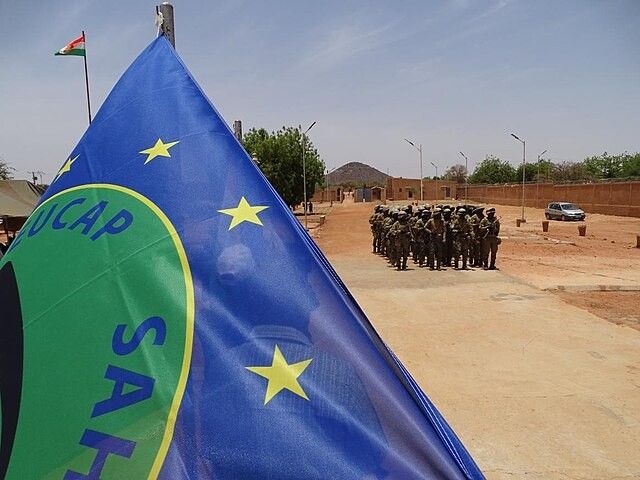
In Niger, violence increasingly affects the mining belt around Samira, Komabangou, M’Banga and Tamou. In Mali, armed groups are placing growing pressure on mining areas in the north and along the borders with Guinea and Ivory Coast. Attacks on transport, fuel supplies and mining camps increasingly resemble economic warfare intended to weaken companies and deprive the state of revenue.
This threat may also spread further south. JNIM is expanding towards Senegal, Guinea, Ivory Coast and Ghana, while armed groups in Nigeria may increasingly exploit artisanal mining economies. The patterns already visible in the central Sahel could therefore appear in coastal West Africa.
Governments are also increasing their control over mineral resources through changes to mining law, contract reviews and nationalisation. Mining companies must therefore operate under pressure from armed groups, state institutions and local communities at the same time.
The most important conclusion is that protecting the mine alone is no longer sufficient. Stronger security around the main facility may redirect attacks towards workers, convoys, roads and nearby communities. The growing use of drones creates an additional threat to fuel depots, aircraft and processing facilities.
Mining companies will therefore need more than guards and barriers. They will depend on secure transport, intelligence, resilient supply chains and cooperation with local communities. Community acceptance may become as important as military protection, because local populations influence whether mining operations can continue and whether armed groups can establish themselves in the surrounding area.
Mining areas in the Sahel are no longer simply sites of resource extraction. They have become part of the battlefield and an indicator of wider conflict dynamics. The main struggle is not only over who controls the gold, but who controls the routes, communities and local economies that make extraction possible.


