












- WIADOMOŚCI
- KOMENTARZ
Belarus reacts sharply to the prospect of preemptive strikes on its territory


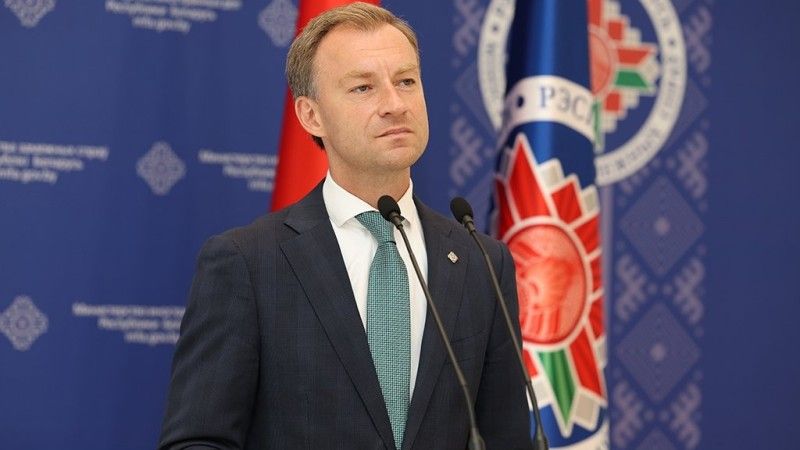
Belarus is trying to present General Alexus Grynkewich’s words as a NATO announcement of an attack on its territory. This reverses the logic of the statement. The American commander was saying that, in the event of aggression against Alliance members, NATO would not only destroy the forces moving forward, but also the system that allows them to wage war: command, logistics, air defence, communications and operational support.
NATO’s Theory of Victory does indeed include Belarus. In the event of a Russian attack against a NATO state, the plan calls for creating an extensive „autonomous zone” on the eastern flank where UAVs and ground drones would hold back a Russian offensive without major losses among NATO troops. At the same time, the Alliance would conduct long-range air strikes targeting Russian command posts and air defence systems in the Kaliningrad Oblast, near St. Petersburg and in Belarus.
For Minsk, this is the problem. Belarus is no longer just a state bordering Russia. Since 2022, it has become part of Russia’s war infrastructure. Russian forces attacked Ukraine from Belarusian territory, and Russian troops, systems and rear facilities have been deployed there. If, in a future conflict, Belarusian bases, radars, command posts or airfields were used against NATO, they would become part of Russia’s military potential.
That is why the Belarusian MFA’s reaction is not proof of the Alliance’s „aggressive plans”. It is an attempt to pre-empt a debate that is uncomfortable for Minsk. NATO is signalling that it will not treat an aggressor’s rear area as untouchable. Belarus wants to speak the language of de-escalation, but its problem is that it agreed to become Russia’s operational depth. It is now beginning to feel the political consequences of that role.
Now the question is whether Gen. Grynkewich’s announcement presenting a danger to Minsk will be a trigger for talks between Vladimir Putin and Alexander Lukashenko. The Belarusian administration may be less eager to station Russian troops and weaponry when presented with the aforementioned threat. Lukashenko was trying to balance between Russia and the West before. And we seem to be approaching the thaw phase again, judging by Minsk’s relations with Washington and the latest meeting between the Polish and Belarusian foreign ministers.

It must be emphasised that the part of the Theory of Victory that includes Belarus is the reactive phase of the plan. Strikes may only occur in the event of a Russian (or Belarusian) attack against a NATO state. Belarusian territory will remain safe if Russia (or Belarus) does not decide to attack a NATO member or, if the attack happens, Minsk denies Moscow access to its infrastructure.


