- WIADOMOŚCI
- ANALIZA
Belarus–Poland: From snowdrops to gardens

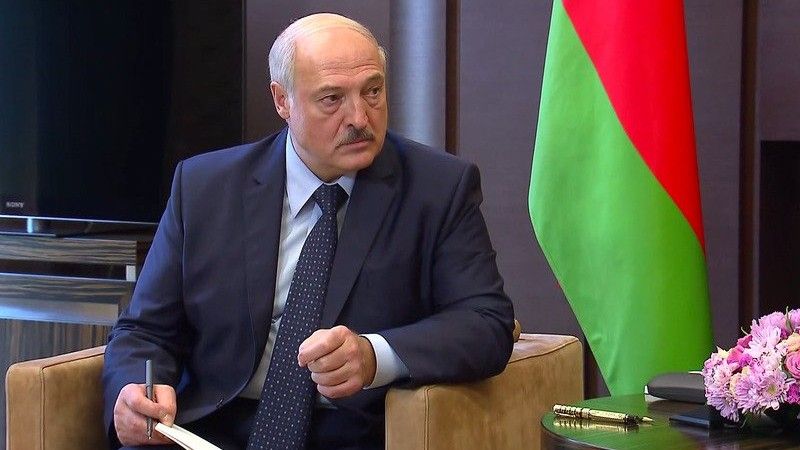
Photo. The Presidential Press and Information Office/Wikimedia Commons/CC 4.0
On April 28, at the Belovezh–Pererovo border crossing, Belarus and Poland carried out a “five-for-five” prisoner swap. Donald Tusk personally met Andrei Pochobut at the border. The exchange was a breakthrough, but it still sat inside existing EU policy. Intelligence channels never really close, even in wartime, and the effort to get Pochobut out had been underway for years. What came next is the more interesting part.
By September, Pochobut had crossed back into Belarus. He went to his hometown of Grodno, met his family and activists from the Union of Poles, and returned to Poland unharmed. He made clear at once that this was not a one-off visit. He intended to come back regularly and keep working there—including on a book about his time in detention. It was the first safe return of a released political activist to Belarus since 2020.
At the same time, Anżelika Borys, the head of the Union of Poles, received a mandate from the organisation’s council to negotiate its legalisation directly with the Belarusian authorities and informed Poland’s Foreign Ministry. Minsk called it a “gesture of goodwill”.
Even before that, Poland’s Interior Ministry reported that illegal crossing attempts from Belarus had dropped by nearly 96 percent from the 2022 peak. Warsaw credits its own measures first: the barrier and a zero-tolerance policy. Those measures work and explain why people cannot get across. However, they do not explain why almost no one is trying.
Still earlier—right after the swap and before Pochobut’s trip—Radosław Sikorski said a new phase in Minsk–Warsaw relations was possible and that the initiative now rested with “Belarusian President Alexander Lukashenko.” After years of non-recognition, the word “president” was not an accident.
On Tuesday, September 22, on the sidelines of the UN General Assembly in New York, Sikorski met Belarusian Foreign Minister Maxim Ryzhenkov. It was the first foreign-minister-level meeting between the two sides in nearly a decade. They discussed the border and regional security. Sikorski has kept his distance, calling the encounter “the first, exploratory one”. Asked whether Poland was recognising the regime, he said: “As a state, we recognise states, not governments”. Asked about normalisation, he stayed vague: “It’s like a snowdrop that can bloom if the weather is favourable”. Then he added the line that matters: “When a neighbour wants to thaw and improve relations, Poland is always the first to agree”. A new embassy building, he noted, would soon open in Minsk.
What is happening between Belarus and Poland—and, more important, why it is happening now—has to be answered without the usual political reflexes.
See also 

Why the West keeps being disappointed in Belarus
For thirty years, Western policy toward Belarus has moved in a circle regular enough to set a clock by: pressure, thaw, crisis, pressure again. The outcome has been stubborn. Belarus has refused to become what that policy was designed to produce—a democratic state with a pro-European orientation.
The regime’s survival strategy has never been about picking a side. It has been about keeping space between the two sides. When Minsk can manoeuvre between Russia and the West, it can afford some autonomy from Moscow. When that space shrinks, it cannot. Any Western policy toward Belarus—whether its authors see it this way or not—is first a policy about the width of that corridor.
The years from 2014 to 2020 showed what a wide corridor looks like. There was no new round of isolation, and Belarus used the opening. The EU lifted most sanctions in February 2016 after political prisoners were released. The human-rights dialogue resumed. Talks produced visa-facilitation and readmission agreements that took effect in the summer of 2020. Washington and Minsk agreed in 2019 to restore ambassadors after a ten-year gap, and in February 2020 Mike Pompeo became the first US Secretary of State to visit Minsk in a generation. He brought an offer of American oil and a hard message about sovereignty.
At the same time, Minsk was chasing its export formula—one-third to Russia, one-third to the West, one-third to the rest of the world—and came closer to hitting it than it has before or since.
In January 2020, in a price fight and under Moscow’s pressure for “deeper integration”, Russia cut oil supplies to Belarusian refineries. Lukashenko pushed back. He bought Norwegian oil, arranged Belarus’s first shipments from Saudi Arabia and the United States, said he intended to cut Russia’s share of energy imports to 40 percent, and warned that if supplies fell short, he would start pulling crude from the transit pipeline that feeds Europe. Why? Because, however obvious it sounds, he could. He had the leverage to tell the Kremlin no.
Why, then, does Minsk never make a final choice for the West? Not out of brotherhood with Russia. The issue has always been existential risk and trust. The regime has never believed, not for a day, that the West would underwrite Belarus’s security if a turn westward provoked Russian aggression. Lukashenko has said it himself, many times: we have no friends; no one needs us except ourselves. Ukraine after 2022 only hardened that view in him and in the people around him. A Western pivot offers a security guarantee the regime does not trust, against a threat it treats as real. The current manoeuvre offers survival.
The lens has to widen here—from Lukashenko to the system that keeps him in place. No dictatorship runs on fear alone. Fear explains why the streets stay quiet. It does not explain why elites stay loyal. This system also rests on a simpler fact: no one has given those elites another realistic plan for keeping the state alive. The opposition talks about human rights, the regime’s brutality, and language and culture as a way to pull Belarus away from Moscow. All of it matters, but all of it answers only what people want. It does not answer what can be done so the state survives between Russia and the West. Most opposition strategies are written for a future in which Belarus is already democratic. For the present, in which it is not, there is basically one proposal: lean on the West. That is exactly the scenario the elites have already rejected as suicide.
There is a grim irony in this. The rest of the world is only now, and with difficulty, moving back from a politics of values to a politics of interests—under the pressure of war, the end of the unipolar moment, and mounting economic strain. The Belarusian regime never left that logic. It has lived by it from the start.

A flaw in the hypothesis and a flaw in the analogy
The opening that lasted until 2020 also had an internal cause. There was no isolation because there were no mass protests—and therefore no new wave of repression, and no isolation to follow. That is the lesson for the opposition and for the West: the working hypothesis was wrong. Protest has been treated as the main path to change, even though in Belarus it has never, on its own, produced change. Even the latest version of the argument—that the regime would fall if enough people came into the streets—did not hold.
Protests can show that the regime has lost public support. For an authoritarian state, this is a serious problem, but it can be managed. However, spontaneous protest cannot do the thing that matters most: give the elites an alternative, or answer what comes next. If no one answers that question, Lukashenko remains the only option, and the field of possibilities starts to narrow. Set against the uncertainty of a power change, losing the West looks to the authorities like the lesser evil and a familiar threat. The system has seen this movie: pressure, isolation, and, sooner or later, a thaw.
Without the war, that threat would have stayed familiar. The war put everyone—the regime, the opposition, and the West—in a situation none of them had planned for. Before, losing the West meant leaning on Moscow until the next thaw. Now it means putting the state itself at risk. Paradoxically, that is what raises Lukashenko’s value to the elites. If survival depends on how far Moscow is prepared to go, then a politician who can minimise it becomes enormously important—even if he helped create the problem in the first place.
The other problem is a bad analogy. Belarus has been compared, over and over, to the Baltic states or to Poland, as if it were on the same road, only late. That comparison produced an expectation: if society keeps protesting, things will shift, and Belarus will be able to turn safely toward the European Union. Even in Poland and the Baltics, though, freedom was not won by protest alone.
The Baltic states left when the Soviet Union could no longer hold them.
In Poland, the Round Table locked in the change. “Solidarity” made that possible: a mass labour movement that involved millions and could shut down the Polish economy. But the Round Table was not only a concession to the movement. It was also a deal that gave the elites a place in what came next. Moscow could not stop it.
Belarus is in a different position. The opposition has no real internal hold on the economy. It has no offer for the elites. And today’s Russia will not sit this out. Therefore, it is a mistake to say Belarus is walking the Polish or Baltic path on a delay. The same tools should not be expected to work.
Belarus was a founding republic of the USSR and remains tied to Russia—economically, militarily, psychologically—far more tightly than Poland or the Baltics ever were. The better comparison is with states whose Russian ties run just as deep: Kazakhstan and Armenia. Those countries first build autonomy and leave the civilisational choice for later. For that choice to mean anything, sovereignty has to exist. To protect it, the country’s survival has to matter not only to the country itself but to other major players.

Two Western approaches to Belarus
Two opposing Western approaches to Belarus are now in play. Both treat the country as a security problem. They draw opposite conclusions from the same map.
The first is to keep pressing on the regime until it breaks. In this view, Belarus has already lost its autonomy and become a Kremlin asset. If there is no gap between Minsk and Moscow, any easing of pressure on Lukashenko reads automatically as a concession to Putin. The pressure in question—often pressure that cannot be applied to Russia itself—weakens Minsk’s sovereignty without touching the Kremlin’s war plans. Isolation eats away the remaining room to manoeuvre and the remaining independence from Moscow. Think it through and Belarus’s isolation from Europe is actually a Russian foreign-policy objective. For long stretches, the West has delivered that objective for Moscow, free of charge.
The second approach looks at the same map and sees a different risk. If Belarus falls completely and permanently into Russia’s hands, the West loses more than a buffer. It loses a state that, with some room to move, can do less for Russia’s aggression than Moscow wants and can slowly take back what it was forced to give up. This approach has no illusions about Lukashenko and does not expect a Western turn under his rule. It bets only that Belarus can stay out of Moscow’s aggression and keep a balance: close ties with Russia, working-level contacts with the West. Democratisation is not a ticket into the room.
What matters most in this second approach is having a strategy of one’s own toward Belarus, rather than just reacting. The clearest example is the United States. Over the past few months, Poland has been moving in the same direction.
A convergence of calculations
Inside the Belarusian opposition, the same argument has run for years. The pragmatic wing and the radical wing answer the same question differently: how do you get positive change in Belarus under the constraints that actually exist? The radical wing believes the regime can be pushed to collapse—or at least forced into major political concessions. The pragmatic wing sees the threat of losing sovereignty as more serious than the fact that an undemocratic regime, which has already harmed them, will last a while longer. Their case is that, right now, humanitarian and social problems inside Belarus—political prisoners, less repression, some revival of civil society—are more achievable with Western help than the political ones: new elections, democratic legislation, regime change.
The pragmatic wing’s reaction to the Sikorski–Ryzhenkov meeting was unambiguous. Viktor Babariko, a former political prisoner and the most popular presidential candidate in the 2020 campaign, wrote: “I thank Radosław Sikorski for meeting with the Belarusian foreign minister on the sidelines of the UN General Assembly, despite today’s difficult circumstances. Any opportunity for dialogue is important if it can help improve relations for the benefit of the peoples of Poland and Belarus”. He called it “the actions of a true partner”.
Maria Kolesnikova, released in December 2025 after a brutal stretch in prison, said: “Thank you for this important step toward resuming direct dialogue with Belarus. Dialogue is especially important when challenges persist—to mitigate risks, address humanitarian issues, prevent escalation, and build better relations between neighbours”. Valery Kovalevsky, speaking for the Coalition for the Release of Political Prisoners, called the meeting “a major breakthrough” and “a welcome effort by both sides, reflecting significant changes in the context”, and added: “Belarusians appreciate and support this strong, bold step forward”.
Pochobut put it this way: “This is an important signal that Warsaw is not ruling out the possibility of normal relations with Belarus in the future. It is also proof that Poland is not ruling out the future of an independent Belarus”. His last point is careful and fair: “Given Minsk’s growing dependence on the Kremlin, this second issue is far from obvious today”.
Yes, it is not obvious. And that is an argument for acting now, not later.
That’s not just solidarity talk. It is also a convergence of interests. People who have felt the regime’s pressure firsthand are now making the same case Polish diplomacy is making in public: contact with Minsk does not mean ignoring Belarus’s problems. It is a way to work with them.
From recipient to supplier
Belarus’s other EU neighbours have kept contacts thin and stuck with pressure. Poland, by contrast, seems to have learned to treat Minsk not as a single object—the regime—but as a set of signals with different meanings, and to answer each one in proportion: without writing Belarus off, and without giving ground where it is still too soon. Poland’s place inside NATO has also been shifting in recent months, from a front-line state asking for help to a country supplying security to the region.
The Belarus file fits that role. Security is not only weapons and military edge. It is also a clear-eyed read of the other side and the ability to judge the moment. The skill that counts more and more is walking into a room with people whose values are not yours and walking out with a result. That is a security strategy too. Other European capitals could use Poland’s experience with it.
About the author: Anastasiya Kostyugova is a Belarusian strategic communications expert working on political conflict, polarisation, and de-escalation. She has held roles across Belarusian democratic institutions and currently engages with diplomats and policymakers in the United States and Europe on pragmatic approaches to securing the release of political prisoners, rebuilding channels of engagement between Belarus, Western actors, and Belarusian civil society. She is a JST Fellow, a 2021 recipient of the Jeane J. Kirkpatrick Award, and the daughter of a former political prisoner