












- WIADOMOŚCI
- ANALIZA
Thawing in Poland-Belarus relations?
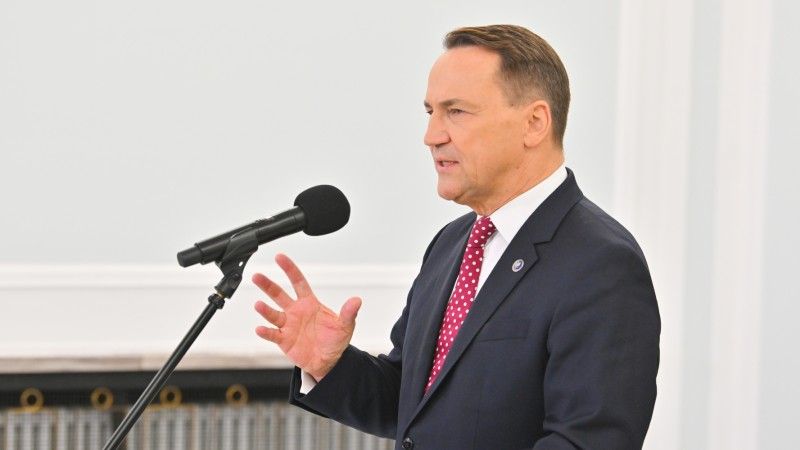
On the sidelines of the 81st session of the UN General Assembly, a meeting took place between Polish Foreign Minister Radosław Sikorski and his Belarusian counterpart Maksim Ryzhenkov. The diplomats discussed, among other matters, the situation at the border and regional security.
The mere fact that such a meeting occurred may come as a surprise to some. Poland and Belarus are not formally on good terms due to the policy pursued by Minsk and its close cooperation with Moscow. Asked whether such a meeting took place, the Polish minister confirmed that it did. “The UN is neutral territory,” he noted, adding that this allows for meetings with representatives of various states, even those with which relations may not necessarily be settled in other contexts.
The event is a breakthrough of sorts; there has likely been no meeting at such a level since 2016. Sikorski emphasised that “we currently have a more normalised situation at the border than in the past; of course, this is thanks to the fact that successive governments invested in an effective fence on the border, but we also have the release of political prisoners, including Andrzej Poczobut. So, neighbours are allowed more; they have greater reasons to try to stabilise their relations.”
It should be added here that the release of political prisoners is primarily due to the diplomatic efforts of Donald Trump’s administration and his envoy John Coale, who offer the lifting of sanctions on Belarusian companies in exchange for releases. The amnesties are, therefore, not an expression of Minsk’s goodwill, but rather merely an element of a transaction.

The ministers discussed the border situation and national security. Sikorski also reportedly requested that Belarus not allow Russian drones and missiles to fly through its territory. “This is the first, introductory meeting, but meetings of other ministries are also taking place at other levels. We will soon be opening a new embassy building in Minsk. When a neighbour wants to unfreeze and improve relations, Poland is always the first to agree,” the minister stated. He was asked whether the Polish government recognises the Lukashenko regime. Sikorski replied that “as a state, we recognise other states, not governments.”
.@sikorskiradek, snowdrop diplomacy is a nice restart. But we’re in it for the harvest. Let’s plant an orchard 🍎 – it needs nurturing every year, not once a decade. Minsk is ready to host 🇧🇾🇵🇱 pic.twitter.com/WSN5n4uOtE
— Belarus MFA 🇧🇾 (@BelarusMFA) September 23, 2026
This statement should be understood as a certain readiness to engage in talks with the current authorities in Minsk, despite their authoritarian nature. The minister is trying to take a realistic approach – at present, nothing suggests a change of power in Belarus; however, the state remains Poland’s neighbour, and its isolation does not positively affect bilateral relations or the internal situation within the country. Poland and Europe cannot remain passive, as we’ve already explained in the report that was recently published. At this point, consultations should take place, for instance, with the Belarusian diaspora and Belarusian opposition centres in Poland and Europe, to discuss what such a process could look like, taking into account issues such as further releases of political prisoners and the reduction of repressions. Close contact should also be maintained with the US administration, which is currently leading the way in improving its relations with Belarus and is indeed contributing to amnesties. However, it must not be forgotten that the regime in Minsk remains in close contact with Moscow and has not yet expressed a desire to limit repressions or the arrest of further political prisoners.

Are we, therefore, witnessing the beginning of the normalisation of relations with Belarus? Minister Sikorski was asked a similar question. He replied that “it is like a snowdrop, which may bloom if the aura is favourable.” And in my opinion, it should be treated as such.


