












- ANALIZA
- KOMENTARZ
- WIADOMOŚCI
- OPINIA
Ukrainian crews praise Abrams tanks

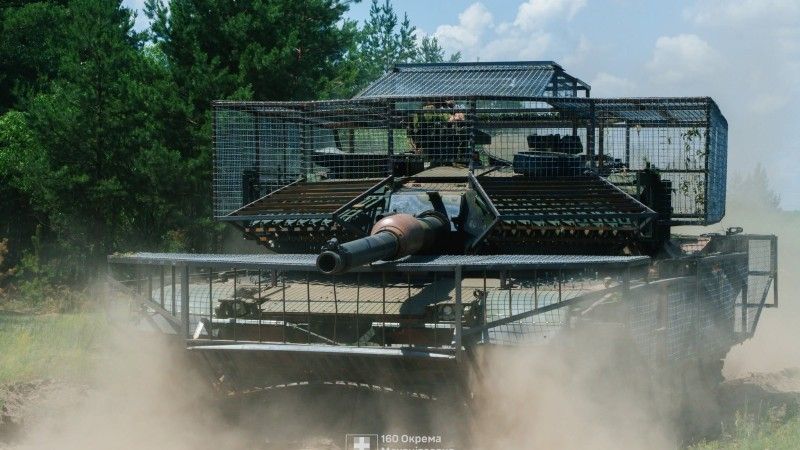
The Ukrainian Ground Forces have received a total of 82 M1A1 Abrams tanks as part of military aid, including 33 from the USA in the M1A1SA-UKR variant and 49 from Australia in the M1A1AIM version. As it turns out, contrary to various media reports, these tanks enjoy a very high reputation among Ukrainian tank crews.
On the pages of The War Zone portal, a report was published featuring interviews with soldiers from the 425th Separate Assault Regiment „Skala”, which is likely one of three Ukrainian units operating M1A1 Abrams tanks. The first and most important conclusion drawn by Ukrainian soldiers fighting on the front line is that armoured vehicles, including tanks, save soldiers’ lives and are indispensable on the battlefield, even when equipment losses are incurred due to the presence of anti-tank munitions in the form of FPV drones.
Infantry operating independently is not only far more vulnerable to attacks from drones carrying HEAT (High-Explosive Anti-Tank) and fragmentation warheads, but moving long distances with full equipment, ammunition, water, and food supplies also becomes problematic. One of the greatest advantages of the M1A1 tanks mentioned by soldiers serving in the 425th Separate Assault Regiment is the very high level of resilience of their primary composite armour. One soldier, using the call sign Kent, recalls that his vehicle was hit by 20 drones near Pokrovsk; despite this, the crew survived and continues to fight.

Kent mentions that the advantage lies not only in the main armour but also in the supporting auxiliary protection in the form of Explosive Reactive Armour (ERA) modules, as well as mesh and rod screens, despite their debatable utility given the operating mechanisms of HEAT warheads mounted on FPV drones. Another praised design feature that significantly increases the survivability of both the tank and the crew is the fully isolated ammunition stowage equipped with blow-off panels. M1A1 and M1A2 tanks have three such magazines: two in the rear turret bustle, each holding 18 rounds, and a third small magazine in the hull behind the turret on the starboard side, which holds 6 rounds, providing a total of 42 rounds for the main gun that are stored in a manner safe for the crew.
This solution is very simple from a design perspective while simultaneously providing the highest possible degree of safety and survivability for the crew in the event of a successful hit resulting in armour penetration. Furthermore, the Ukrainians praise the ergonomics of the crew stations. Additionally, the firepower is lauded, both in terms of the fire control system and electro-optics, including thermal imaging cameras, as well as the tank’s armament itself, consisting of an M256 120 mm smoothbore gun, two M240 7.62 mm machine guns, and one M2 12.7 mm heavy machine gun. The vehicle also features two M250 66 mm smoke grenade launchers.

Photo. 160th Independent Mechanised Brigade
Despite a mass exceeding 60 tonnes, the tanks are also praised for their tactical mobility. One of the tankers, Kubik, stated that while driving the M1A1, he was able to reach speeds of up to 80 km/h cross-country, though it must be noted that driving at such speeds is unsafe and significantly wears down the tank’s components. Interestingly, according to Ukrainian tankers, M1A1 tanks handle difficult terrain well and rarely face issues with getting bogged down, even during the thaw period when melting snow creates large areas of muddy chernozem (black earth).
Observations regarding fuel consumption are very interesting. The crew claims that on paved roads, consumption reaches 400 litres per 100 km, while in difficult terrain, it reaches 700 litres per 100 km or more. M1A1 tanks have six fuel tanks, holding a total of approximately 1,900 litres. Ukrainian tankers confirm that the AGT1500 gas turbine is a multi-fuel engine, which is very useful; however, the primary type of fuel they use is diesel, which, according to their experience, provides the best performance parameters.
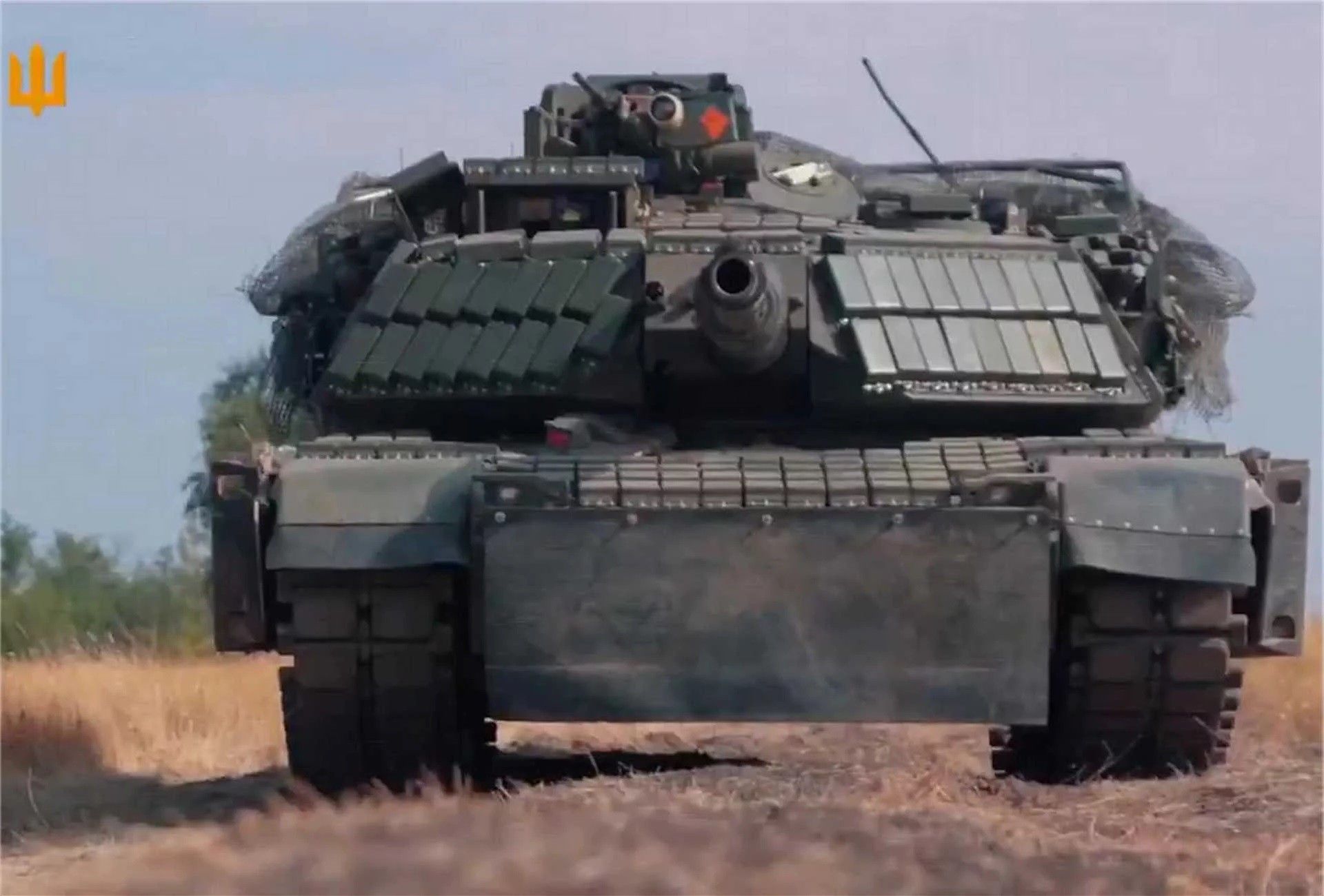
Photo. Ukrainian MoD
Naturally, the Ukrainians also recognise the challenges associated with operating the tanks, which require technical maintenance, as well as spare parts and ammunition. Here, the fundamental question must be asked again: what do the Ukrainian government’s purchases of these components look like? We must not forget that because Ukraine received Western equipment largely in the form of donations as part of military aid provided by NATO and allied nations, rather than through a standard purchase, Ukraine never established an effective logistical system to maintain this equipment, nor an effective training system for the soldiers operating it.
The tankers also expect that although armoured units have currently been withdrawn to the rear to preserve precious crews and equipment, the Ukrainian Ground Forces will return to a broader use of armoured and mechanised units once the problem of loitering munitions in the form of FPV drones is resolved. This is already happening in the areas of responsibility of the „Azov” Corps and the 3rd Army Corps. The Russians have reached similar conclusions and are attempting to gradually neutralise the threat posed by FPV drones through implemented technical solutions, such as active protection systems for vehicles.


