












- ANALIZA
- WIADOMOŚCI
The Sahel and European security

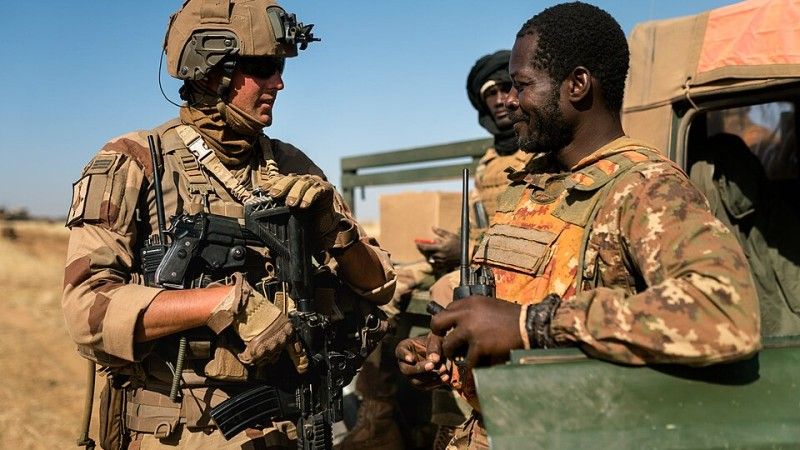
Photo. Éric B./French Army / Wikimedia Commons
Instability in the Sahel has direct consequences for Europe, affecting security, migration and international stability.
The deterioration of the security situation in the Sahel is likely to continue in the coming years, with jihadist violence, political instability, climate change, and migration increasingly affecting both Africa and Europe. The current reality in the region reflects a deepening collapse of social, economic, and political structures. In many Sahel countries, state authorities and local armed forces no longer control large parts of their own territory, making sustainable development and investment almost impossible.
At the same time, financial and political support from Western states remains insufficient in relation to the scale of the crisis. The Sahel requires not only humanitarian assistance, but also a new long-term economic and security strategy. This could include stronger military support such as air capabilities, permanent military facilities, intelligence cooperation, and targeted counterterrorism operations. Without external assistance, weak and unstable West African states may become increasingly vulnerable to terrorist organisations linked to ISIS and Al-Qaeda.
An additional challenge is the growing influence of Russia, China, and actors from the Arabian Peninsula across the Sahel. Unlike Western governments, these partners generally avoid attaching conditions related to democracy, transparency, or human rights to their cooperation. For military juntas seeking to consolidate power, such partnerships provide immediate political and financial benefits. Russian involvement, including the activities of Wagner-linked structures, has further strengthened anti-Western narratives and expanded Moscow’s influence in the region.
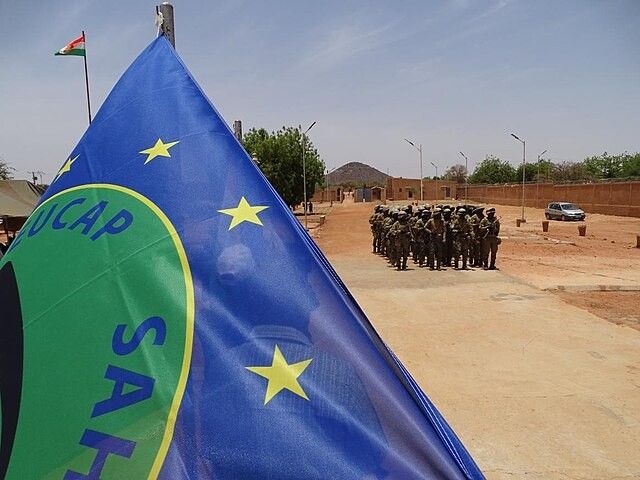
For NATO and the European Union, the Sahel is becoming an increasingly important strategic challenge connected directly to the Alliance’s southern flank. One of the key priorities should be cooperation with states neighbouring the Sahel in order to train local armed forces, strengthen border security, and limit the spread of terrorist organisations. Even if NATO is not directly engaged in combat operations in the region, instability in the Sahel will inevitably affect European security through terrorism, organised crime, migration flows, and geopolitical competition.
From a military perspective, maintaining an international presence in Africa remains important, particularly in areas where jihadist organisations operate and where Russia continues to expand its influence. This applies especially to Mali, Burkina Faso, and Niger. However, military measures alone will not solve the crisis. They must be accompanied by political engagement, support for local institutions, cooperation with the African Union, and efforts to build trust between armed forces and civilian populations.
The current situation is especially concerning because, after more than a decade of conflict, the region is entering a new and potentially more dangerous phase of instability. Although there are similarities to the crisis that emerged in 2012 before Operation Barkhane, the contemporary security environment is now far more complex. The influence of international organisations is declining, while local instability, extremist activity, and foreign interference continue to grow.

Underestimating developments in the Sahel may eventually force NATO and the EU to respond primarily through military crisis-management operations rather than preventive political engagement. The situation therefore requires a comprehensive strategy that combines political presence, military cooperation, counterterrorism efforts, and long-term stabilisation initiatives. At the same time, Russia and other actors hostile to the Alliance are pursuing increasingly active policies in the region, creating an additional strategic challenge for NATO as it simultaneously manages threats on both its eastern and southern flanks.


