












- WYWIADY
- WIADOMOŚCI
Key reform in the Polish Armed Forces. Lt. Gen. Król: The new commands and wartime system explained [PART 1 OF THE INTERVIEW]

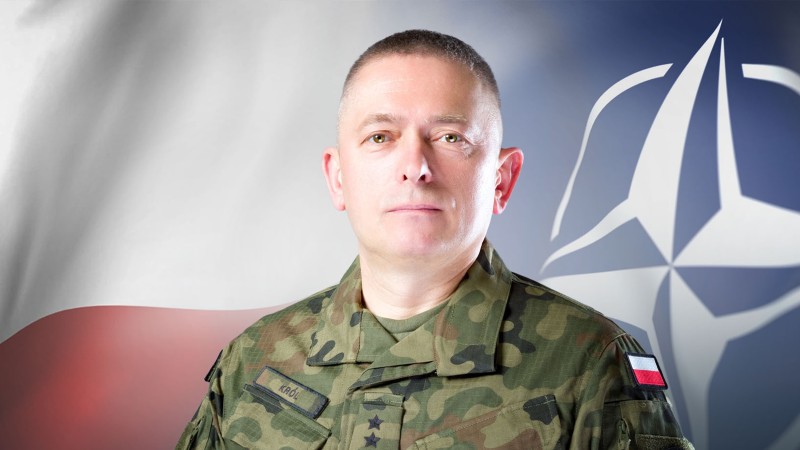
Photo. Sztab Generalny WP
„The reform we are designing and planning primarily concerns how we intend to command the fight in wartime. (…) The transition from deterrence to defence must not entail changes to our command structures,” Lieutenant General Krzysztof Król, Plenipotentiary of the Chief of the General Staff of the Polish Armed Forces for the establishment of the Wartime Command System and the Armed Forces Command and Control System, stressed in an interview with Defence24.pl Editor-in-Chief Jędrzej Graf. General Król also explains how the individual Services will be commanded and when the command reform may proceed to parliamentary consideration.
Jędrzej Graf, Editor-in-Chief at Defence24.pl: General, you currently serve as the Plenipotentiary of the Chief of the General Staff of the Polish Armed Forces for the establishment of the Wartime Command System and the Armed Forces Command and Control System. What are your responsibilities in this position?
Lieutenant General Krzysztof Król, Plenipotentiary of the Chief of the General Staff of the Polish Armed Forces for the establishment of the Wartime Command System and the Armed Forces Command and Control System: Pursuant to a decision of the Minister of National Defence, I was appointed chairman of an ad hoc task force responsible for developing the assumptions for a new model of the Armed Forces Wartime Command System and for reforming the Command and Control System of the Polish Armed Forces.
The reform we are designing and planning primarily concerns how we intend to command the fight in wartime. By applying a reverse-engineering approach, we must determine how our peacetime structures should be constructed so that they are capable of performing wartime tasks without having to be transformed during a period of threat. As a frontline state, Poland is the so-called first responder (the first to respond militarily) while simultaneously serving as a logistics hub and as both a provider and recipient of NATO capabilities assigned to a defensive operation. We must possess a command system and command structures capable of ensuring the execution of both national and Allied plans.
Does any NATO country currently have a command system similar to Poland’s?
In Europe, we are the only country with such a command system, although that is not entirely the case.
The underlying philosophy of the present system was copied from the model used in the United States. There, the military is divided into two segments: the institutional force and the operational force.
The institutional force consists of the Pentagon and other structures responsible for transformation, training and force generation. The operational force comprises operational commanders, known as combatant commanders, who exercise command in the various theatres around the world. The institutional force prepares resources and personnel and subsequently assigns them to operations.
In our case, we sought to do the same, on the assumption that we would primarily be preparing for expeditionary operations. As a result, we now have a divided force. We have since recognised, however, that a frontline state should not divide its military into institutional and operational components. It should combine those two elements into a single whole in order to make maximum use of its personnel, training infrastructure and the geographical disposition of its Armed Forces.
Looking at NATO’s European members, no other country has such a system. Moreover, given the differences in scale and size, comparing the American system with the Polish one appears entirely inappropriate.
It is worth noting that the Americans built their system after the Vietnam War, many years ago. In 2023, they marked its fiftieth anniversary. Nevertheless, they continue to recognise that the system they created must remain subject to transformation, modification and adaptation.
We are similarly proceeding on the assumption that we are constructing a backbone, but that it must remain flexible and capable of change depending on developments in both the security environment and the operational environment. Our current model rests on two pillars: the Force Provider and the Force User, that is, the General Command and the Operational Command.

Why is this division — in view of the size of the Polish Armed Forces, our resources and our position on NATO’s flank — unsuited to the threats we currently face? Is the Russian Federation forcing us to make this change?
I would not say that the Russian Federation is forcing us to do so. We ourselves have concluded that we must prepare the command structures of the Armed Forces as effectively as possible for two types of challenge.
As set out in NATO’s 2022 Strategic Concept, adopted in Madrid, we must prepare to perform deterrence tasks by building credible command capabilities and, should deterrence fail to produce the desired effect, be ready to defend ourselves in an armed conflict.
The difficulty is that the transition from deterrence to defence must not entail changes to our command structures. At present, we assume that, for the purposes of conducting a war, we will transform the Armed Forces Command and Control System into a Wartime Command System.
What is NATO’s approach here?
The document from 2022 that I have already mentioned states unequivocally that NATO (and therefore its member states) must build a system capable of performing tasks in peacetime, crisis and war without significant internal reorganisation. Command posts, from the strategic to the tactical level, should operate according to the same working model throughout.
If we consider Russia’s current activities, its conduct of hybrid warfare against us, we do not truly know when it may change the character of its actions or how it might attempt to take us by surprise. The future command structures will be far better prepared for changes in the security environment and in the threat, as well as for the need to respond immediately, rather than responding only after the time required to reorganise command structures and shift from a peacetime mode of operation to a wartime operational tempo.
From a military perspective, and I also exercised this within NATO structures, command posts, irrespective of their level, operate according to a defined battle rhythm. In peacetime, that rhythm should be extended; in wartime, it should be shortened to the greatest possible extent because decision-making processes must proceed much more rapidly. There is nothing to prevent us from treating our present deterrence activities as an operation.
If we work according to a battle rhythm in peacetime and subsequently shorten that rhythm during a crisis, soldiers will be able to perform even the most demanding wartime tasks without difficulty. Cooperation between the individual elements of a headquarters command post, and operational work at a particular command post, will become embedded in our organisational culture. Our culture will no longer be centred on peacetime routines, but on processes resembling those employed in combat.
I introduced the „Warfighting Headquarters” project in 2023 within the headquarters of Allied Joint Force Command Brunssum, which I commanded. That command is responsible for NATO’s central operational direction, at the heart of which lies Poland. The approach was accepted by the then Supreme Allied Commander Europe, General Chris Cavoli, and was subsequently mandated for implementation in all commands subordinate to SACEUR.

For many years, officers and commanders of the Polish Armed Forces have argued that the system introduced in 2013 needs to be changed. Had the need for reform already been clearly identified in planning documents?
The „Armed Forces Development Programme for 2021–2035, with 2020” as the base year, prepared in 2019, already identified the need to establish commands for the individual Services, that is, domain commands.
Following the recognition of cyberspace as an additional operational domain in 2016 and space in 2019, we knew that we would have to change both the system and the way in which we prepared for and conducted combat operations. It should be recalled that, in the United States, the concept of multi-domain operations developed into Multi-Domain Operations doctrine in 2018. Even then, the General Staff of the Polish Armed Forces identified the need to build domain commands for the individual Services. We are now designing command structures for the Land Forces, Air Force and Navy, but these will not be the same kinds of commands that existed in 2013. We are discussing entirely different structures, with different tasks and areas of responsibility, operating in accordance with modern management principles.
Those earlier commands were heavily focused on peacetime activities and the development of operational capabilities, including the procurement of equipment and the expenditure of funds. It should be remembered that, in the past, Service commanders also decided how budgetary funds were to be spent on developing capabilities within their respective domains.
Today, all financial matters are centralised at the level of the Minister of National Defence. As a general principle, this is a sound arrangement, even though some aspects still require refinement. The commands we are establishing, however, will primarily focus on developing the operational capabilities of their subordinate structures, maintaining their combat readiness and ensuring an effective mobilisation system.
The current system, based on the General Command of the Branches of the Armed Forces, inspectorates and equipment authorities, has primarily concentrated on the readiness of personnel and equipment for employment. Am I correct in understanding that we are principally discussing the restoration of separate Land Forces, Air Force and Navy commands? Will any other commands also be created?
The most important issue is the establishment of three Service commands. I would, however, like to return to the current structure of the General Command of the Branches of the Armed Forces and its inspectorates. Let me illustrate the problem using the Land Forces Inspectorate as an example. The fundamental issue concerned the development of domain capabilities.
The Inspector of the Land Forces was responsible for mechanised, motorised and armoured forces, infantry and airmobile forces. However, the Inspector did not have support and sustainment units within his structure, such as artillery, air and missile defence forces, engineer troops, chemical defence forces or, as is now particularly important, uncrewed weapon systems. These belonged to the structures of other inspectors. Training was also handled elsewhere.

Photo. Private First Class Tomasz Łomakin/12th Mechanised Brigade
How can a commander who does not routinely have the full range of instruments required to integrate the elements of a coherent combat grouping develop a combined-arms capability? Such a commander cannot fully integrate into an operation those elements that are not under his authority. This is why we have had (and continue to have) a major problem with the proper and rapid development of doctrine, combat regulations and principles governing the operational employment of newly introduced equipment. If a structure lacks some of the elements and expertise required to conduct operations in a particular domain, its commander cannot independently develop those capabilities.
In addition to the conventional domain commands, we will recommend the establishment of a Space Operations and Environmental Support Command. The rapidly developing military capabilities in the space domain, together with civilian capabilities, require an appropriate approach to their management, protection and defence, as well as the delivery of operational effects for the Joint Force Commander.
The foundation for building a multi-domain operational capability is first to build the capacity to operate effectively within a single domain, incorporating all the necessary elements. It must also be emphasised that multi-domain operations will not be possible without the space domain, which provides intelligence, weather and geospatial data, as well as communications.
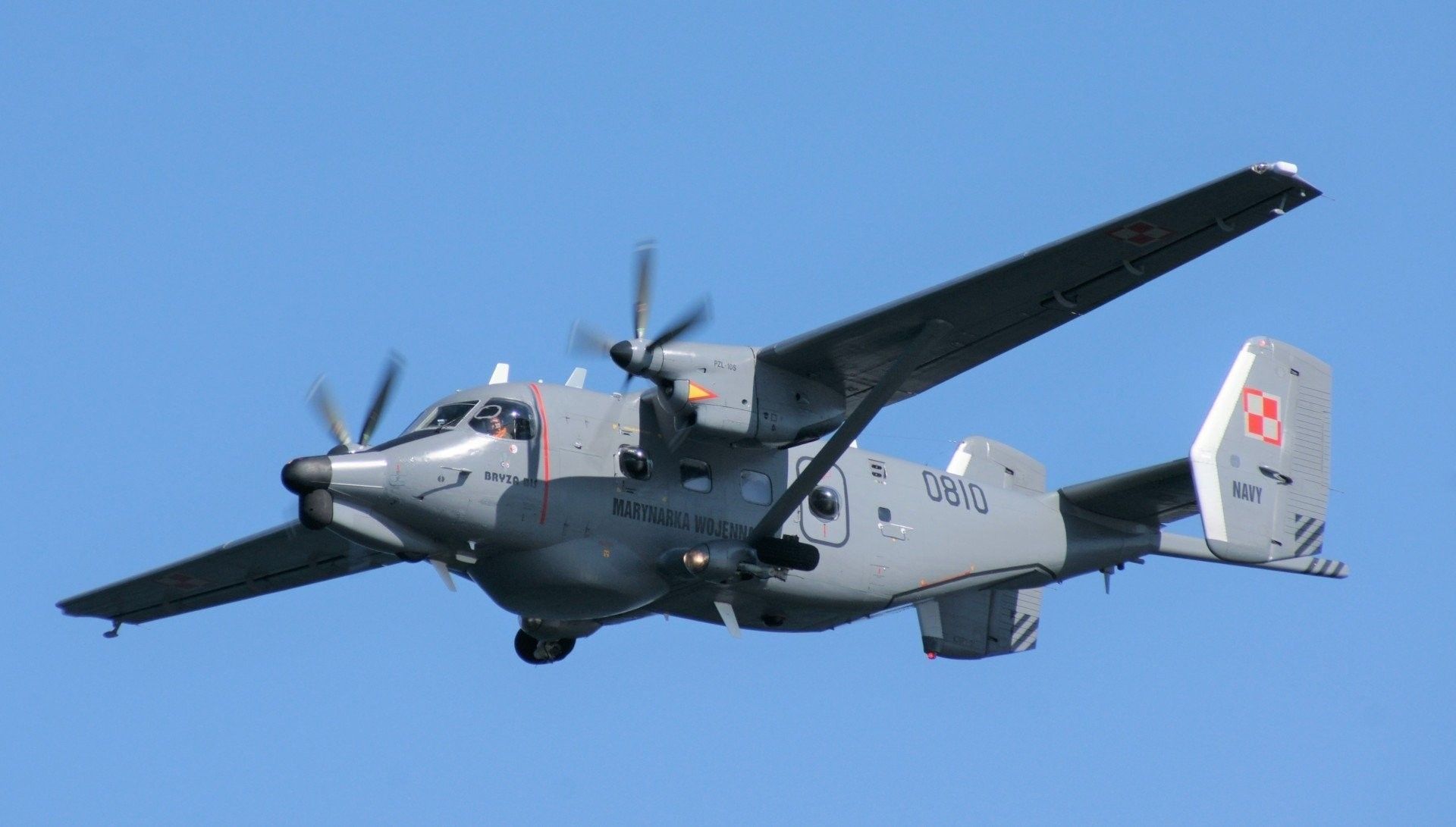
A Joint Command will operate above the Service commands. Can it be viewed as combining the responsibilities of the present Operational Command and General Command, while being built primarily around the Operational Command?
The Operational Command already plays the most important role, and it will continue to perform a similar function in the future, but with additional responsibilities for developing the capability to conduct joint and multi-domain operations. During deterrence, it will conduct activities intended to alter the adversary’s operational and strategic calculations concerning the plans that the adversary seeks to execute. It will also be responsible for planning and conducting defensive operations.
In NATO terminology, the Joint Force Commander is the commander who „is fighting the fight”, the commander conducting the joint operation. Above that commander is the strategic level. We also require such a level to translate political objectives into military objectives, continuously monitor the security situation, identify the adversary’s centres of gravity and vulnerabilities, and prepare military recommendations to support political decisions concerning the state’s preparation for and conduct of war. Until now, contrary to Allied doctrine, we have had three levels of command and control: the political-military level, the strategic-operational level and the tactical level.
NATO, by contrast, operates at the political-strategic, military-strategic, operational and tactical levels. All NATO doctrinal documents are structured according to precisely this model.

Why is this necessary? How was the role of these commands in a defensive operation previously understood?
Poland must prepare for a range of scenarios. We must prepare the Republic of Poland and its Armed Forces for every possible contingency and scenario. The command structures we are designing will be capable of performing the same tasks regardless of the scenario: whether part of our forces and certain command authorities are transferred to NATO, whether we conduct national activities and operations, or whether we assign forces to a coalition operation conducted by Poland along our operational direction.
We will never transfer all of our forces and capabilities to the Alliance. We will never transfer our military units to NATO together with the full scope of authority to command them. The principle is that the Alliance receives only a portion of the command authority over national units. The commands we are designing will be compatible with their Allied counterparts in terms of command structures and procedures. At the same time, they will retain the capacity to operate independently, thereby preserving the ability of the state’s political leadership to decide on the employment of the Armed Forces.
How does this work in an Allied operation?
To ensure coherence in the achievement of the objectives of a particular operation, the Alliance is granted authority to command and synchronise the employment of forces assigned by member states. Nations, however, always retain what is known as „Full Command”. Among other responsibilities, individual nations remain accountable for the medical support and medical evacuation of their soldiers, their rotation and the logistical sustainment of their forces.
Furthermore, when the Alliance is conducting an operation, our national command system must maintain awareness of the current strategic and operational situation. The new command structures will be responsible for providing professional, data- and analysis-based assessments of the operation and for submitting military reports that will form the basis for decisions taken at the political level. We must be capable of commanding the Armed Forces of the Republic of Poland, whether they are operating in Poland or elsewhere, while simultaneously supporting decision-making processes at the state’s political-strategic level.
The Chief of the General Staff places considerable emphasis on the Transformation Command. What role will it play in the new system as a whole? How would you respond to those who argue that structural changes should not be undertaken while a war is already being fought in our region?
You referred to the present Force User–Force Provider model. We are rebuilding it into a system that we call „Readiness and Transformation”. There will no longer be two militaries, an institutional force and an operational force. There will be a single force within which two processes will take place. These processes will be conducted coherently and simultaneously throughout the entire Armed Forces, rather than exclusively within one command.
The Transformation Command will be subordinate to the Chief of the General Staff. Every command, whether headed by the Joint Force Commander, such as the Land Forces Command, Air Force Command and Navy Command, or directly subordinate to the Chief of the General Staff of the Polish Armed Forces, will implement objectives defined by the General Staff concerning mobilisation and combat readiness, as well as the transformation process. This will include implementing the Armed Forces development programme and development plans, together with „transformation in contact”. Each command will comprise an operational component and a transformation component. Each will have a division or directorate responsible for planning and implementing development programmes, but also for applying lessons from wars and exercises and from the concept now being developed very intensively in the United States and NATO—”transformation in contact”.

Photo. Reporting Team of the 1st Legions Infantry Division/Facebook
What does this process involve?
The purpose is not for the senior leadership alone to dictate how the Armed Forces are to change under the Armed Forces Development Programme. It is also about drawing on the knowledge and professionalism of soldiers: what additional capabilities they require, how equipment should be modernised and technology adapted, and what must be changed in the principles governing operational employment so that they meet the requirements of tomorrow’s battlefield and outperform the adversary’s capabilities. The adversary is changing rapidly by implementing lessons directly from the front in Ukraine. Transformation in contact means adapting the equipment with which we fight and making short-term procurements, primarily of dual-use equipment. It also means changing soldiers’ mindsets so that they continuously improve tactically and procedurally through transformation.
The objective is to ensure that soldiers are capable, today, of fighting the adversary and outperforming it in areas such as reconnaissance, fires, survivability and manoeuvre. We are therefore discussing both major, long-term projects and bottom-up measures connected with developing capabilities for the employment of uncrewed systems, counter-drone operations, countering adversary reconnaissance, electromagnetic warfare and the development of new capabilities, including space capabilities.
We have two vectors that will run through every military unit: one is current readiness and the other is transformation. The Transformation Command, which has already been established, will not be an entirely new organisation. It was created by reorganising the Armed Forces Doctrine and Training Centre, which had focused primarily on developing new doctrine and training principles. Its purpose is to change completely — from an administrative institution into an operational organisation supporting Service commanders in the individual preparation of personnel. It will also support commanders in jointly developing and implementing new doctrine, combat regulations and principles for the operational employment of equipment.
The intention is that a brigade, regiment or battalion commander should not have to concentrate his efforts on preparing the individual soldier. That will be the responsibility of the Transformation and Training Command. It will control training centres and training battalions in which personnel undertaking voluntary basic military service will be prepared and, in the future, depending on the model adopted, reservists as well. The structures subordinate to the Commander of Transformation and Training will be responsible for the professional development of new soldiers and reservists. This will encompass general military and specialist training, the cultivation of high morale and discipline, psychological resilience, and confidence that they have received the best possible preparation for operations on the modern multi-domain battlefield.
What changes will the establishment of the Transformation Command enable?
The Armed Forces Transformation and Training Command is intended to create the conditions necessary to meet the basic and specialist training requirements of the Armia500 model. I frequently encounter criticism that we do not prepare future soldiers adequately, including in the use of the latest technologies and techniques. That is precisely what we intend to change. We want to create an institution with direct access to the lessons and experience of wars and operations, alongside which training centres will operat. Training programmes will be capable of being updated and implemented immediately, through a short cycle, rather than through a lengthy process running through successive levels of command.
Training the individual soldier will, of course, be the responsibility of the training centres. However, for division, brigade, regiment and other unit headquarters to function properly, we also require a headquarters (commands) training centre. Headquarters (commands) must be trained by experts familiar with the latest processes and procedures in intelligence and reconnaissance, communications, information technology, cyberspace and, above all, artificial intelligence. It is there, during evaluation exercises, that we intend to implement and teach the operational employment of the latest AI solutions.
We want to prepare the commands as rapidly as possible to command formations and sub-units on the future battlefield. We are not building this system for a war like the one in Ukraine, but for future warfare, because the way in which armed forces operate in a future war will certainly be different.

Legislative changes will be required. From your perspective, is there currently sufficient political will (among the leadership of the Ministry of National Defence, the National Security Bureau and the President) to implement these changes? What is the recommended roadmap for the reform?
That is a very good question, because the reform as a whole will, of course, depend on political decisions. That is entirely appropriate, because it is the political level that decides what the Armed Forces must be prepared to do.
We are preparing a draft amendment to the Act on Homeland Defence. We have received detailed guidance from the political level, including from the Deputy Prime Minister and Minister of National Defence, as well as from the President. The President presented the principal guidance at his annual briefing with the Armed Forces in February. The deadlines for preparing the documents were set out in the decision of the Minister of National Defence establishing my team. We are now in the final stage of preparing the draft legislation.
We would like to submit the first draft to the Ministry of National Defence this week and obtain approval to continue the work and begin consultations within the Ministry and with the National Security Bureau. We would like parliamentary debate on amendments to the present Act on the Defence of the Homeland and other legislation to begin after the summer recess.
The pace is ambitious.
It is a very ambitious timetable. Nevertheless, as we do not anticipate major structural changes or substantial expenditure, I believe there is a realistic prospect of implementing the reform rapidly.
When we compared the personnel and infrastructure resources required to implement the reform, it became apparent that the resources involved would be very limited relative to the scale of the Armed Forces. Our primary assumption was that it is essential to consolidate domain capabilities currently dispersed among various institutions and bring them back within their respective operational domains.
The Territorial Defence Forces have a special role within our system. Where will they be placed in the new structure?
We want to assign somewhat different tasks to the Territorial Defence Forces. I would not yet like to discuss the matter in detail, but we would like to give them greater responsibility connected with the function they already perform and which we also envisage for them during a potential armed conflict.
That function is associated with the territory of the Republic of Poland and with the excellent relationships that the Territorial Defence Forces have already developed with local authorities. We also want to draw on the Cold War experience of the territorial defence forces of NATO countries. Those forces performed important tasks connected with defending designated areas and receiving Allied forces on the territory of NATO countries preparing to defend themselves against the Warsaw Pact.
Thank you for this conversation.
The second part of the interview with Lieutenant General Krzysztof Król will address, among other subjects, the space domain, Special Forces operations and the process of implementing the changes.


