












- WIADOMOŚCI
- WYWIADY
Recon, Strike, Support. General Joks on the 2nd Polish Corps

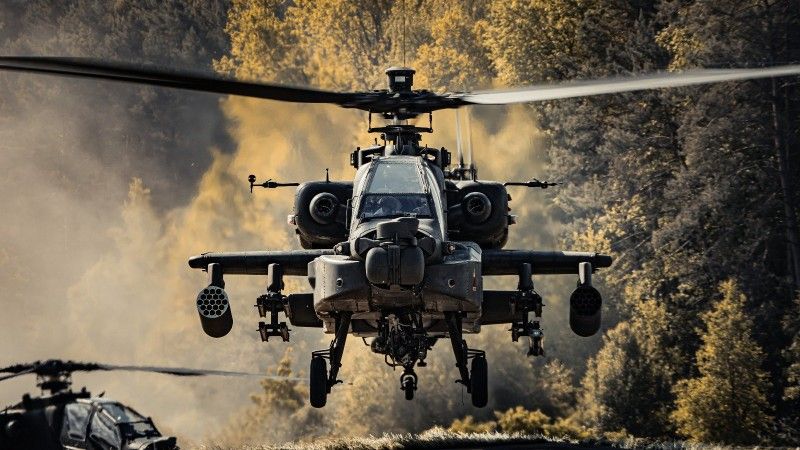
Photo. St. Szer. Spec. Damian Łubkowski / 18th Mechanized Division.
To strike the enemy where it hurts most, in order to protect one’s own forces and enable their freedom of action — this is the task assigned to the 2nd Polish Corps–Land Component Command. Lieutenant General Dr. Adam Joks spoke to Defence24.pl about how this tactical formation is preparing for that role.
Done with: Jędrzej Graf
The main task of the 2nd Polish Corps–Land Component Command is to plan the employment of, and command, land tactical formations in conditions of armed conflict. A distinguishing feature of the 2nd Corps is its ability to conduct operations across multiple domains and in an allied environment, as well as its close integration and interoperability with NATO structures, in particular with the U.S. Army V Corps and the Multinational Corps Northeast.
In the final days of April, the author had the pleasure of visiting the headquarters of the 2nd Corps in Kraków. The host was Lieutenant General Dr. Adam Joks, Commander of the 2nd Polish Corps–Commander of the Land Component. We spoke about the development of the 2PC-LCC structure, the role of this tactical formation, interoperability with the U.S. Army V Corps and NATO commands, and the conduct of multi-domain operations together with allies.
The second part of the interview with General Joks will be published soon, so we encourage readers to follow Defence24.com regularly.
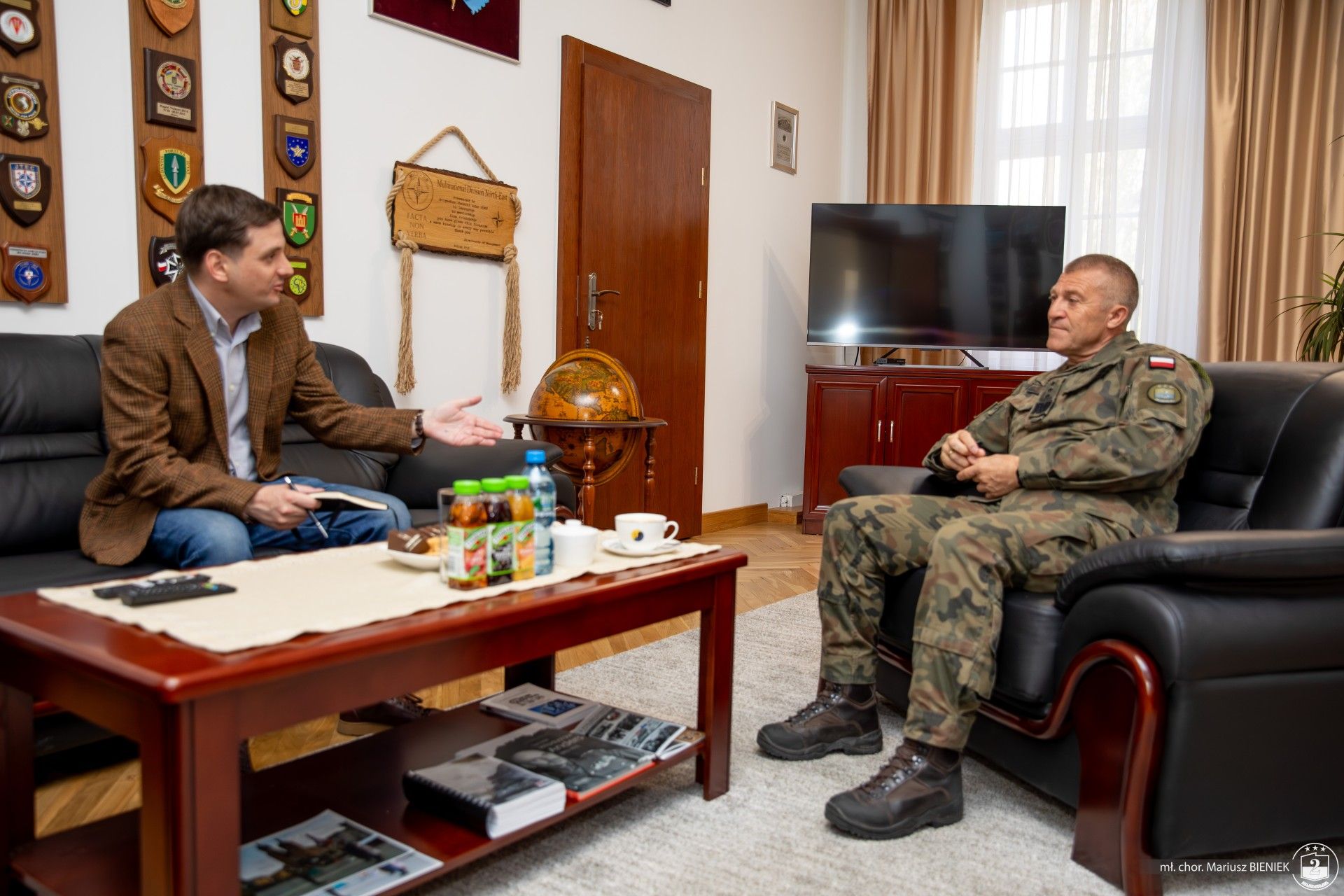
Photo. Junior Warrant Officer Mariusz Bieniek / 2nd Polish Corps–Land Component Command
Antoni Walkowski, Defence24: The 2nd Polish Corps was formed in 2023. At what stage is the creation of this structure now?
Lieutenant General Dr. Adam Joks, Commander of the 2nd Polish Corps–Commander of the Land Component: The structure has essentially been created, and the Corps has achieved full readiness. The formation process was carried out with consideration for the structure and experience gained from creating the U.S. Army V Corps. General Błazeusz, who served in the General Staff, in coordination with Generals Kolasheski and Broadwater — the then commander and deputy commander of V Corps, respectively — took steps to ensure that American structures would be adapted and used in creating the 2nd Polish Corps.
The very process of programming the 2nd Polish Corps, creating its structure, and building its capabilities is modeled on the American V Corps, which two years before the establishment of the 2nd Polish Corps was certified, achieving full operational capability and the status of a NATO Warfighting Corps — NATO’s highest tactical-level command for conducting multi-domain operations.
For this reason, the 2nd Polish Corps was from the outset created within such a structure and with such capabilities as to become a Warfighting Corps. Translated into Polish, this means a combat corps. The point is for the structure of the 2nd Polish Corps to fully incorporate the experience of the U.S. Army V Corps, so that it is ready to conduct a full-scale defensive operation in a multi-domain environment. This is the fundamental assumption that guided the development of its capabilities from the very beginning.
In 2021, you became deputy commander of V Corps. Did that make your task easier when forming the 2nd Polish Corps?
Of course. I became deputy commander at the moment when V Corps was moving toward achieving IOC — Initial Operating Capability. During my time there, I had the opportunity to participate in all exercises and to be present at every command post organized by the Corps. In 2022, when I was serving there as deputy commander, V Corps achieved full operational capability.
In 2023, when I began the process of forming the 2nd Polish Corps and bringing it first to initial and then full operational capability, I had the opportunity to adopt all the solutions and capabilities — the so-called Warfighting Functions — that we had implemented in the American V Corps.
As Commander of the 2nd Polish Corps, you have participated in a series of exercises: „Spokojny Szwoleżer,” „Jesion-25.” What role is the 2nd Polish Corps to play in the planned „Brave Hussar” and „Avenger Triad” exercises?
As the 2nd Polish Corps, we take part in all national exercises, such as „Dragon.” We have also participated in exercises conducted by U.S. Army Europe, as well as by the Land Component Command in Izmir. These include „Loyal Leda” and „Avenger Triad.” This year we are preparing for Exercise „Brave Hussar.” Meanwhile, „Jesion,” „Brave Hussar,” and „Dragon” are our national exercises. I am also the Commander of the Land Component, and therefore, when conducting a land defensive operation, I command the entire land defensive grouping.
At the moment of transition to an allied operation, I am included in the regional plans together with the other corps that are part of the NATO Force Structure. These are: the Multinational Corps Northeast, the 1st German-Netherlands Corps, and also the French 1st Army Corps — formerly the Rapid Reaction Corps–France. At present, I am cooperating with the French 1st Army Corps, the Allied Rapid Reaction Corps, and the U.S. Army V Corps. Its commander, General Charles Constanza, is based here in Poznań, and I have direct contact with him. We cooperate in planning, organizing, and conducting joint exercises.

Photo. 18th Mechanized Division / fb
What role does the 2nd Polish Corps play in multi-domain operations in defense of the country and NATO’s eastern flank?
Fundamentally, the 2nd Polish Corps is the main command in the land domain. In allied operations on national territory, we have the Multinational Corps Northeast, where my former deputy, General Parylak, is currently the commander. I cooperate with him in planning, organizing, and conducting exercises on Polish territory.
Of course, you know that the land domain is the principal domain. Although multi-domain operations are developing in Ukraine — and we cooperate with them across all these domains — in general the remaining domains are most often supporting domains. In accordance with NATO solutions, there are „supported” and „supporting” domains — that is, leading and supporting domains. For example, in a certain phase of an operation, the maritime domain may be the leading one. Then I, as the commander conducting operations in the land domain, support the Navy. It may also be that the Air Force conducts operations in the air domain, where the main effort is concentrated. Then I may be an element supporting that domain, whether in reconnaissance, protection of elements of the Air Force grouping, and so on.
We exercise various scenarios. We are being prepared so that we are not surprised. All actions that strengthen our capabilities are intended to deter a potential adversary. The purpose is for an adversary conducting operational-tactical calculations to conclude that it is not worth attacking us, because he may suffer losses that are too great in relation to what he could achieve. The 2nd Polish Corps fully implements these tasks, of course while taking into account the elements of the combat grouping assigned to a given operation. As a rule, these are all land components that the General Command prepares for subsequent deployment to an operation.
In the process of technical modernization, the Polish Armed Forces are currently acquiring new capabilities: attack helicopters, fifth-generation multirole aircraft, and long-range rocket artillery. The General Staff is placing increasing emphasis on the ability to strike the enemy’s deep rear area. What is the role of the 2nd Polish Corps in shaping and employing these attributes?
Thank you for that question, because it fully fits into the role of the 2nd Polish Corps. The Corps« fundamental task is to create conditions for all fighting forces, from regiments to divisions, so that they can accomplish their missions. I mentioned the warfighting functions. We are implementing three fundamental warfighting functions that take into account new combat systems: Intel, meaning reconnaissance; Fires, meaning fire support; and Movement and Maneuver. We are now adding a fourth to this list: Force Protection, meaning the protection of troops.
Starting with Intel, the Armed Forces of the Republic of Poland are developing long-range reconnaissance. In English I call this „collection.” It is about using all sources of information in order to have a complete picture of the enemy’s actions far away from the front line and from our forces — from the place where the divisions begin their operations. ELINT, SIGINT, and IMINT — electronic, electromagnetic, and imagery intelligence — as well as space-derived data: all the data we can collect, we gather in our Intel Cloud and have available in our interface. This allows us to fully visualize and have knowledge of the enemy in the depth of his formation.
Once we have knowledge of the enemy, we can conduct deep fires — that is, Long-Range Fires and Deep Strike. All of this fits into what the Corps is capable of performing and what divisions do not possess.
The new capabilities we are acquiring, these systems — Abrams tanks, Apache attack helicopters, HIMARS rocket launchers, F-35 combat aircraft — all of this enters into one long-range reconnaissance system that we are currently building, including the latest solutions, among them unmanned systems. We are able to obtain information about the enemy in depth, then process it and deliver effects before he begins to affect our combat grouping and inflict losses on our troops. My role is to minimize losses among our own troops at the greatest possible distance.
Since we are talking about distance: the farther we can strike, the greater the chances of destroying the enemy’s potential, incapacitating or disrupting his supply lines, and destroying what may affect elements of my grouping. That is why the new programs we are implementing, related to the use of unmanned systems, are so important — and at distances significantly greater than the reach of HIMARS or Homar-K. Naturally, the closer to the line of contact, the greater the density of these elements becomes.
I mentioned Force Protection. The San program, which is intended to support the protection of our troops, including protection against enemy drones, fully fits into and integrates with the elements of my grouping. The exercises, training, and staff drills we are currently conducting take the use of these elements into account. All of this is so that, as General Kukuła, Chief of the General Staff, says, we can fight and win.

Photo. 1st "Warszawska" Armoured Brigade.
That sounds like a quote from Patton.
Referring to Patton, the Patton Museum is located at Fort Knox. His ivory-gripped pistol is also at Fort Knox, where the headquarters of the U.S. Army V Corps is located. I had the opportunity virtually to touch his four-star helmets, as well as to become acquainted with Patton’s approach to combat. The mindset was exactly the same as the Chief of the General Staff defines it today: we fight to win. There is no option other than victory.
Since we have touched on that subject, how is cooperation between the 2nd Polish Corps and the U.S. Army V Corps developing?
This is best illustrated by General Constanza’s words every time we meet: „my sister corps, my sister command.” In essence, we are sister corps. We have been able to implement all the procedures possessed by American forces so that the Multi-Corps Land Component Command — the recently formed NATO land component command located in Mikkeli, Finland — can integrate our efforts.
Our cooperation procedures are fully aligned. The employment of Intel, Fires, and Force Protection capabilities is practically shared between us. That is why we integrate our activities so easily, participate in the same training, and exercise different scenarios. Of course, the deployment of V Corps« Forward Command Post here in Poznań makes this task easier.
The appointment of General Jabłoński as deputy for interoperability in V Corps also helps. He is in contact practically every day with my deputy for interoperability, General Koziatek. A V Corps liaison officer is present in my command on a daily basis. My liaison officer is in Poznań, in the V Corps command, so on an ongoing basis we have full information about what V Corps is doing and how it is doing it.
We make use of the experience of V Corps, which we gain in individual exercises. Of course, we also adopt all the lessons and solutions that we are currently receiving from our colleagues in Ukraine. They are testing these capabilities practically every day in order to prevent Russia from winning this war. We have an extraordinary opportunity to fully prepare for the next war, using the experience of our colleagues and of the international environment.
So that the army does not end up preparing for the previous war.
Yes, we must prepare for the war that may occur. Of course, every subsequent war incorporates the experience of the previous one. That is why it is so important for us to draw conclusions about what should still be implemented and better used — from command systems to the development of equipment, meaning military technology.
However, people remain the most important factor, which the Chief of the General Staff also often emphasizes. We may have the best technology, we may have the best technical solutions, but if we do not have properly motivated soldiers and well-trained non-commissioned officers… I would like to emphasize that at present, 50 percent of the personnel strength of the 2nd Polish Corps consists of non-commissioned officers, which is unprecedented in the Armed Forces of the Republic of Poland. No command structure includes such a large proportion of NCOs, who constitute an exceptionally well-prepared element.
This is experience drawn from the U.S. Army: that non-commissioned officers provide stability, continuity in the use of the command, and institutional memory. That is why it is so important to have properly prepared NCOs in all functional cells of the Corps command, ensuring the maintenance of these capabilities as well as their further development.
End of Part 1 of the interview. The second part of the material will soon be published on Defence24.

Photo. Dowództwo Generalne Rodzajów Sił Zbrojnych / X


