











- WIADOMOŚCI
- WYWIADY
- KOMENTARZ
“Belarus’s future cannot be decided in the Kremlin”. One of the opposition leaders calls for talks with Lukashenko

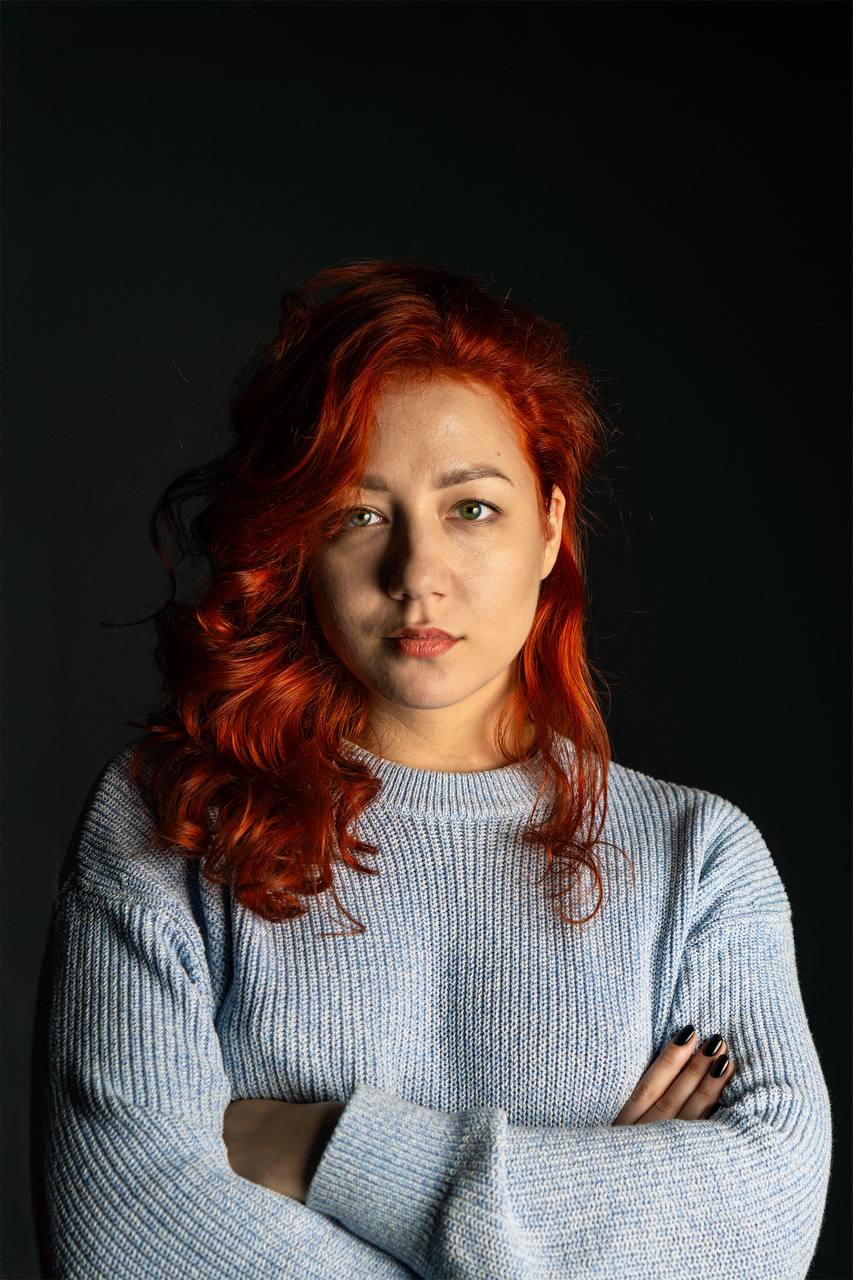
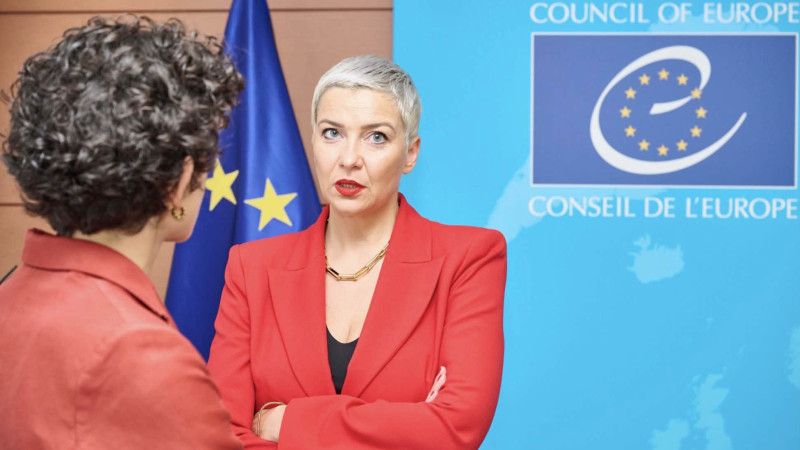
Europe risks leaving Belarus entirely under Russia’s control if it fails to rethink its policy towards Minsk. In an exclusive interview with Defence24, Belarusian opposition figure Maria Kalesnikava, who spent more than five years in Lukashenko’s prison, calls for a new approach combining sanctions, diplomacy, and verifiable agreements.
She defends US-led negotiations that have helped secure the release of political prisoners, challenges the strategy pursued by parts of the Belarusian opposition, and warns that Moscow could determine who succeeds Lukashenko. For Poland and Europe, she argues, the stakes extend far beyond Belarusian domestic politics: the future independence of Belarus is also a matter of European security.
Dr Aleksander Olech: It will soon be a year since your release. Over that time, you have made a number of striking statements about Belarus, and you have also been active in music. So who are you now: a politician with a passion for music, or a musician who hasn’t forgotten about politics?
Maria Kalesnikava: Above all, I am someone who cares. I care about what is happening around me, about what is happening to people, to my country, and to Europe. I am deeply concerned that repression continues in Belarus, that people are still in prison, and that our country is becoming increasingly dependent on Russia and risks losing its independence.
I cannot stand aside, and I will not. Music is an enormous and very important part of my life. I am a professional musician, and art is one of the ways I communicate with the world.
And I do not choose between music and politics. I believe that each of us bears responsibility for the world we live in. And each of us can make a difference, regardless of our profession.
I want people to be free. I want Belarus to remain independent. And I want us to have a future that we determine for ourselves. I use every opportunity I have to work towards that.

You call for a change in EU policy towards Lukashenko and have said that the old strategy isn’t working. What, in your view, is wrong with it?
First of all, I believe we must honestly assess the results of our decisions. Not our intentions, not our statements, but the actual results.
In 2020, the situation was completely different. Millions of Belarusians were demanding change, taking to the streets, and demonstrating extraordinary courage and solidarity. At that time, the strategy of international pressure was intended to support these developments. But six years have passed. Lukashenko remains in power. Repression continues. And Belarus has become even more dependent on Russia.

So I ask a simple question: if a strategy is not delivering the expected results, why do we continue acting as though nothing has changed? I am not calling for sanctions to be abandoned. But sanctions are a tool, not a goal or a strategy in themselves. They must help us achieve concrete results.
Today, we face three urgent priorities: freeing political prisoners, ending repression, and preserving Belarus’s independence. And if we look at this in the context of the European security architecture, there is now a real danger that Belarus could fall entirely under Russian control.
That is why I see diplomacy as an essential instrument of influence. Not as a concession to the regime, but as a means of achieving concrete changes, reducing threats to European security, and strengthening Belarus’s ability to act independently.
Diplomacy does not exclude pressure. On the contrary, it allows us to use pressure to achieve specific objectives. This is why I advocate developing a European strategy in which sanctions, diplomacy, and concrete reciprocal steps work together to free people, end repression, and preserve Belarus’s sovereignty.

Does it make sense to hold serious negotiations with Lukashenko? After all, a number of Belarusian opposition figures believe that all decisions are made for him by the Kremlin.
Then I have a question in return: if we are convinced that Lukashenko makes no decisions independently and that Putin decides everything, who exactly are we proposing to negotiate with about Belarus’s future? Putin?
Are we really suggesting that Russia should decide the fate of nine million Belarusians? Are we not, in effect, handing over the sovereignty of an entire country to Moscow ourselves? I find this an extremely dangerous line of reasoning.
Yes, Lukashenko’s dependence on Russia is enormous. But dependence does not mean a complete absence of autonomy. Our task is not to accept the idea that Belarus has already lost its ability to act as an independent state, but to do everything possible to preserve and strengthen it.
I understand perfectly well who we are dealing with. I spent more than five years in Lukashenko’s prison. I do not need anyone to explain to me what this regime represents. But that is precisely why I believe we must use every available opportunity to achieve concrete results.
Negotiations do not mean endorsing Lukashenko, trusting him, or justifying his actions. They are an instrument of influence. If we want political prisoners to be released, repression to end, and Belarus’s dependence on Russia to decrease, we have to talk to those who currently make decisions in Minsk.
Otherwise, we face a paradox: we want an independent Belarus, yet we ourselves proceed from the assumption that its future can only be decided in Moscow. I fundamentally disagree with that. Belarus’s future must not be decided in the Kremlin.
The Belarusian opposition is often seen as a single front, but inside it there have long been different approaches. You represent what is called the pragmatic wing: those who believe it is necessary to talk to Minsk, even after everything the regime has done, including your own imprisonment. What is the strategy of your wing specifically? How do you intend to bring about change in the country, and is that still the goal?
I think it is perfectly normal to have different opinions and different approaches to solving problems. That is precisely what democracy is about: the ability to listen to one another, respect different views, and look for common solutions.
We all want what is best for our country. We want Belarus to be free, independent, and democratic. Our goals have not changed. But the circumstances have changed, and we have a responsibility to take that into account.
We can talk endlessly about what we want in an ideal future. But the truth is that waiting for the perfect moment for change, while people continue to pay for that waiting with years of their lives, is, in my view, irresponsible.
What can we do today? What can we offer to the people who continue to live in Belarus? To those who are in prison? To their families? I believe we must now focus on three priorities: the release of political prisoners, an end to repression, and the preservation of Belarus’s independence.
And to achieve this, we need a concrete plan of action.
Such a plan already exists. It was proposed by Artyom Shraibman, Dzmitry Kruk, Ekaterina Deikalo, and Andrei Bushilo. It envisages a series of gradual, reciprocal, and verifiable steps by Belarus and the European Union.
I believe this plan deserves serious discussion at the European level. At the same time, it is important to understand that negotiating with the current Belarusian authorities does not mean abandoning the goal of democratic change.
On the contrary, we need to stop repression, give society a chance to breathe again, and restore ties with Europe — first and foremost at the human level. We need to create conditions in which change can once again become possible.

I do not promise Belarusians that everything will change tomorrow. But I reject the position of endless waiting. I believe we must change what we can change today. Even if it is difficult, even if it is slow, even if the results come gradually.
We must not only fight for the Belarus of tomorrow. We must also do everything we can for the Belarusians who are living today. And most importantly, the future of Belarus must be determined by Belarusians themselves.
Lately there has been a lot of talk and analysis in the information space about Belarus preparing for war. Do you consider it likely that Belarus will commit military aggression?
I believe this possibility cannot be ruled out. But it is important to understand where the main threat comes from. Belarusians do not want war. I am convinced that neither Belarusian society nor the Belarusian army has any interest in fighting against Ukraine or threatening our European neighbours.
But Russia has already used Belarusian territory to launch its invasion of Ukraine. And Lukashenko’s responsibility for that is absolutely clear. I think the question is not only whether Belarus is preparing for war. The question is what we can do to prevent it.
Because if Belarus is turned into a Russian military staging ground, European security itself will be in jeopardy. It may be that diplomatic instruments are the only way to reduce Minsk’s dependence on Moscow and secure concrete commitments concerning regional security.
Of course, any agreements and steps must be accompanied by thorough verification of their implementation. It would be naive to trust Lukashenko’s statements alone.
You have repeatedly praised the US approach to negotiating with Lukashenko. However, this approach is widely criticized, for example because the regime immediately takes new prisoners to replace the ones it releases. Moreover, it is hard to imagine a thaw in relations with Minsk at a time when Europe is talking about war with Russia. How do you respond to this criticism?
I think there is an element of manipulation in the way this question is framed.
The truth is that throughout the five years I spent in prison, repression never stopped. People continued to be arrested, prosecuted, and imprisoned, including during periods when there were no releases at all. So why are we now being asked to treat new arrests as a consequence of negotiations, when people were being arrested even without any negotiations?

Let us look at the results. Since July 2024, when the current wave of early releases began, around 900 political prisoners have been released. A significant number of these releases resulted from negotiations with the United States.
These are not just numbers. These are hundreds of people who have regained their freedom, been able to reunite with their loved ones, and been given the opportunity to rebuild their lives. Of course, repression continues. And that is absolutely unacceptable.
I, of all people, understand what every new arrest means. I spent more than five years in prison myself. But can the continuation of repression really be an argument against freeing people? I would like to ask the critics: what concrete alternative do they propose? Should we go back to waiting for the political circumstances to change? And what if they do not change for another five years? How many more years are people supposed to spend in prison?
Can you even imagine what it means for prisoners, their families, and the people who love them to know that there is a possibility of release, yet to have to wait for years until the political circumstances are considered right? I propose that Europe become more actively involved in the negotiation process, using its own instruments to achieve long-term, verifiable agreements.
As for European security, I see another contradiction here.
We are rightly concerned about Belarus’s growing dependence on Russia, yet at the same time we refuse to use one of the most obvious and effective instruments that could allow Europe to influence the situation. If we genuinely want to change the situation, we need more diplomacy, not less. After all, diplomacy is most necessary precisely when countries have disagreements and conflicts.
I want to remind everyone that behind every number there is a human being. For me, people’s freedom matters more than our disagreements about how to achieve it.

What do you think about the future development of Belarus’s relations with the US?
First of all, I think it is extremely important that the United States has brought Belarus back onto the international diplomatic agenda. We can already see concrete results of this work: people being released, contacts being restored, and the possibility of discussing issues that until recently seemed completely blocked.
But the United States also has broader geopolitical interests and priorities. That is why I believe closer coordination between American and European diplomacy on Belarus is essential.
The Americans can open the door to negotiations. But without Europe’s involvement, it will be impossible to develop a long-term solution for Belarus. And this is where our immediate neighbours — Poland, Lithuania, and Latvia — have a particularly important role to play.
These are the countries with a direct interest in ensuring that Belarus is safe, independent, stable, and predictable.
The Polish government is taking certain steps to improve relations with Minsk. What steps along this path do you think are possible and desirable over the coming year?
First of all, I want to say that Poland has helped Belarusians an enormous amount, especially since 2020, when thousands of people were forced to leave their country. I am deeply grateful to Polish society for its solidarity, support, and assistance. You have quite literally saved the lives of many Belarusians, including members of my own family and some of my friends.

I believe we also need to think about the millions of people who continue to live in Belarus.
The release of Andrzej Poczobut was an extremely important event. So was his safe trip back to Belarus afterwards. Together they show that confidence-building steps can deliver concrete results.
I also welcome the resumption of direct contacts between the Polish and Belarusian foreign ministers. Of course, relations remain difficult, and Poland has every right to protect the security of its borders and its citizens.
That is why the first important steps should include ensuring the rights of the Polish minority in Belarus — their ability to engage in cultural and educational activities and to preserve their language and traditions.
We also need to discuss border security, an end to provocations, and the gradual restoration of trust. And wherever it is possible and safe, we should restore human connections, transport links, and cultural, educational, and economic contacts.
But I would also like to draw attention to a broader question.
Is it really in Poland’s interest for Belarus to become a territory entirely dependent on Russia? I am convinced that it is not.
That is why this is not simply about improving bilateral relations. It is about the future security of the entire region. Clearly, Poland can be one of the key participants in shaping a new European strategy towards Belarus.
Do you see Belarus as part of the European Union within the next ten years? Or perhaps as part of Russia?
I want Belarus, ten years from now, to remain Belarus. An independent country in which people determine their own future.
Decisions of such importance must be made by Belarusians themselves. And if there is one thing we have all learned over the past few years, it is that Europe is much bigger than the European Union. Belarus is historically, geographically, and culturally part of Europe.
We need to restore and strengthen these ties — through culture, education, the economy, and human connections.
What concerns me much more, however, is that Belarus is becoming increasingly dependent on Russia. Not only economically and militarily, but also culturally and ideologically. We have our own history, our own culture, our own language, and our own interests. And we have the right to our own future. For me, Belarus’s European choice is, above all, a choice in favour of freedom, human dignity, and independence.
When will Lukashenko leave, and who might become his successor?
I do not like reading tea leaves. Sooner or later, Lukashenko will leave. There is no such thing as an eternal dictator.
But what concerns me much more is what happens afterwards. Who will make decisions about Belarus’s future? Belarusians themselves? Or will those decisions be made for us?
See also 

In authoritarian regimes, the transfer of power often depends not on society, but on agreements within the political elite. And today, there is a very serious risk that Moscow will have the decisive influence at the moment of transition.
Precisely because, when that moment comes, Moscow may be the only external actor present and ready to shape the outcome. That is why, for me, the main question is not what the next president’s surname will be. The main question is whether Belarus will remain sovereign and independent. And this is why we need to start thinking about the future now — supporting the independence of Belarusian society, developing ties with Europe, and creating conditions for political change.
Europe, and especially our closest neighbours, must also have a clear idea of how to act when a transfer of power takes place in Belarus.
The future of Belarus must be determined by Belarusians themselves.
Comment by Anastasia Kostyugova, a Belarusian strategic communications expert working on political conflict, polarisation, and de-escalation
The key part of this interview comes at its end, and it concerns the future rather than the past. Policy towards Minsk should be shaped not only by what Belarus has done, but by what kind of Belarus must exist at the moment of political transition, so that the transition does not take place under the Kremlin’s total control.

That is why the question of how to approach Belarus has to be answered now, before the transition. The security dilemma, as developed by Robert Jervis, helps frame the choice. In the spiral model, both sides primarily seek security, but mutual suspicion leads them to continuously strengthen their positions. In the deterrence model, one side is an aggressor that reads concessions as weakness. Misdiagnosis is costly: firmness where reassurance is needed accelerates the spiral, while softness towards a genuine aggressor encourages it.
If we apply this logic to the current security situation in Europe, EU policy towards Russia clearly falls under deterrence. Minsk, however, is a more complicated case. It has so far avoided direct participation in the war and clearly fears both the West and the complete loss of its sovereignty to Russia. At the same time, Minsk supports Putin’s war effort and is dependent on Moscow; that dependence is what any policy has to work with. As this dependence deepens, Belarus is falling into an escalation spiral, yet it may still be open to compromise and de-escalation, as a way to regain room for manoeuvre.
Whether it can act on that openness independently remains unclear, and the most reliable way to find out is to test it. Limited engagement is how this can be tested: through confidence-building measures, working contacts, and small reciprocal, verifiable steps. Poland appears to have already begun moving in this direction, from the April prisoner exchange to the first foreign-minister-level meeting in nearly a decade.
This also returns us to the question posed at the start. Lasting security in the region cannot be built next to a Belarus whose only option is Moscow. A Belarus that has other partners and can withstand external pressure is far more likely to emerge from the transition as a sovereign state, which is in the interest of Belarusians and their neighbours alike.