


- WIADOMOŚCI
- ANALIZA
Drones and balloons fly in from Belarus. Interior Ministry to extend buffer zone


Photo. mł. chor. Daniel Wójcik / 16. Dywizja Zmechanizowana
The buffer zone at the Polish-Belarusian border will be maintained for another 90 days, according to a draft regulation from the Ministry of the Interior and Administration. The new regulations are set to come into force on 30 November 2026 and will be valid until the end of February 2027. The ministry justifies the decision by the ongoing migration pressure, as well as the increasing intensity of Polish airspace violations involving weather balloons and unmanned aerial vehicles (UAVs).
The currently binding regulation regarding the temporary ban on staying in specific areas near the border with Belarus is in effect until 29 November 2026. According to the draft prepared by the Ministry of the Interior and Administration (MSWiA), the ban is to be extended by another 90 days from 30 November – until 27 February 2027. Crucially, the area covered by the restrictions will remain unchanged compared to the current one.
As stated in the justification of the draft, „The validity of extending the duration of the current temporary exclusion zone in the area adjacent to the state border with the Republic of Belarus stems from the fact of still-real threats on the Polish-Belarusian section of the state border, related to migration pressure.”
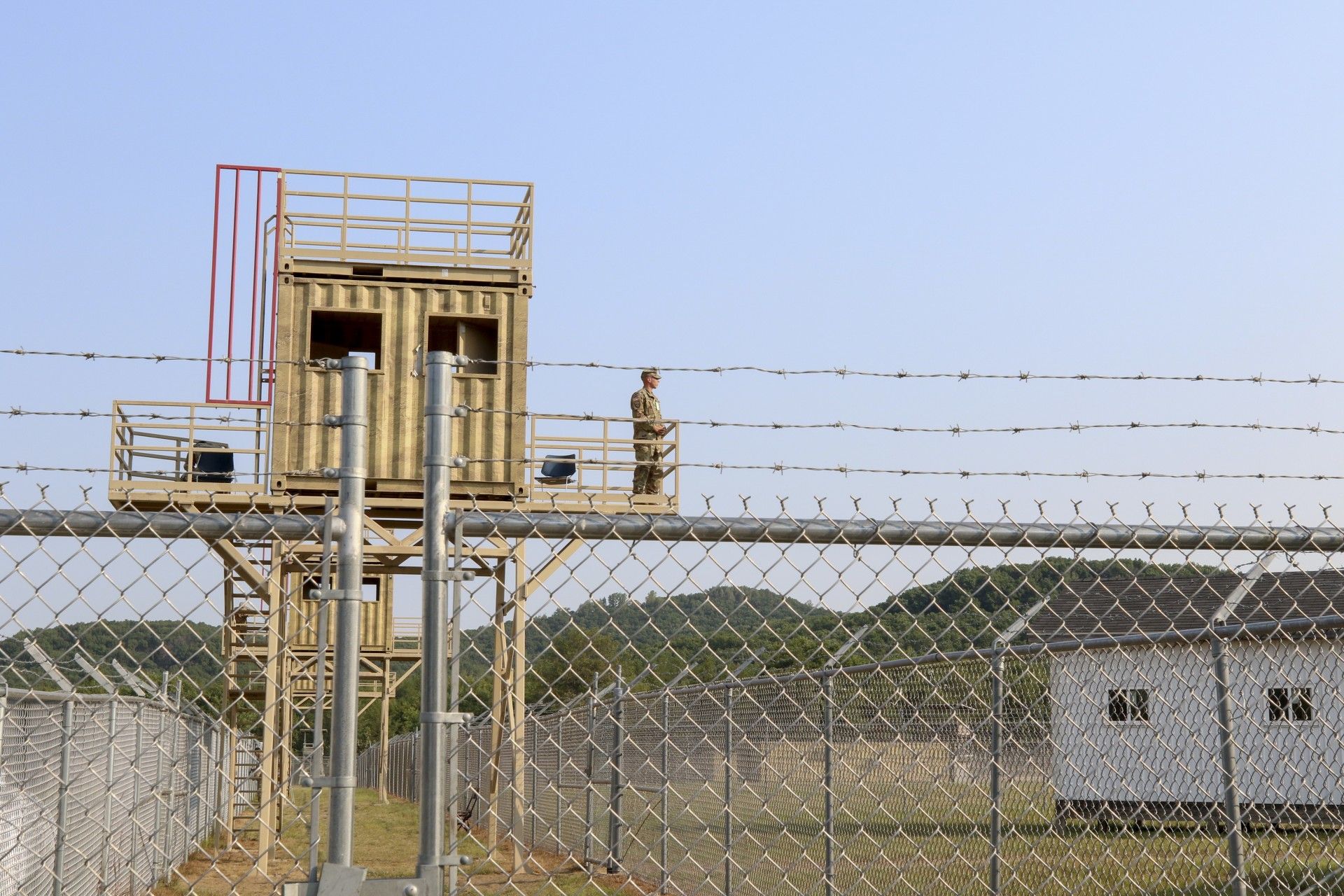
The ministry points out that this phenomenon has persisted with varying intensity since mid-2021. According to the MSWiA, the migration pressure was artificially created by the Belarusian authorities as an element of hybrid activities aimed at destabilising Poland and other European Union member states.
The document indicates that from the beginning of 2026 until 8 November, 482 attempts to illegally cross the border were recorded on the Polish-Belarusian section. „These actions, accepted and supported by the Belarusian services, were often accompanied by aggression from foreigners,” the authors of the draft emphasised.
In the justification of the project, the MSWiA also highlighted the increasing intensity of violations of Polish airspace using weather balloons and unmanned aerial vehicles arriving from the territory of Belarus.
„Although the aforementioned objects are currently mainly used for smuggling purposes, their use for activities destabilising the situation on the territory of the Republic of Poland cannot be ruled out,” the justification reads.
As noted, these objects may pose a risk of conducting observational reconnaissance of the border area. This concerns, among other things, the possibility of obtaining information regarding the deployment of Border Guard (Straż Graniczna) forces and assets, cooperating services, as well as critical infrastructure facilities.
„Restricting the presence of persons in the area specified in the draft regulation is therefore necessary to detect and properly position flying objects, as well as to effectively intercept payloads carried by the aforementioned devices,” the document indicated.

Another argument in favour of extending the ban is the increase in migration pressure on the Lithuanian-Belarusian and Latvian-Belarusian sections of the border. In the assessment of the MSWiA, it cannot be ruled out that as the situation develops, an increased stream of illegal migration will again be directed towards the Polish-Belarusian section of the border.
The ministry also draws attention to the planned commencement of work related to the implementation of projects under the „East Shield” (Tarcza Wschód) programme. As emphasised in the justification, the extension of the zone is intended to contribute to the efficient implementation of these tasks and help ensure the safety of people staying in the designated area.
The draft regulation does not provide for changes to the current scope of the zone. The ban on staying is to continue to cover a 78.29 km section of the border, located within the territorial range of the Border Guard posts in Michałów, Narewka, Białowieża, Dubicze Cerkiewne, and Czeremcha.
Along a 59.24 km section, the zone will cover a strip 200 metres wide from the state border line. In the area of nature reserves and the Białowieża National Park, over a length of 15.26 km, its width will be approximately 2 km. In turn, on a section of about 3.79 km, the ban will reach about 4 km inland.
The MSWiA notes that the area covered by the restrictions will not, as a rule, include settlements and tourist routes. This is intended to limit the inconvenience for residents, tourists, and entities conducting professional activities.
The justification also recalled that the provisions of the Act on the Protection of the State Border provide a list of persons to whom the ban does not apply. This includes, among others, persons permanently residing in the area covered by the restrictions, those conducting business activity there or performing gainful work, as well as owners and holders of real estate.

Furthermore, in justified cases, the locally competent commander of the Border Guard post may allow other persons to stay in the zone for a specified time and under specified conditions. In this context, the document mentioned journalists, among others.
According to data presented in the draft justification, from the beginning of 2026 until 27 October, the Podlaskie Border Guard Regional Unit (Podlaski Oddział Straży Granicznej) issued 13 penalty notices for staying in the area covered by the ban. In two cases, motions for punishment were sent to court, while 141 people were cautioned regarding the existing restrictions.

„Maintaining the ban in question will contribute to reducing the number of undesirable incidents related to crossing the Polish-Belarusian state border in violation of the regulations and increasing the level of security in the area covered by the ban on staying. Its extension will have a positive impact on the effectiveness of the protection of the Polish-Belarusian state border and on raising the level of security, both for officers and soldiers serving in the protection of the state border and for bystanders,” the MSWiA added.


