


- WIADOMOŚCI
- OPINIA
- KOMENTARZ
- ANALIZA
A Prisoner of War Is Not a Tactical-Level Commander’s Problem [OPINION]

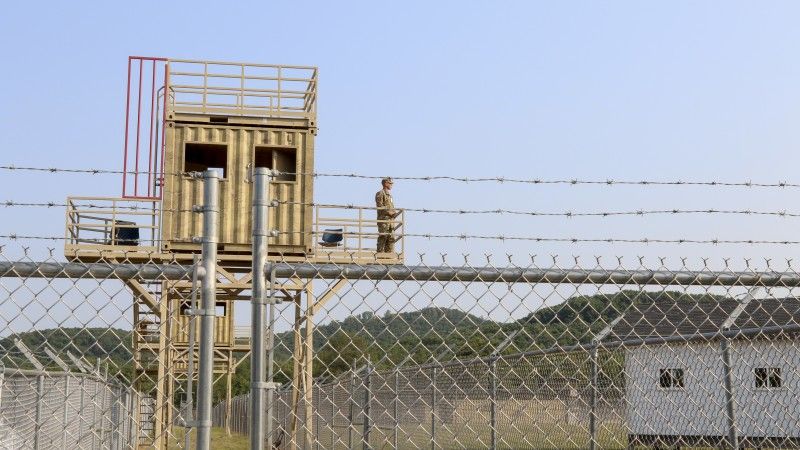
Photo. Zachary Mott 88th Readiness Division, domena publiczna
The military, and more broadly the state, must be prepared for a major armed conflict in Europe. One critical aspect of developing adequate defense capabilities is preparing for the emergence of large cohorts of prisoners of war (POWs). The sheer complexity of such an operation demands in-depth reflection both within individual nations and across NATO as a whole.
The rapidly transforming European security architecture compels us to assess potential Large-Scale Combat Operations (LSCO) within a Multi-Domain Operations (MDO) environment. To this end, we must thoroughly evaluate all facets of military action ahead of any potential full-scale armed conflict. One such critical topic that unfortunately fails to break through into the wider analytical space is the management, handling, and disposition of prisoners of war and other captured personnel (CPERS – under NATO standards: captured persons, encompassing prisoners of war, internees, and detained civilians).
Every Conflict Yields Prisoners of War
Every armed conflict throughout the 20th and 21st centuries demonstrates that operational success often pivots upon the appropriate approach toward prisoners of war and detained individuals. Practically, this involves friendly force protection and HUMINT (Human Intelligence) collection capabilities. Notably, the United States and its coalition partners experienced a dramatic surge in attacks on their forces following the Abu Ghraib scandal. Concurrently, the handling of captured personnel is increasingly analyzed within the information-cognitive domain—directly affecting domestic support for friendly forces and enabling Psychological Operations (PSYOPs) targeted at enemy forces and the civilian populace across the operational area. This cognitive dimension warrants its own distinct analysis.
NATO openly and comprehensively addresses this subject, incorporating critical lessons learned from the armed conflict in Ukraine. In this context, within NATO’s operational framework, the NATO Military Police Center of Excellence (NATO MP CoE), located in Poland, spearheads these issues. On Defence24, we previously explored the Centre’s extensive remit in an in-depth interview with its Director. Furthermore, it is worth noting that Poland hosted the „Operational Detention Forum” (2–5 November, Sopot), a dedicated initiative advancing Allied integration, operational knowledge exchange, and the codification of lessons learned. NATO can also leverage support from other Centers of Excellence across related disciplines, including CIMIC (Civil-Military Cooperation, the Netherlands), STRATCOM (Strategic Communications, Latvia), HUMINT (Human Intelligence, Romania), and MILMED (Military Medicine, Hungary).

The Prisoner of War in a Systems Approach to War
At the outset, let us underscore the acute complexity of this problem set under the conditions of a hypothetical large-scale armed conflict. Above all, this issue encompasses every single echelon of command and the entirety of national defense systems. At the tactical level, this challenge is growing increasingly complex due to the realities of a battlespace saturated with sensors and effectors. Enemy soldiers face a perilous route to surrender—even though inducing surrender remains a prime objective of tactical PSYOPs units. For example, Russian forces regularly target their own personnel and mercenary units attempting to surrender to Ukrainian lines. Furthermore, frontline troops and tactical commanders must execute point-of-capture search and screening procedures, while arranging evacuation through contested operational spaces where routine logistical resupply and medical evacuation (MEDEVAC) are already severely constrained.

Photo. National Guard photo by Staff Sgt. Zach Holden, Oregon Military Department Public Affairs, domena publiczna
The CPERS mission, however, sits much higher in the chain of command, requiring decisions at the operational and strategic levels. Capturing a prisoner of war or handling CPERS incurs binding legal obligations under the Law of Armed Conflict (LOAC), International Humanitarian Law (IHL), domestic statutes, and corresponding jurisdictional frameworks. Furthermore, detention policies extend well beyond the immediate cessation of kinetic combat, as captured personnel will ultimately be repatriated. Detainees will return to their home countries carrying distinct political and psychological perceptions, carrying enduring geopolitical and military implications.
This must be paired with logistics and an extensive medical support apparatus. CPERS may be wounded—often critically—or their health compromised by non-battle injuries, endemic disease, and malnutrition unrelated to direct kinetic engagements. This operational reality demands dedicated logistics lines: establishing not only transport assets for CPERS and POWs, but also dedicated screening/filtration facilities and standardized administrative and medical processing systems. Crucially, these operational requirements must be executed without degrading broader combat missions during high-intensity hostilities. This operational friction highlights why rigorous, staff-level planning must be fully integrated well before a crisis erupts.
Siting the Internment Facility
Finally, we must evaluate where and how we intend to construct and operate internment and POW facilities. Determining the geographic distribution of such compounds during a major conflict is a strategic dilemma that requires prior political consensus and bilateral agreements among Allies. During the Second World War, hundreds of thousands of German and Italian POWs were transferred and housed in rear-echelon facilities, including camps across the United States. Today, however, we must recognize that the immediate, primary burden will fall directly upon frontline and eastern flank nations. Consequently, these states must validate and stress-test their organic detention handling capabilities with the same rigor applied to frontline combat capabilities. Nonetheless, because NATO is actively addressing CPERS, flank states should expect allied burden-sharing integrated into broader collective operations.
Yet before multinational operations can proceed seamlessly, joint training and harmonization across disparate legal regimes, doctrines, and Rules of Engagement (ROE) are imperative. Ambiguities frequently surface regarding tactical crowd and riot control, as well as the proportional escalation of non-lethal and lethal force. Interoperability demands synchronization not only across Military Police (MP) formations, but across all supporting military branches: logisticians, medical personnel, intelligence staff, legal advisers (LEGADs), PSYOPs elements, CIMIC, and specialized strategic communications components.

Understanding the Detainee
The integration of operational linguists, cultural advisers, and religious specialists further clarifies the profound scale of the challenge confronting the military and supporting state apparatus. Preparations for such detention operations must be operationalized well ahead of any major military confrontation. Modern battlefields feature an influx of foreign mercenaries and third-country nationals integrated into conventional force structures. Friendly forces will encounter detainees from highly specific cultural and linguistic backgrounds with whom Allied personnel have little or no language proficiency.

Photo. U.S. Marine Corps photo by Cpl. Armando Elizalde, domena publiczna
Detention facilities must be scaled to absorb the volume of captives generated by a full-scale armed conflict. Consider the First and Second Gulf Wars (1991 and 2003), where Coalition forces were inundated with mass surrenders of Iraqi troops. While U.S. Military Police units—the best-prepared force in NATO for this mission—formed the backbone of the response, operations still faced severe systemic challenges and errors that have been extensively documented. Similarly, Ukraine has had to rapidly overhaul its military and civilian institutional frameworks to manage the scale of captured Russian combatants.

This Will Never Be a Purely Tactical Problem
The physical siting, engineering, and infrastructure of both temporary holding areas and permanent facilities cannot be relegated to a tactical-level mindset. Tactical commanders, even at higher echelons, lack the organic logistics, personnel, and budgetary resources to sustain this mission independently. While expeditionary point-of-capture facilities must be erected rapidly to maintain operational maneuver, permanent internment camps will serve as an enduring component of the national defense architecture and Allied theater rear.
Staff planning must ensure these facilities strictly comply with international legal standards while maintaining operational functionality, robust force protection, physical security, and sustainable life support. A permanent internment facility is merely the final echelon of an operational continuum: the Point of Capture (POC), the transfer to the Forward Collection Point (FCP), the Detainee Collection Point (DCP), the transfer to an intermediate Detainee Holding Area (DHA), and ultimately the Theater Internment Facility (TIF) operating through the conclusion of hostilities.

Extensive Medical Requirements
Detention compounds inevitably house individuals who remain overtly hostile and may attempt escape, resistance, or sabotage. Friendly personnel stationed in these facilities operate face-to-face with the adversary 24 hours a day under high-stress conditions. As noted, comprehensive medical infrastructure is non-negotiable. Wounded (including critically injured) and sick detainees require adequate medical material, pharmaceuticals, diagnostic equipment, and qualified medical personnel (physicians and combat nurses). Russia’s war against Ukraine confirms that an adversary may intentionally conscript individuals with active, infectious, or chronic diseases to impose massive medical and logistical burdens upon capturing forces.

Photo. SGT Craig J. Shell, U.S. Marine Corps, http://www.dodmedia.osd.mil/, domena publiczna
Another critical dimension evident from Ukraine and other recent conflicts is the requirement for psychological and psychiatric support. Detainees frequently present severe post-traumatic stress disorder (PTSD), behavioral decompensation, and chemical dependency (narcotics, alcohol, or psychoactive substances), creating severe security risks for facility administrators. Crucially, psychological support must also be provided to friendly guard forces executing an extraordinarily demanding, high-friction security mission throughout the conflict.

The Heavy Burden on Logistics
Administering internment camps and CPERS screening facilities constitutes a massive logistical undertaking. This begins with synchronizing the intake processing, identification, documentation, and threat-level classification of all captured personnel. Furthermore, even temporary facilities must provide secure, compliant areas for tactical HUMINT debriefing and interrogation. Concurrently, base operating support requires sustainment lines for food, water, sewage disposal, and maintaining sanitation standards scaled to densely concentrated populations. This mission demands the commitment of substantial forces and resources beyond the Military Police or Gendarmerie, drawing in broader military assets, civilian law enforcement, central and municipal governments, and defense contractors. It requires an inter-agency framework operating with horizontal and vertical integration.
Regarding technical infrastructure, screening, administrative, and intelligence operations rely on local deployable networks, automated biometric identification systems (ABIS), and enterprise cyber hardware and software suites—assets that will be contested and targeted by adversary cyber and electronic warfare. Data must be fused and cross-referenced with intelligence and law enforcement databases to support investigators identifying suspects of war crimes or other offenses. All required IT systems and infrastructure, including resilient tactical power generation, must be engineered and tested in advance for rapid wartime fielding.

Security of Friendly Forces
Facility administration requires equipping friendly security personnel with specialized inventories. While civilian corrections systems offer valuable lessons learned, military internment demands robust access to Non-Lethal Weapons (NLWs): smoothbore shotguns with non-penetrating impact munitions, conducted energy devices (tasers), riot control agents (tear gas) and dispersal systems, and kinetic marking launchers. Facilities also require hardened tactical communications, protective equipment, and anti-riot gear. Modern technology requirements dictate enterprise closed-circuit surveillance (CCTV) and advanced perimeter security sensors, alongside handheld scanners and advanced detection systems to interdict contraband during vehicle and personnel searches.

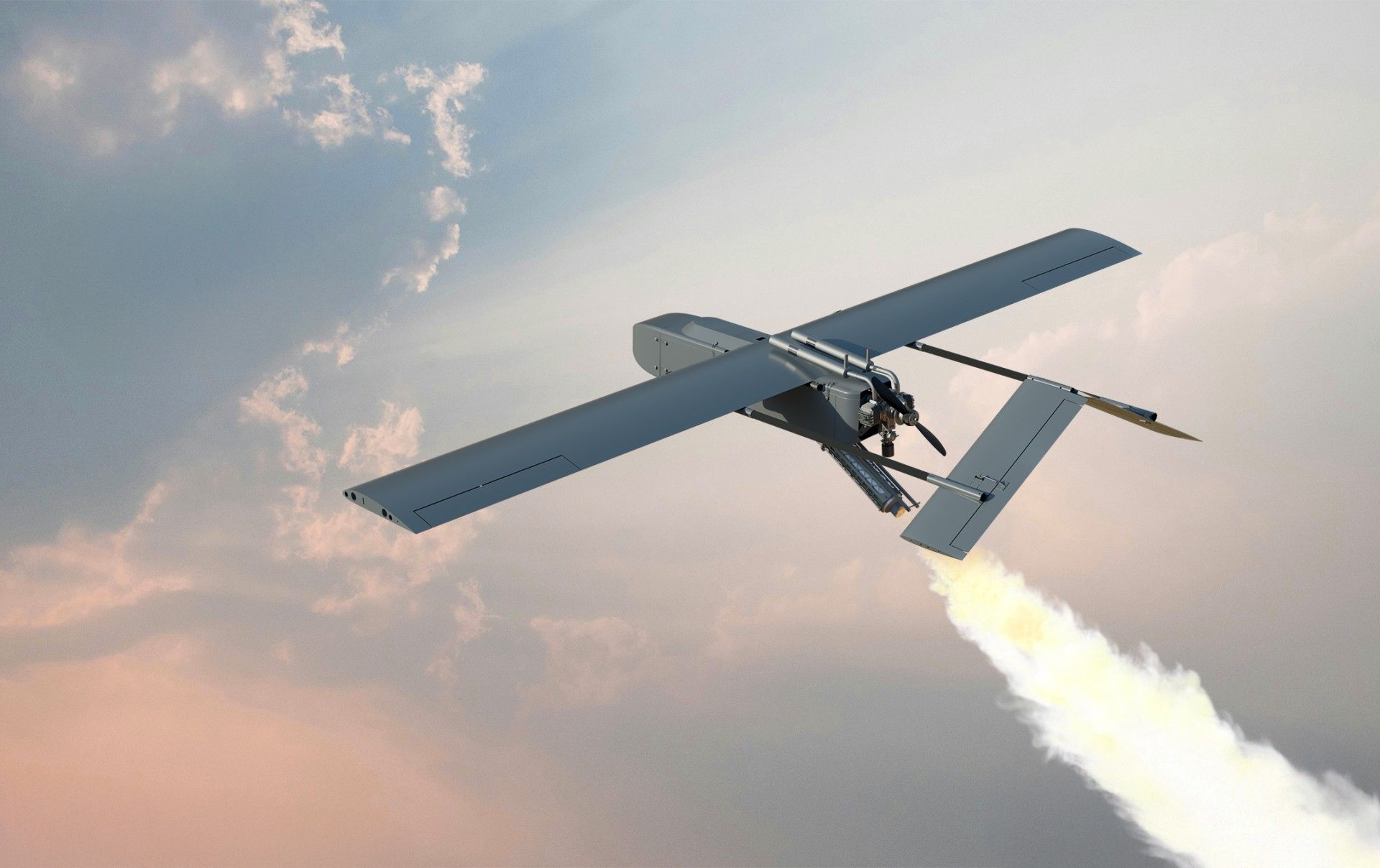
Furthermore, detention compounds holding CPERS must be hardened with comprehensive Counter-Unmanned Aircraft Systems (C-UAS). Drones are pervasive across the contemporary battlefield, and civilian correctional systems worldwide already face systematic attempts to smuggle weapons, cell phones, and contraband across perimeter lines via micro-UAVs. A major armed conflict demands that logistical planning account not only for combat consumables like artillery shells, lubricants, and spare parts, but also specialized detention hardware—from concertina wire to multi-spectral perimeter sensors—needed to secure CPERS installations. The military and civilian state apparatus must map and stockpile these inventories well in advance.

Photo. Wołodymir Zełenski/X
Conclusion and Recommendations
In conclusion, this analytical review points to the following baseline recommendations:
- CPERS management must be elevated above the tactical echelon and treated as an operational- and strategic-level responsibility, building requisite situational awareness throughout the command and control (C2) architecture preparing for large-scale multi-domain operations;
- The Military Police / Gendarmerie is not solely responsible for executing Detention Ops, but the Military Police community actively assumes functional leadership over this domain. The role of the Military Police is to advise the chain of command and monitor compliance with Human Rights Law (HRL) and the Geneva Conventions (GC);
- Joint exercises and training evolutions must incorporate complex CPERS scenarios that mirror the operational environment and contemporary threat vectors, engaging the broader armed forces to build institutional fluency;
- Material and logistical readiness must be established beforehand, ensuring the infrastructure, supplies, and life-support assets required to sustain CPERS during medium- or large-scale conflict are prepositioned, alongside finalized legal frameworks (status agreements, jurisdictional mandates, standing operating procedures, and Rules of Engagement);
- Broaden institutional engagement with other government agencies and specialized NGOs, facilitating access to international best practices and lessons learned, thereby enabling commanders, policymakers, and defense planners to field operational solutions ahead of a potential conflict.
Addressing the issue of prisoners of war during major armed conflict confirms that tactical improvisation is no substitute for doctrinal readiness, physical infrastructure, and a systems approach. Failing to prepare the required procedures, logistics, and facilities will severely degrade friendly forces« defensive capabilities and compromise the strategic conduct of the campaign.


