












- WYWIADY
- WIADOMOŚCI
The driving force of innovation in the activities of the Military Police [INTERVIEW]

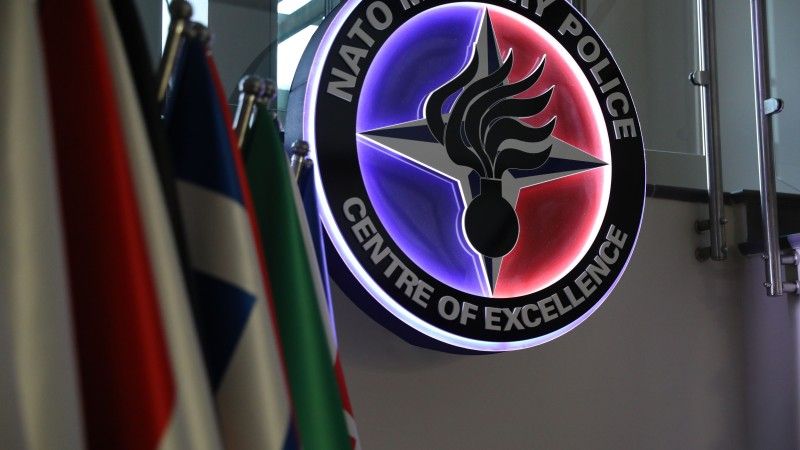
Photo. NATO MP COE
The NATO Military Police Centre of Excellence has been operating in Bydgoszcz since 2014, serving as an important element of NATO’s reflection on the operations of military police and military gendarmerie forces. Dr. Jacek Raubo (Defence24) had the opportunity to speak with Colonel Piotr Kwas, Director of the NATO Military Police Centre of Excellence, about the structure, mission, and key challenges.
Jacek Raubo (Defence24) – Colonel, thank you very much for the opportunity to conduct this interview. First, I would like to ask, what is the mission of the NATO Military Police Centre of Excellence, and what role does the Centre play?
Colonel Piotr Kwas, Director of the NATO MP CoE - The NATO Military Police Centre of Excellence is a multinational hub for the development and transformation of NATO Military Policing capabilities.
Our primary role is to support NATO, the participating nations and the wider Military Police Community of Interest by connecting operational experience, professional expertise and NATO capability-development requirements. We are not an operational headquarters, and we do not command Military Police forces. Instead, we help ensure that Military Police capabilities remain relevant, interoperable and prepared for the evolving operational environment. We achieve this through four closely connected areas of activity: doctrine and standardisation, education and training, lessons learned, and concept development and experimentation.
However, our contribution extends beyond the production of individual documents or courses. The Centre establishes, develops and maintains professional networks that enable the Military Police community to understand emerging challenges collectively. Through formats such as the Provost Marshal Forum and specialised functional forums, we bring together commanders, practitioners and subject-matter experts.
These communities and professional networks are the real engines of capability development. They allow operational requirements to be identified, different national perspectives to be understood and common solutions to be developed. In this sense, the NATO MP COE is both a hub for capability development and a motor for innovation within the Military Policing discipline.
The Centre establishes, develops and maintains professional networks that enable the Military Police community to understand emerging challenges collectively.
Colonel Piotr Kwas
- Sir, how is the NATO MP COE team formed? Which nations participate, and how are personnel assigned to Bydgoszcz?
The NATO MP COE is a genuinely multinational organisation composed of military and civilian personnel provided by its participating nations (Poland, Romania, the Czech Republic, Croatia, Greece, Italy, the Netherlands, Germany, Hungary, Bulgaria, Slovakia). Personnel are nominated by their nations for internationally agreed positions within the Centre. They bring different professional backgrounds, national experiences and areas of expertise, but they work as one integrated multinational team in support of the Centre’s common mission and Programme of Work.
This multinational character is one of our greatest strengths. Military Police organisations across NATO are shaped by different legal systems, command structures, traditions and national responsibilities. The Centre does not seek to eliminate these differences or promote one national model over another. Our role is to understand the different perspectives, identify common operational requirements and develop solutions that support interoperability.
The Centre’s personnel therefore provide more than individual expertise. Together, they form a multinational body capable of assessing Military Policing challenges from different perspectives and translating them into solutions that are relevant to the Alliance as a whole.
Our role is to understand the different perspectives, identify common operational requirements and develop solutions that support interoperability.
Colonel Piotr Kwas
– What does the daily work of military and civilian personnel at the NATO MP COE look like?
Our daily work is organised around projects, NATO requirements and the needs of the Military Police Community of Interest. Some personnel focus on doctrine and standardisation. They support the development and revision of NATO publications, handbooks and other practical guidance. Others work in education and training, where in cooperation with the Requirement Authority they identify training requirements, design courses and ensure that education solutions remain relevant to the operational environment.
Our lessons-learned specialists collect and analyse observations from exercises, operations, training events and professional exchanges. Their task is not simply to record what happened, but to determine what NATO and the Military Police community should learn from those experiences. The Centre also organises and supports multinational forums, conferences, workshops, writing teams and expert meetings. Formats such as the Provost Marshal Forum and specialised functional forums allow senior leaders and practitioners to discuss capability gaps, operational requirements and emerging developments.
Civilian and military personnel work together throughout these activities. Legal, administrative, financial, information-management, security and logistical expertise is essential for transforming ideas into reliable and usable outputs. The daily work of the Centre is therefore highly collaborative. It connects analysis, professional dialogue, doctrine, lessons learned and education in one continuous capability-development process.
The Centre also organises and supports multinational forums, conferences, workshops, writing teams and expert meetings.
Colonel Piotr Kwas
– What role does Poland play as the Framework Nation of the NATO MP COE?
Poland is the Framework Nation of the NATO Military Police Centre of Excellence and provides the essential foundation for the Centre’s functioning in Bydgoszcz. At the same time, the NATO MP COE is a multinational organisation. Its direction, priorities and Programme of Work are developed and coordinated through multinational governance and in close connection with NATO requirements.
The Framework Nation creates conditions that enable the participating nations and their personnel to contribute effectively to the Centre’s mission. This provides the Centre with stability and allows the multinational team to concentrate on its core responsibility: supporting NATO Military Police capability development. The Centre is therefore firmly located in Poland, but its mission, professional network and outputs serve the Alliance and the wider Military Police Community of Interest.
The Framework Nation creates conditions that enable the participating nations and their personnel to contribute effectively to the Centre's mission.
Colonel Piotr Kwas
– The NATO MP COE has operated since 2014. What has the Centre achieved during this period?
The Centre’s most important achievement is the establishment of a functioning and sustainable capability-development hub for NATO Military Policing. Over the years, the Centre has created and maintained a multinational network connecting NATO bodies, national Military Police organisations, Gendarmerie-type forces, commanders, practitioners, training institutions, other Centres of Excellence and external specialists.
Formats such as the Provost Marshal Forum and our specialised forums have become important platforms for identifying operational requirements, sharing experience and developing a common understanding of the future of Military Policing. The Centre has also contributed to NATO doctrine, standardisation, education, training and lessons-learned processes. However, some of our most visible and practically relevant outputs are our handbooks.
Handbooks are particularly valuable because they translate complex doctrine, legal considerations and operational experience into guidance that can be used by commanders, planners and practitioners. They bridge the gap between conceptual development and practical application.
A significant current example is the Handbook on Detention in NATO Operations. Detention is sometimes perceived as a narrow Military Police responsibility. In reality, it is a comprehensive operational challenge requiring coordination between commanders, planners, legal advisers, intelligence, medical support, engineers, Military Police and other stakeholders. Through this handbook, the Centre supports the transformation of detention from a specialist topic into a capability that can be understood and integrated across NATO planning and operations.

Photo. NATO MP COE
Our participation in Sentinel Justice 2026, conducted by the 200th Military Police Command of the United States Army Reserve, is another important example. It allows us to connect concept development, professional expertise and practical exercise experience. Such participation helps ensure that our work remains operationally relevant and that observations from exercises can contribute to future doctrine, education and capability development.
Our participation in Sentinel Justice 2026, conducted by the 200th Military Police Command of the United States Army Reserve, is another important example. It allows us to connect concept development, professional expertise and practical exercise experience.
Colonel Piotr Kwas
– What is the significance of the NATO MP COE for the Alliance? Is the Centre ready to be at the forefront of change?
The Centre’s significance lies in its ability to translate NATO’s strategic direction and operational requirements into practical development within the Military Policing discipline. The Centre of Excellence does not define NATO policy. Decisions concerning the future direction of the Alliance are taken by the Allies. Our responsibility is to understand what those decisions mean for Military Policing and to support their implementation through doctrine, education, training, analysis and professional expertise. The NATO MP COE is ready to act as a motor for innovation within its recognised area of expertise.
For us, innovation does not simply mean introducing new technology or creating new terminology. It means improving the way Military Police capabilities are understood, planned, trained and employed. It also means identifying emerging challenges early enough to develop relevant solutions before capability gaps become operational problems.
The broader transformation of Military Policing is therefore our central task. Military Police capabilities must remain connected to NATO’s changing requirements, including collective defence, readiness, reinforcement, sustainment, protection and multi-domain operations. Our ambition is not merely to react to developments. It is to bring the Military Police Community of Interest together, stimulate professional discussion and turn that discussion into practical NATO capability.
For us, innovation does not simply mean introducing new technology or creating new terminology. It means improving the way Military Police capabilities are understood, planned, trained and employed.
Colonel Piotr Kwas
– What does the NATO MP COE consider important when analysing the war in Ukraine, particularly in relation to the Military Police in Hybrid Warfare Course?
When analysing an ongoing conflict, we must remain professionally disciplined. Not every observation is automatically a lesson, and not every experience can be transferred directly into NATO doctrine or training. The Centre therefore follows a structured approach. We collect observations, place them in their operational and legal context, discuss them with relevant experts and assess whether they have broader relevance for NATO Military Policing.
The purpose is not to make premature judgements about an ongoing conflict. It is to establish a reliable process through which operational experience can be examined and, where appropriate, incorporated into NATO capability development. The Military Police in Hybrid Warfare Course is an important example of this approach. This one was designed in cooperation with the Ukrainian Law and Order Service. It provides a model for rapidly incorporating operational experience into NATO education while maintaining professional and analytical standards.
The course allows relevant experience to be discussed with practitioners and transformed into learning objectives, scenarios and educational content. This shortens the distance between operational observation and institutional learning. For the NATO MP COE, the key value is therefore not only the subject of hybrid warfare itself. It is also the ability to adapt education quickly and responsibly to changes in the operational environment.
When analysing an ongoing conflict, we must remain professionally disciplined. Not every observation is automatically a lesson, and not every experience can be transferred directly into NATO doctrine or training.
Colonel Piotr Kwas
– Have sabotage, terrorism, espionage and other threats below the threshold of war fundamentally changed the mission of Military Police forces?
I would not describe this as a complete replacement of traditional Military Police responsibilities. It is better understood as an expansion and increasing complexity of the environment in which those responsibilities must be performed. Military Police continue to support commanders through established functions and capabilities. However, they now operate in an environment in which conventional military threats, sabotage, terrorism, espionage, criminal activity, cyber effects and information activities may be closely interconnected.
This requires greater situational awareness and closer coordination with other military capabilities, national authorities and relevant civilian organisations. The exact responsibilities will always depend on legal mandates and national authorities. From the NATO MP COE’s perspective, the important question is not whether Military Police should assume responsibility for every emerging threat. The question is how Military Police capabilities should be integrated into a coordinated military response.
Our task is to identify the doctrinal, educational and interoperable implications of these developments and to ensure that the Military Police contribution is properly understood in NATO planning and capability development.
From the NATO MP COE's perspective, the important question is not whether Military Police should assume responsibility for every emerging threat. The question is how Military Police capabilities should be integrated into a coordinated military response.
Colonel Piotr Kwas
– Does the Centre’s location on NATO’s eastern flank define its mission, or does it follow NATO’s 360-degree approach?
The Centre’s location in Poland provides valuable access to regional knowledge, expertise and operational perspectives. However, the mission of the NATO MP COE is not limited to one region or one flank. The Centre supports NATO as a whole. Its activities are based on NATO requirements, the priorities of participating nations and the needs of the wider Military Police Community of Interest.
Relevant experience may originate from Eastern Europe, the Balkans, the Middle East, Africa, multinational exercises or other operational environments. The decisive question is whether that experience has relevance for NATO capability development. The NATO 360-degree approach requires the Alliance to understand different threats, regions and operational contexts. It does not mean that every challenge is identical. It means that NATO capabilities must be sufficiently interoperable and adaptable to operate across different environments.
Our location provides an important perspective, but our mission and output remain Alliance-wide.
– What experience from previous international missions is most important for future NATO operations, including non-Article 5 activities?
One of the most important conclusions from previous operations is that Military Police capabilities must be integrated into operational planning from the beginning. Military Police should not be considered only after the main plan has already been developed or after a specific problem has occurred. Their capabilities can affect movement, protection, detention, investigations, military order, security and the commander’s situational awareness.
A second important conclusion is the need for interoperability. Different national forces bring different legal authorities, structures, terminology and procedures. These differences must be understood before deployment and addressed through doctrine, training and exercises.
A third conclusion concerns institutional learning. Experience from an operation only creates lasting value when it is captured, analysed and translated into improved doctrine, education, training or capability development.
This is precisely where the NATO MP COE contributes. We connect operational experience with professional networks, lessons-learned processes and practical products. These principles are relevant to both Article 5 and non-Article 5 activities. The operational conditions may differ, but early integration, interoperability and systematic learning remain essential.
One of the most important conclusions from previous operations is that Military Police capabilities must be integrated into operational planning from the beginning.
Colonel Piotr Kwas
– How should Military Police and Gendarmerie-type forces be understood in the twenty-first century? Which stereotypes must be overcome?
One persistent stereotype is that Military Police are primarily responsible for traffic control, discipline or guarding military facilities. These tasks may be part of national responsibilities, but they do not reflect the full operational value of modern Military Policing. Military Police provide commanders with specialised capabilities that contribute to freedom of action, protection, mobility, security, detention, investigations, military order and situational understanding.
Another stereotype is that Military Police activities can be considered only after the main operational planning has been completed. In reality, Military Police considerations may influence deployment, reinforcement, sustainment, protection, the handling of captured persons and the security of military activities. The NATO MP COE works to ensure that Military Policing is not treated as an isolated specialist subject. It must be understood as an integrated operational capability and as an important component of the wider military instrument.
The broader transformation of Military Policing therefore begins with a change in understanding. Military Police must be considered early, integrated into planning and developed in close connection with NATO’s overall capability requirements.
Military Police provide commanders with specialised capabilities that contribute to freedom of action, protection, mobility, security, detention, investigations, military order and situational understanding.
Colonel Piotr Kwas
– What are the differences between national Military Police organisations, and what distinguishes the Polish Military Gendarmerie?
It would not be appropriate for the Director of the NATO MP COE to assess, compare or rank individual national Military Police or Gendarmerie organisations. Every national organisation has developed within its own constitutional, legal, historical and military framework. These national differences must be respected. From the perspective of the NATO MP COE, the relevant issue is interoperability.
Our task is to identify how forces with different structures, authorities and procedures can operate effectively together. We support common understanding through NATO terminology, doctrine, handbooks, education, training and professional dialogue.
The Centre does not promote one national model as the standard for all nations. Instead, it provides a neutral multinational environment in which different perspectives can be discussed and transformed into common operational solutions. Diversity within the Alliance is therefore not considered a weakness. It becomes a strength when it is supported by mutual understanding and effective interoperability.
– How are modern technologies affecting Military Police activities? Is the NATO MP COE analysing emerging technologies?
Modern technology is already changing both the tasks of Military Police and the environment in which they operate. Unmanned systems, artificial intelligence, digital evidence, advanced sensors, secure communications and autonomous platforms may offer significant operational advantages. At the same time, they create new vulnerabilities, legal questions, training requirements and protection challenges.
The NATO MP COE does not examine technology as an isolated subject. We analyse how technology affects Military Police capabilities, doctrine, organisational structures, interoperability, education and operational employment. The important question is not simply whether a new system is available. We must ask what operational problem it solves, how it changes existing procedures, what new risks it creates and how personnel must be trained to use it effectively.
Technology must therefore be considered as part of the broader transformation of Military Policing. The Centre supports this process by bringing experts and practitioners together, capturing observations, identifying capability implications and translating them into educational, doctrinal and lessons-learned outputs. This is another area in which the NATO MP COE seeks to act as a motor for innovation.

Photo. NATO MP COE
– Finally, I would like to ask what are the greatest challenges facing the NATO MP COE?
The greatest challenge is the speed at which the operational environment is changing. New technologies, changing threats and evolving operational requirements generate observations and new demands faster than traditional doctrine and capability-development processes can always respond.
A second challenge is ensuring that Military Police capabilities are integrated into broader NATO planning and capability development from the beginning. Military Policing should not be treated as a separate or isolated discipline. It must be connected to NATO’s wider requirements and future operational concepts.
A third challenge is transforming professional discussion into practical and measurable results. Conferences, forums and workshops are essential, but they are not ends in themselves. They must lead to improved understanding, new educational solutions, stronger lessons-learned processes, updated guidance or other relevant capability-development outputs.
A fourth challenge is maintaining interoperability across different national structures and legal frameworks while respecting national responsibilities and sovereignty.
Our response to these challenges is to strengthen the Community of Interest, improve the speed and quality of institutional learning and connect operational experience more closely with education and training. The NATO MP COE’s ambition is to remain the hub for NATO Military Police capability development and the motor for innovation supporting the broader transformation of Military Policing.


