- WIADOMOŚCI
- WYWIADY
U.S. nuclear bombs in Poland are unlikely [INTERVIEW]

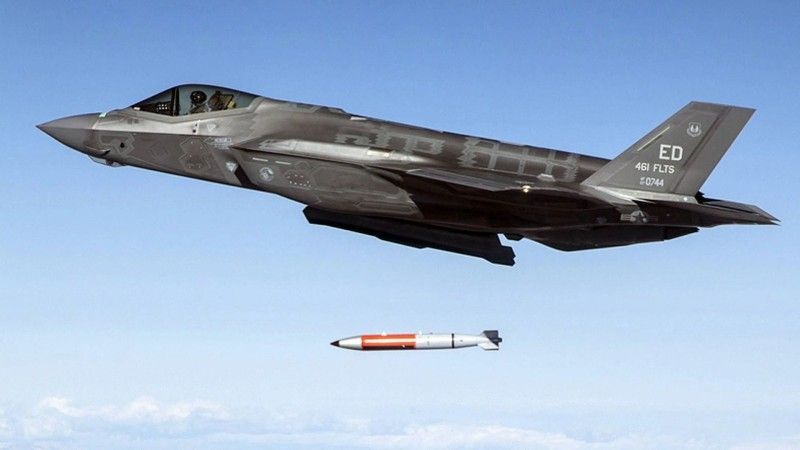
Photo. DOD F-35 Joint Program Office
An interview with John Erath, Senior Policy Director at the Center for Arms Control and Non-Proliferation, who previously served on the U.S. National Security Council, where he was responsible for European affairs.
Before turning to NATO’s nuclear-sharing arrangements, under which the United States deploys tactical nuclear weapons on the territory of selected non-nuclear NATO allies, I would like to begin with a broader question. Could you outline the current U.S. nuclear strategy, with a focus on strategic competition against global powers, including China? According to available assessments, Beijing has significantly accelerated the expansion of its nuclear arsenal in recent years. In its 2022 report on China’s military capabilities, the Pentagon estimated that China’s stockpile had surpassed 400 nuclear warheads; just one year later, the Department of Defence projected that this arsenal could exceed 1,000 warheads by 2030.
U.S. nuclear strategy has not changed significantly since the immediate post-Cold War period. Officially, U.S. nuclear weapons exist for defence and deterrence. In other words, they are weapons that policymakers hope will never be used.
That said, the strategy is evolving somewhat due to China’s ongoing nuclear buildup. China is expanding its nuclear arsenal at a rapid pace, which has raised concerns in Washington. There are serious questions about whether the current U.S. nuclear inventory is sufficient to deter both Russia and China simultaneously.
Personally, I believe the existing arsenal is more than adequate. It takes relatively few nuclear weapons to inflict unacceptable damage on an adversary, which is the essence of deterrence. However, the current debate in Washington centers on whether the United States should expand or deploy additional nuclear forces in response to China’s growth.
The challenge is that China remains highly opaque about its intentions. We do not know how large an arsenal it ultimately seeks to build, whether it aims for parity with the United States and Russia or some other level of capability. That uncertainty naturally creates concern.
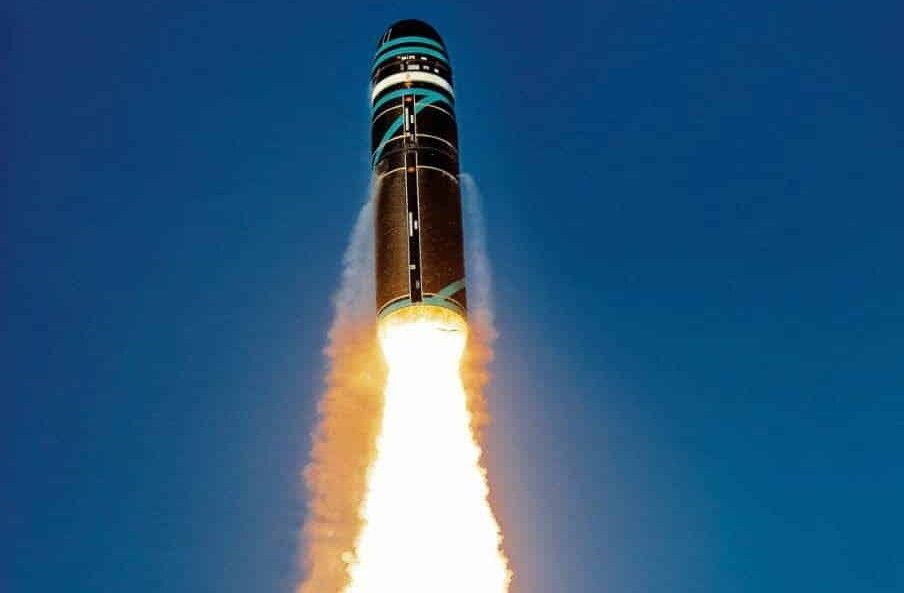
What about tactical nuclear weapons deployed in Europe? What role do they play in U.S. strategy today? It is estimated that the United States currently maintains approximately 100 tactical nuclear bombs at six military bases across five NATO member states: Belgium, Germany, Italy, the Netherlands, and Turkey.
They have little, if any, military role today. Their primary function is political. They symbolise alliance solidarity and demonstrate the U.S. commitment to defend NATO allies, including through the full spectrum of military capabilities and in accordance with Article 5 commitments.
How would you characterise the Trump administration’s approach to nuclear weapons? Are there any notable differences compared with previous administrations in terms of modernisation, arms control, or overall policy?
It is an interesting question because President Trump’s rhetoric on nuclear weapons has often emphasised that there are too many of them in the world and that their numbers should be reduced.
At the same time, the administration has consistently supported increased spending on nuclear forces, continued modernisation, and a larger share of the defence budget dedicated to nuclear capabilities. In that sense, the message is somewhat mixed.
Was the approach different under Presidents Obama (2009 – 2017) and Biden (2021 – 2025)?
Both Obama and Biden supported the modernisation program. U.S. nuclear forces had not undergone major modernisation since the Cold War, and concerns had emerged regarding the aging of some systems, as well as issues related to safety and reliability. As a result, a modernisation effort was broadly accepted across administrations.
President Obama famously delivered his Prague speech in 2009, declaring that the United States was prepared to lead by example in pursuing a world free from the threat of nuclear weapons. Two years later, in 2011, he signed the New START Treaty with Russia. However, there was relatively little follow-through toward achieving this broader vision.

You mentioned that U.S. tactical nuclear weapons are primarily political instruments. Could you elaborate on that in the context of NATO’s nuclear-sharing arrangements? Do these weapons retain any strategic value today?
Tactical nuclear weapons are largely a legacy of the Cold War. At that time, military planners assumed that any major conflict in Europe would involve nuclear weapons, and there was extensive doctrine governing their use against high-value targets, transportation networks, command centers, and similar objectives.
Today, however, conventional military capabilities can perform many of those missions more effectively. Precision-guided weapons and long-range conventional strike capabilities have significantly reduced the military utility of tactical nuclear weapons.
Moreover, modern nuclear doctrine increasingly emphasises deterrence rather than warfighting. In that framework, strategic systems, such as ballistic missile submarines or long-range bombers, provide a far more credible deterrent than short-range nuclear bombs delivered by tactical aircraft.
If they have limited military value, why are they still deployed in Europe?
Because they serve as a symbol of U.S. commitment to NATO. Support for these weapons remains relatively strong among many NATO allies.
In my personal view, the United States would probably have retired all of its tactical nuclear weapons long ago if it were not for the continued support from NATO allies who see them as an important political symbol.
Given current tensions in transatlantic relations, could that change in the near future?
It is difficult to predict what the Trump administration might do from one day to the next. I would hesitate to predict such a significant unilateral move, but at the same time, this administration has surprised observers before.
Poland has repeatedly expressed interest in joining NATO’s nuclear-sharing arrangements and is acquiring F-35 aircraft. Does Poland have a realistic chance of becoming part of the program?
That is a difficult question, but also an important one.
My honest assessment is that nuclear sharing serves a political rather than a military purpose. From that perspective, there is no obvious political reason why Poland should be excluded. At the same time, I do not see any meaningful military value in Poland’s participation, nor in nuclear sharing more broadly.
If I were advising Poland strictly from a military standpoint, I would probably suggest avoiding the expense. Nevertheless, I fully understand why Poland would want to participate if the arrangement continues to exist.

From the Polish perspective, participation would strengthen the U.S. military presence in the region. Is there any willingness on the American side to support such a move?
I do not think that there is currently a strong understanding in Washington of the Polish perspective on this issue.
The guiding principle of the current administration is „America First.” Decisions are increasingly evaluated through the lens of immediate U.S. interests and domestic political considerations. As a result, I do not believe that significant attention is being devoted to Polish concerns at the moment.
What political or institutional obstacles would Poland face in joining the program?
Any such decision would require approval within NATO’s Nuclear Planning Group (NPG), which is one of the alliance’s key policy bodies.
Let me clarify that since its creation in 1966, the Nuclear Planning Group (NPG) has functioned as NATO’s key body for consultations and decisions concerning nuclear deterrence, covering matters such as policy, doctrine, planning, force posture, capabilities, and exercises.
I would expect resistance from some European allies. Many governments do not want to create the impression that nuclear weapons are spreading further eastward in Europe, and some remain concerned about provoking Russia.
Despite recent events, there are still governments that favor a cautious approach toward Moscow. Those countries would likely oppose any initiative that could be interpreted as expanding NATO’s nuclear footprint.
Recent media reports, including an article in theFinancial Times, suggested that the United States may be considering expanding nuclear-related deployments in Europe, possibly including Poland. How credible do you find such reports?
The article I read referred not to nuclear weapons themselves but rather to nuclear-capable aircraft. That is a very important distinction.
The discussion was likely about advanced aircraft such as the F-35. Deploying such aircraft in response to Russian aggression would be a reasonable step because their primary mission is conventional warfare, not nuclear operations.
I would therefore interpret such deployments primarily as the forward positioning of highly capable conventional military assets.

Some reports suggest that U.S. officials are willing to consider deploying nuclear-capable aircraft beyond the six current nuclear-sharing countries. What message would Washington be trying to send?
The purpose would be reassurance. The United States wants to signal to its allies that it remains committed to European security and is not withdrawing its attention from the region despite developments elsewhere, particularly in the Middle East.
Looking ahead five to ten years, do you think we could see F-35s, or even nuclear weapons, deployed in Poland or the Baltic states?
If I had to make a prediction, I would say that the deployment of aircraft is certainly possible. The deployment of nuclear weapons is much less likely.
If the United States ever seriously considered employing nuclear weapons in a European conflict, which I sincerely hope never happens, there are far more effective delivery systems available than forward-based tactical nuclear bombs. Ballistic missile submarines and long-range strategic bombers provide significantly more capable options.
For that reason, I think aircraft deployments are plausible, whereas nuclear weapon deployments remain unlikely.