- KOMENTARZ
- WIADOMOŚCI
Will Türkiye maintain its distance from the Iran War?

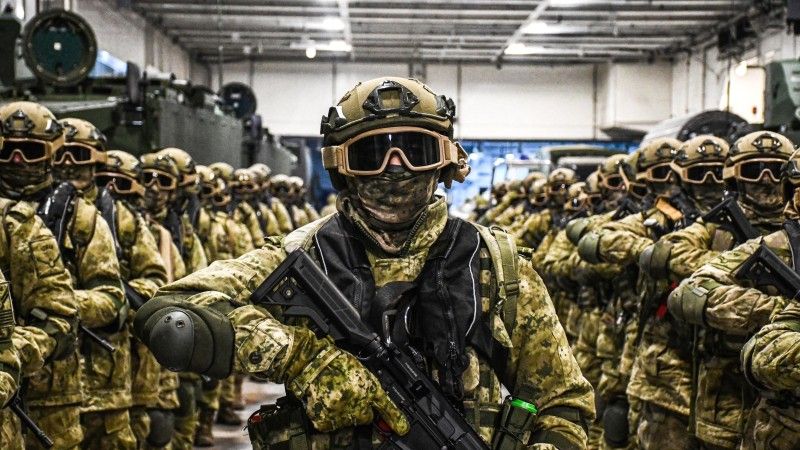
The escalating confrontation between Israel, the United States, and Iran has fundamentally impacted the strategic situation in the Middle East. For Türkiye, this newly escalated conflict represents not only a matter of regional security, but also a multidimensional challenge that affects nearly every pillar of its foreign policy – from border security, through economic stability, migration management, and even diplomatic stance.
The Diplomatic path and the ignored Istanbul process
One of the most notable aspects of the Iran crisis is Türkiye’s earlier efforts to promote diplomatic negotiations. Turkish officials proposed Istanbul as the venue for nuclear negotiations between Iran and Western powers. From Ankara’s perspective, the Istanbul format would provide Tehran with a diplomatic shield.
Launching a multilateral negotiation process in Türkiye (a NATO member and regional power) could have increased the political costs of military attacks on Iran, which ultimately rejected the proposal and continued negotiations in Oman. According to reports, Turkish officials viewed this decision as a strategic miscalculation by Tehran.
As a result, limiting negotiations to a narrower bilateral format focused primarily on the nuclear issue reduced the diplomatic barriers to potential military action against Iran. From Ankara’s perspective, the absence of a broader multilateral framework increased the likelihood of escalation, a point emphasized by Foreign Minister Hakan Fidan in one of his interviews. Moreover, Fidan described Iran’s attacks on Oman, Qatar, Kuwait, Bahrain, Saudi Arabia, the United Arab Emirates, and Jordan as an „extremely flawed strategy”. He noted that many of these countries had launched diplomatic attempts to de-escalate the conflict hours before the military operations began. He argued that attacking them not only increases regional tensions but also undermines potential diplomatic channels that could help de-escalate the crisis. According to the minister, Iran appears to be pursuing a strategy driven by the logic that”if it goes down, it will take the region with it”. He warned that attacking neighbouring countries – especially their energy infrastructure – could provoke retaliation and trigger a broader regional war.
This episode highlights a broader strategy of Turkish diplomacy. Ankara often seeks to position itself as a mediator capable of resolving regional conflicts. Such mediation efforts serve both practical and strategic purposes. They can reduce the likelihood of war while strengthening Türkiye’s diplomatic influence without direct military involvement.
See also 

Strategic distance in the face of regional escalation
Ankara’s response to the current crisis is best described as strategic distance. Türkiye has not joined a military campaign to pressure Iran or aligned itself politically with Tehran. Instead, Turkish decision-makers have adopted a stance focused on de-escalation, diplomatic engagement, and domestic preparations for potential crisis scenarios.
In practice, this balancing strategy has manifested itself in several key decisions. Türkiye has refused to allow the use of its territory or airspace for military operations against Iran, while closely coordinating its defence efforts with NATO. Ankara has also repeatedly called for de-escalation and diplomatic negotiations and condemned violations of international law, while avoiding direct involvement in the conflict, positioning itself as one of the few actors capable of communicating with both Tehran and Western capitals.
Behind this diplomatic caution, however, lies a deeper strategic calculation. Turkish decision-makers understand that the outcome of the conflict with Iran could fundamentally alter the regional balance of power, and their current approach suggests they have learned from previous regional conflicts, in which they played a more proactive role.
While Ankara may favour certain scenarios, none of them appears to fully serve Turkish national interests. From Türkiye’s perspective, the most dangerous scenario remains the potential collapse of the Iranian state, which could further destabilize a region already weakened by decades of conflict.
Ankara is therefore trying to balance two competing threats: a strengthened Iran, capable of dominating all (or much of) the region, and a weakened or failing Iran, which could create a security vacuum and thus destabilize Türkiye’s eastern border.
The pre-existing regional balance
To understand Türkiye’s current position, it is necessary to analyze the strategic situation prior to the escalation. Despite ideological differences (especially those that emerged after the 1979 Iranian Revolution), the two countries maintained relatively stable diplomatic relations, trade, and cooperation, including in the security sphere. They also shared concerns about Kurdish separatism, which led to overlapping security interests despite broader geopolitical rivalry. This dual approach, based on rivalry combined with pragmatic cooperation, remains a defining feature of Turkish-Iranian relations.
At the same time, over the past two decades, Türkiye and Iran have emerged as two of the most influential regional powers in the Middle East. Both states have pursued ambitious foreign policies aimed at expanding their influence across several regions, with their rivalry particularly visible in Syria, Iraq, and the South Caucasus.
In Syria, Türkiye and Iran supported opposing sides in the civil war. Iran invested heavily in maintaining the Assad regime, sending military advisors, funding militias, and coordinating with Russia to stabilize Damascus. Türkiye, in turn, supported opposition groups and conducted numerous military operations in northern Syria, aimed both at combating Kurdish militias and shaping the post-war political order in the neighboring country.
In Iraq, the two countries competed for influence, leveraging their political networks and existing security ties. Following the US invasion of Iraq in 2003, Iran established close ties with Iraqi Shiite militias and political parties. Meanwhile, Türkiye expanded its economic presence in northern Iraq while carrying out military operations against PKK bases in the region.
The South Caucasus has become another arena of strategic rivalry. Türkiye’s decisive support for Azerbaijan during the 2020 Nagorno-Karabakh War significantly shifted the regional balance of power, weakening Iran’s influence while simultaneously strengthening Türkiye’s geopolitical influence. The situation is further complicated by the new economic and political project, TRIPP (Trump’s Route for International Peace and Prosperity), which excludes any Iranian involvement in the plan.
Nevertheless, it is worth noting that despite the aforementioned areas of rivalry, Ankara and Tehran have consistently avoided direct confrontation for decades. Their rivalry, however, appears to be based on a mutual recognition that both countries benefit from regional stability.
According to Turkish strategic assessments, the period prior to Hamas’s attack on Israel on 7 October 2023 was marked by Iran’s relatively stable position in the regional balance. In this context, its influence remained significant but manageable within the broader regional balance of power, which, from Ankara’s perspective, was advantageous for several reasons.
- First, Türkiye effectively limited Iran's ability to expand its regional networks while maintaining sufficient state capacity to preserve internal stability;
- Second, Türkiye created strategic space to pursue its interests in neighboring regions, particularly in northern Iraq and the South Caucasus;
- Third, the existing balance prevented the emergence of uncontrolled instability along Türkiye's eastern borders, which is particularly important in the context of Kurdish separatist groups.
It is worth emphasizing, however, that Türkiye did not aim to completely eliminate Iran’s influence, as such an outcome would offer it little strategic benefit. Instead, it benefited from a system in which Tehran remained a significant regional actor, but whose capabilities were limited by external pressures and internal constraints. However, the current escalation of regional tensions triggered by coordinated attacks on Iranian targets has disrupted this balance, forcing Turkish policymakers to reassess their strategic objectives.

Turkish security concerns
The possibility of a prolonged war creates additional risks extending far beyond Iran itself. Among Turkish policymakers, one of the most serious concerns is that the conflict could weaken Iran’s central government (regardless of who ultimately leads the state) and thereby generate new security challenges for Türkiye as well.
These threats would primarily include the spread of proxy conflicts in the Middle East, increased militant activity in border regions, disruptions in energy markets, and increased migration flows.
Of all the strategic risks arising from the Iranian conflict, the Kurdish question remains the most sensitive for Turkish decision-makers. The collapse of state authority in Iran could enable armed organizations, including terrorist groups, to expand their operations in border regions. For Ankara, preventing the emergence of autonomous Kurdish regions along its borders remains a key pillar of its foreign policy.
The Coalition of Political Forces of Iranian Kurdistan (an alliance of several Kurdish parties) has therefore attracted considerable attention from Turkish security circles. One of the groups that Ankara monitors particularly closely is the Kurdistan Free Life Party (PJAK), the Iranian branch of the PKK, which has operated in Iran for years but whose influence has so far remained relatively limited due to the strength of Iranian state institutions. If these institutions weaken, PJAK and other Kurdish groups may seek to expand their political and military presence, potentially posing a direct threat to Türkiye’s national security.
The PKK is recognized as a terrorist organization by the United States, the European Union, and Türkiye. For this reason, Washington does not officially support the PJAK or other Kurdish armed groups operating against the Iranian government (although indirect dynamics may still enable Kurdish actors to benefit from current U.S. actions and potentially from closer cooperation). Direct support for a group linked to the PKK would contradict U.S. counterterrorism policy and could trigger a serious crisis in relations with Türkiye, a NATO ally (something already seen on a smaller scale during the Syrian civil war, when the United States supported the SDF, in which Kurdish forces play a dominant role). It is also worth noting that Kurdish trust in the United States has significantly declined following the events in Aleppo, Raqqa, and the al-Hol camp, where Washington was deemed incapable of containing Islamist militants.
Despite official statements, Turkish policymakers remain concerned that current attempts to weaken the Iranian state by encouraging grassroots ethnic mobilization could have unintended consequences. From Ankara’s perspective, preventing such events is a strategic priority. This explains why Turkish officials consistently emphasize the importance of preserving Iran’s territorial integrity.
Migration risk and contingency planning
Alongside the Kurdish issue, the risk of increased migration from Iran appears to be one of the most pressing concerns for Turkish policymakers. Türkiye has already hosted millions of refugees from Syria and Afghanistan, making it the world’s largest refugee-hosting country. Public attitudes towards migration have become increasingly critical in recent years, putting political pressure on the Turkish government to prevent new arrivals. Estimates suggest that up to one million people could attempt to enter Türkiye if internal instability in Iran continues to escalate.
To prepare for the worst-case scenario, Turkish authorities have significantly strengthened their border security infrastructure and undertaken extensive contingency planning, including measures to prevent irregular migrants from entering Türkiye. This could include, among other steps, the establishment of temporary humanitarian zones on the Iranian side of the border. These steps suggest that, unlike during the Syrian crisis, Ankara is unlikely to adopt an open-door policy this time.”
In recent years, Türkiye has significantly reinforced its border security infrastructure, including the 560-kilometer frontier with Iran. The eastern border is now equipped with advanced surveillance technologies, physical barriers, and patrol systems designed to control cross-border movement. This infrastructure includes hundreds of observation towers, long sections of concrete wall, and extensive defensive barriers, while drones and reconnaissance aircraft provide continuous monitoring.
Economic issues
Beyond security concerns, the Iranian conflict also poses economic threats to Türkiye, particularly to its energy markets, which constitute its most pressing transit channel. Escalating conflict in the region typically leads to a rise in oil prices, which, given Iran’s strategic location, impacts global supply markets at an exceptionally rapid pace.
For Türkiye, which imports a significant portion of its energy needs, higher oil prices translate directly into macroeconomic pressures, widening the current account deficit and thus hindering efforts to combat persistently high inflation.
Another important pillar of the economy is tourism, which represents a major source of foreign currency for Türkiye. Perceptions of regional instability may deter international travel, potentially reducing tourism revenues even in Türkiye, despite the country not being directly exposed to open armed conflict.
Missile incident near Turkish Airspace
The incident on March 5, 2026, demonstrated how quickly the escalation of the conflict with Iran can spread into NATO territory. The Turkish Ministry of Defense announced that a missile fired from Iran was detected while flying through Iraqi and Syrian airspace. Before reaching Turkish airspace, the missile was intercepted and destroyed by NATO air and missile defense systems deployed in the eastern Mediterranean. According to Ankara, fragments of the interceptor missile fell in the Dörtyol district of Hatay Province, near the border with Syria. Authorities confirmed that the fragments did not cause any casualties or material damage. The incident prompted an immediate reaction from Tehran. The Iranian General Staff said on March 5 that Iran”respects the sovereignty of a neighboring and friendly country likeTürkiye*”*, stressing that no missile had been deliberately aimed at Turkish territory.
Ankara avoids escalation and debate on Article 5
Despite the seriousness of the missile incident near Turkish airspace, Ankara has not expressed any intention to invoke NATO’s collective defense clause under Article 5. Turkish officials described the incident as an isolated security episode rather than a deliberate act of aggression against a NATO member. Emphasizing that the missile did not enter Turkish airspace and that Türkiye was not the intended target (suggesting a potential path toward Cyprus), Ankara has made clear its preference for de-escalation over alliance mobilization. While it has been repeatedly emphasized that Türkiye was not the intended target, the incident demonstrated how quickly a regional confrontation can approach the borders of a NATO member state.
NATO Dynamics and Strategic Autonomy
It cannot be ignored that Türkiye’s NATO membership sometimes complicates its strategic calculations. The country hosts several key military installations used by allies, including Incirlik Air Base and the Kürecik radar station. These facilities play a significant role in NATO’s missile defense architecture. However, Ankara has ensured that they are not directly involved in operations against Iran. This approach reflects Türkiye’s broader commitment to strategic autonomy, which includes maintaining an independent foreign policy that reflects, above all, its own national interests.
Possible Turkish strategies in the event of a prolonged conflict
If the war remains territorially limited: Türkiye would mainly face concerns related to rising energy prices, inflation, and the increasing instability in the region. Domestically, the government will focus on monitoring border areas, strengthening intelligence coordination, and maintaining internal stability without major military escalation.
If the war spreads regionally: Ankara will likely adopt a stronger military posture and further tighten border controls, increasing military readiness and surveillance to prevent the risk of spreading militant activity or illegal migration flows. At the political level, the government would likely stress national unity, crisis management, and regional diplomacy aimed at preventing further escalation of the conflict.
If Türkiye becomes a direct target: The government will pursue closer NATO coordination and defense mobilization. This could include activating allied consultation mechanisms (under Article 4 of the North Atlantic Treaty), strengthening air and missile defense systems, and deploying additional armed forces to regions particularly vulnerable to the conflict.
Regardless of how the situation develops, continued mediation efforts are expected, as well as constant monitoring of the border and the overall situation in the region. At the same time, Ankara may be preparing to provide humanitarian aid in Iranian border regions, which could be used as buffer zones if necessary.