












- WIADOMOŚCI
East Front News #106: US to focus on tactical nuclear weapons and Ukraine's Patriot problem

East Front News is a weekly newsletter summarizing the past week’s most important events concerning security and the situation in the Central and Eastern Europe region. It includes original opinions and comments, along with key news items significant from a Polish perspective. If you would like to receive this newsletter, please sign up by clicking
Türkiye wants to enter Lebanon after UNIFIL. A new front in the rivalry with Israel and France?
Türkiye has declared its readiness to participate in future security arrangements in Lebanon as the UNIFIL mission approaches the end of its mandate. Ankara could provide training, military equipment, naval assets or potentially troops to support the Lebanese Armed Forces.
Greater Turkish involvement would strengthen Ankara’s influence in the Eastern Mediterranean but could also intensify competition with France, Israel and Iran. The final shape of any post-UNIFIL security mechanism remains uncertain.
Author: Natalia Adrianna Potera
See also 

The US will focus on tactical nuclear weapons. Opportunity for Poland?
The Pentagon is considering changes to US nuclear doctrine that would place greater emphasis on low-yield tactical nuclear weapons. The objective is to make American deterrence more credible against limited nuclear threats from Russia and China.
For Poland, the shift could create new opportunities for deeper participation in NATO’s nuclear deterrence architecture. Full implementation would, however, require additional delivery systems and political decisions in Washington and allied capitals.
Author: Michał Górski

Ukraine’s Patriot factory illusion
Ukraine’s efforts to obtain a licence to manufacture Patriot interceptors reflect a legitimate need for greater independence, but receiving US political approval would only be the beginning of a lengthy industrial process.
Export controls, technology transfer, financing, production capacity and the security of manufacturing facilities remain major obstacles. A production line located in Poland, Germany or another NATO country could be safer but would still require substantial political and industrial commitments.
Author: Aleksander Olech
See also

Not all is lost just yet? The US and Ukraine are talking about producing Patriot missiles
Washington and Kyiv are continuing discussions on the possible production of PAC-3 Patriot missile components in Ukraine despite growing doubts about granting Kyiv a full manufacturing licence.
A possible compromise could involve producing selected components in Ukraine while conducting final missile assembly in another European country, most likely Germany. Establishing such production would nevertheless require considerable time and investment.
Author: Michał Górski

Secret European-Russian meeting?
Former European diplomats and national security officials reportedly held discreet talks with Russian representatives in Vienna. The discussions concerned possible conditions for future negotiations related to the war in Ukraine.
The meeting was organised outside official diplomatic channels, although some European governments were reportedly aware of the initiative. Similar unofficial contacts have also taken place in Azerbaijan.
Author: Patryk Jagnieża
See also

Sweden practised the burial of soldiers
During the AURORA 26 exercise, Sweden tested procedures for dealing with large numbers of military fatalities, including identification, transportation and burial. The exercise involved both military and civilian institutions.
The initiative demonstrates the breadth of Sweden’s total-defence model. Preparing for war means not only maintaining weapons and military formations, but also ensuring that state institutions can manage casualties and maintain essential services during a major conflict.
Author: Aleksander Olech

US and Ukraine are sharing intel again
Intelligence cooperation between Washington and Kyiv has reportedly returned to a high level. Improved information-sharing has supported Ukrainian strikes against targets inside Russia and strengthened Kyiv’s early-warning capabilities.
Recent Ukrainian attacks on Russian energy infrastructure have contributed to economic pressure on Moscow. Continued US intelligence support could therefore influence both battlefield developments and Ukraine’s negotiating position.
Author: Patryk Jagnieża

Defending Greenland and deterring Russia: Denmark overhauls its draft
Denmark has introduced an 11-month, gender-neutral conscription model designed to turn recruits into operational soldiers. The reform reflects growing concern about Russia as well as tensions surrounding Greenland.
Copenhagen intends to substantially increase the number of conscripts and integrate them directly into operational formations. Danish recruits will also train in Greenland as part of preparations for Arctic defence.
Author: Jakub Bielamowicz

Russia takes Africa once again
Moscow is preparing to host the third Russia–Africa summit, with more than 30 countries reportedly confirming their participation. Russia will use the event to demonstrate that it remains an important international partner despite the war against Ukraine.
The real significance of the summit will lie in bilateral meetings and agreements covering defence, energy, diplomacy and economic cooperation. Russia continues to use high-level political engagement to strengthen its influence across Africa.
Author: Aleksander Olech
See also

A thaw in diplomatic relations and the revival of the T-70 programme
Turkish Aerospace Industries and Lockheed Martin are preparing to resume production of the T-70 multi-role helicopter after delays that affected the programme. The aircraft is Türkiye’s locally adapted version of the Sikorsky S-70 Black Hawk.
The programme combines an established American platform with Turkish avionics, mission systems and domestic industrial participation. T-70 helicopters are intended for military, security, firefighting and search-and-rescue missions.
Author: Natalia Adrianna Potera

Is the new EU’s Migration and Asylum Pact an act of securitisation of migration?
The EU Migration and Asylum Pact introduces stricter asylum procedures and a new solidarity mechanism intended to distribute responsibility for migration more evenly between member states.
The reform also reflects a broader securitisation of migration in European politics, where irregular migration is increasingly presented not only as a humanitarian or social issue but as a challenge to state and border security.
Author: Julia Makurat

Intelligence warned, the government slept: Anatomy of Spain’s debacle in Ceuta
Spanish authorities reportedly received numerous warnings before a major increase in attempts to cross the border into Ceuta. Security services and local authorities had observed growing pressure and warned Madrid about the possibility of a coordinated operation.
The government’s failure was therefore not primarily an intelligence problem but a political and decision-making one. Madrid’s cautious approach towards Morocco and delayed reaction allowed the situation at the border to deteriorate significantly.
Author: Adam Jawor

Is Russia preparing for another mobilisation? Recruitment offices are hiring
Thousands of vacancies connected with military registration have appeared in Russia, raising speculation that the Kremlin may be preparing for another mobilisation campaign. The scale of recruitment is considerably larger than before the 2022 mobilisation.
Other explanations remain possible, including changes to military-registration laws or attempts to increase recruitment into the armed forces without formally announcing another mobilisation. The available evidence does not yet confirm Moscow’s intentions.
Author: Maciej Szopa

Polish aircraft supports EU inspection of shadow fleet tanker
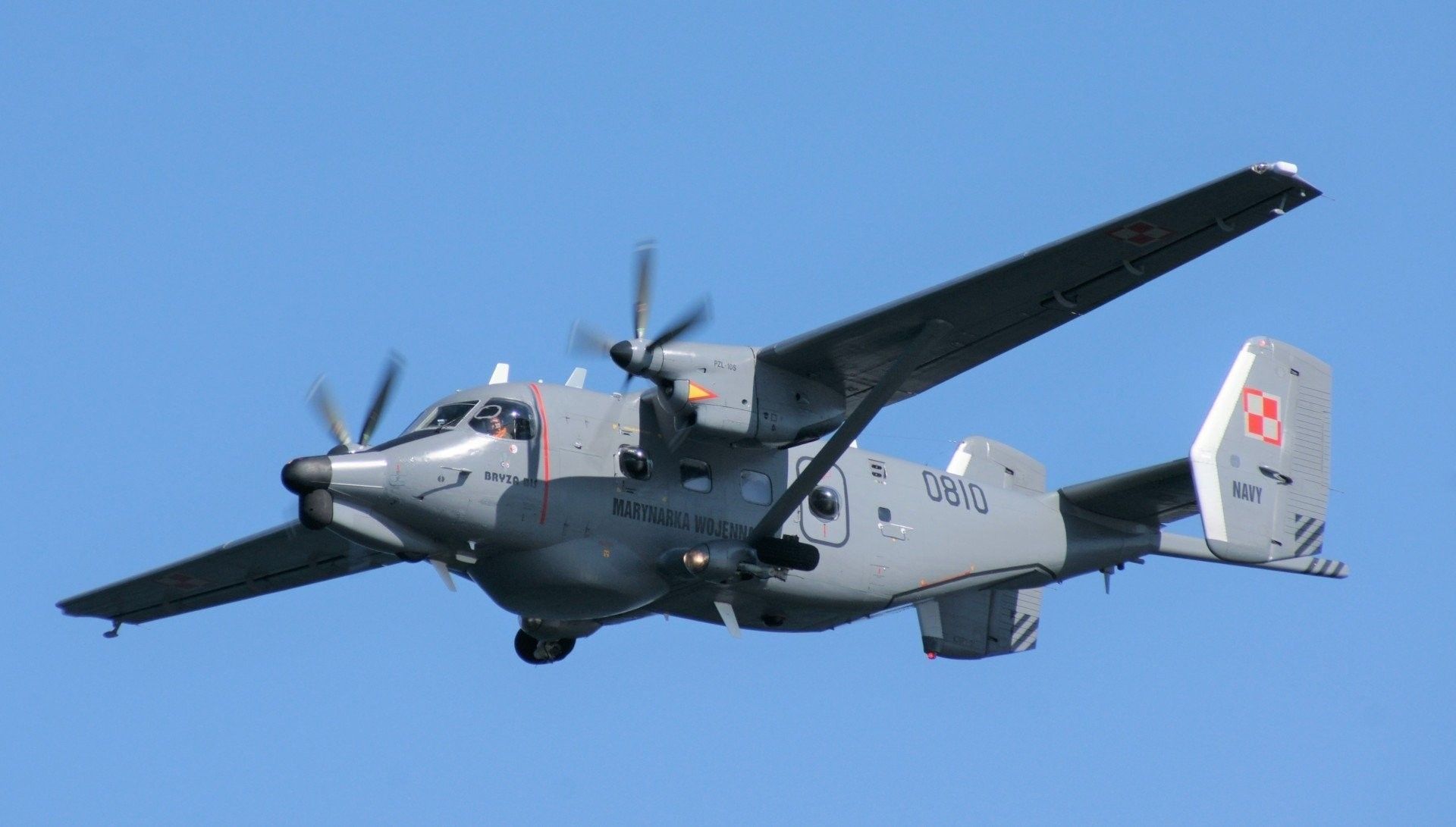
A Polish M28 Bryza B1R patrol aircraft supported an EU operation inspecting the sanctioned tanker Toa Payoh in international waters near Italy. The vessel has been identified as part of Russia’s shadow fleet.
The operation was conducted within EUNAVFOR MED IRINI, whose responsibilities now include checking vessels suspected of helping Russia circumvent sanctions. Poland’s participation demonstrates its contribution to wider European maritime-security operations.
Author: Wojciech Kozioł
Taiwan strategist: Push for deeper ties with Poland
Taiwanese and Polish security interests increasingly overlap in areas such as drones, resilient supply chains, air defence and reducing dependence on Chinese technology. Taiwan’s layered T-Dome concept could also offer lessons for Poland.
Bryce C. Barros argues that Poland should deepen relations with Taiwan and develop greater domestic technological capacity. Cooperation on drones and dual-use technologies could strengthen both countries while reducing vulnerabilities created by Chinese-controlled supply chains.
Author: Antoni Łukasik

- PAC-3
- PATRIOT
- PENTAGON
- UNIFIL
- M28 BRYZA
- RUSSIA
- POLAND
- TAIWAN
- EUROPEAN UNION
- SWEDEN
- TURKEY
- DENMARK
- UKRAINE
- FRANCE
- ISRAEL
- UNITED STATES
- EUROPE
- COOPERATION
- AIR DEFENCE
- DIPLOMACY
- MIGRATION
- LEBANON
- WAR IN UKRAINE
- AFRICA
- TACTICAL NUCLEAR WEAPONS
- TÜRKIYE
- INTELLIGENCE
- GREENLAND
- SHADOW FLEET
- AURORA 26
- MOBILISATION
- ILLEGAL MIGRANTS
- T-70 HELICOPTER


