












- WIADOMOŚCI
- ANALIZA
Ukraine’s Patriot factory illusion

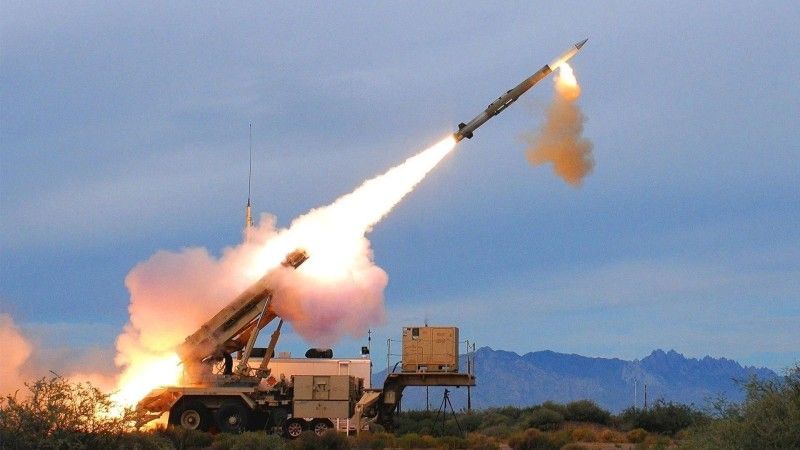
Ukraine was right to seek greater independence in the production of Patriot interceptors. However, receiving an American licence would not have meant that missiles could immediately begin leaving a Ukrainian or European factory. The real obstacles concern export controls, congressional oversight, financing, industrial capacity and, above all, the security of the production site.
The Kyiv Independent reports that Ukraine had been trying for almost two years to obtain permission to manufacture Patriot interceptors, either domestically or jointly with European partners. Kyiv argues that an earlier positive decision from Washington could have prevented the current shortage. This assessment is understandable, but it significantly simplifies the industrial and legal reality.
The US president cannot simply grant full rights to manufacture one of the most sensitive American missile systems during a bilateral meeting. Such a project would require State Department approval, the transfer of protected technical data and compliance with American export-control regulations. It would also be notified to Congress, including the relevant committees in the Senate and House of Representatives. Political consent from the White House would therefore be only the beginning of the process.
Even if Washington had agreed two years ago, Ukraine would probably not yet be producing hundreds of missiles. Establishing a secure production line, transferring technology, selecting suppliers, training personnel and certifying the final interceptor could take several years, potentially even five. This is particularly important because the existing American production system is itself struggling to meet rapidly growing global demand.
The second problem is money. A Patriot production programme would require billions of dollars before the first interceptor was completed. Someone would have to finance the factory, machinery, components, security, personnel, testing and long-term supply contracts. Ukraine is fighting a war and remains dependent on foreign assistance. It is therefore necessary to ask whether Kyiv expected the United States, European countries or an international fund to cover almost the entire cost.

There is also the fundamental question of location. A factory built in Ukraine would immediately become one of the highest-priority targets for the Russian Federation. It would require hardened infrastructure and permanent protection by layered air defence, consuming part of the same resources Ukraine is trying to increase.
Production in Poland, Germany or another NATO country would be safer, but not simple. The host country would have to accept the cost, legal responsibility and additional security risk. American companies and authorities would also have to approve the transfer of technology and the participation of local industry. Producing selected components is one thing; creating an entire interceptor manufacturing chain is something entirely different.
On the one hand, Ukraine correctly identified the danger of relying entirely on future American deliveries. On the other, it remains unclear what specific industrial model Kyiv proposed. Where was the production line supposed to operate? Who was expected to pay for it? Who would provide the components, protect the facility and guarantee that the missiles produced there would be transferred primarily to Ukraine?

A dangerous precedent is also emerging. Kyiv is now publicly criticising decisions made by both the Biden and Trump administrations, while simultaneously entering increasingly visible disputes with representatives of NATO countries, including Poland. Ukraine has the right to demand faster assistance and to identify mistakes made by its partners. Nevertheless, transforming each delay or refusal into a political conflict risks weakening the coalition on which Ukrainian security still depends.
Ukraine needs support, not further disputes with its allies. It needs interceptors, additional air-defence systems and faster European and American production. Most importantly, Ukraine needs this support before the coming winter, when Russia will once again attempt to destroy its energy infrastructure. A factory that might begin production in several years will not intercept the missiles launched against Ukrainian cities today.


