












- WIADOMOŚCI
- KOMENTARZ
Sweden practised the burial of soldiers

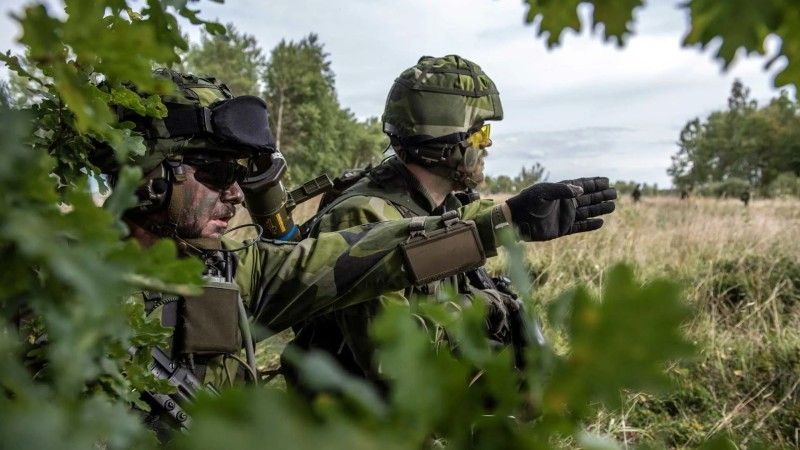
During the AURORA 26 exercise, Sweden and its allies tested not only military capabilities, logistics and cooperation with partners. They also tested one of the most sensitive elements of a state’s preparation for war: care for the fallen, identification, transport and burial with dignity.
Exercise AURORA 26 took place in the Baltic region, including across large parts of Sweden, at the turn of April and May. Nearly 20,000 people took part. The part of the exercise involving the Church of Sweden concerned the so-called war graves service: caring for a large number of those killed in wartime and burying them in a respectful and dignified manner. The entire chain of actions was tested, from caring for the bodies of fictional casualties, their identification and transport, to burial. It was the first time such an exercise had been organised jointly with all the relevant actors involved.
The comments stressed that both the Swedish Armed Forces and the Church of Sweden are making joint efforts to ensure that every fallen person is buried in a cemetery in their home town. If this is not possible, temporary graves should be able to become permanent graves.
This shows how Sweden understands total defence. War is not only about military units, ammunition, tanks and aircraft. The state must also know what to do when there are casualties. It must have procedures for the armed forces, administration, police, church institutions, identification services and transport. That is why the exercise involved not only the Ministry of Defence, but also civilian institutions.
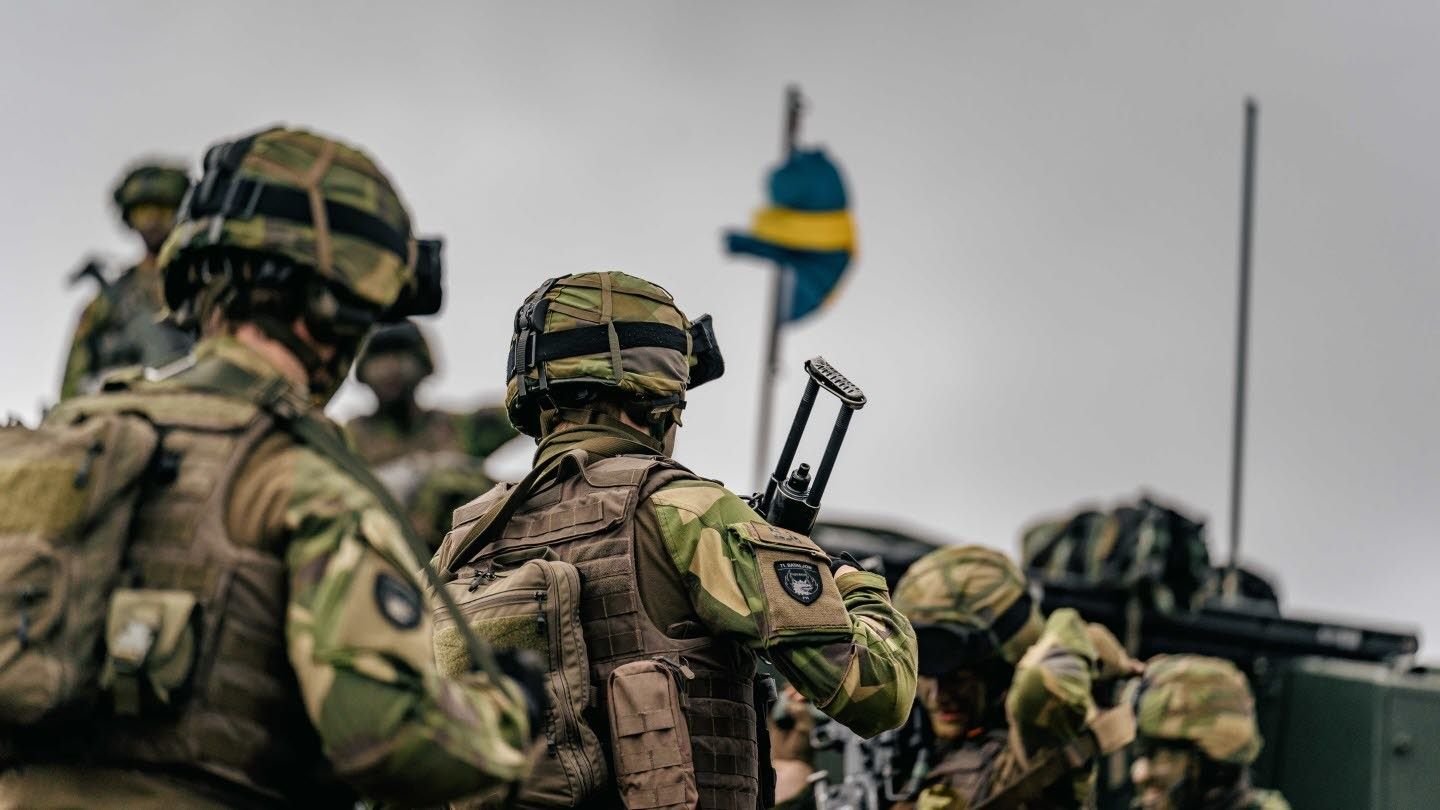
Sweden is preparing for scenarios that are difficult both psychologically and organisationally. Participants in the exercise point out that realistic training is extremely valuable, because questions and decisions arise that institutions had not previously had to face. This makes it possible to check what works, but also what needs improvement.
The Swedes strongly emphasise that this is not about digging mass graves. Every fallen soldier is to receive their own grave. This applies to Swedish forces, allied forces, but also to those killed on the opposing side. The principle is to use the nearest possible cemetery, regardless of the religion or other background of the deceased. This is an important part of the exercise, because even in wartime conditions the state is expected to maintain legal, moral and organisational standards.
The Swedish Armed Forces and the Church of Sweden seek to ensure that every fallen person is laid to rest in a cemetery in their home town. If this is not possible, a temporary grave should later be able to become a permanent one.
Each burial is also accompanied by a short ceremony, during which a specially prepared text is read:
“You died for Sweden. You fulfilled your duty and this is recognised. This burial is taking place out of necessity and is temporary in nature. Rest and wait here.”
Variants of this text were also prepared for fallen allies and for enemy soldiers, as well as a Swedish version. It is a small but very significant element of the whole exercise. It shows that even in war, the state wants to preserve the distinction between military necessity and the duty to show respect towards the dead.
Including procedures connected with the handling of war graves in the exercise shows that Stockholm sees crisis preparedness as something broader than just a matter for the army. It is about the whole state, its institutions, social resilience and the ability to function in a situation where war affects not only soldiers, but also administration, local communities and the families of the fallen.

This is the essence of the Swedish approach: defence does not end with the military. It also includes the Church, the police, state agencies, the identification system, cemeteries, transport, ceremony and the ability to preserve dignity when the state is under the greatest pressure. Sweden is not only practising how to fight. It is also practising how to preserve order, responsibility and humanity in wartime.
NATO countries, after observing four years of war in Ukraine, must be aware that war is inseparably linked with death and burial. In the Russian-Ukrainian war alone, more than 500,000 people have already been killed, while the total number of dead and wounded is counted in the millions.
Although burial exercises sound terrible and are connected with the spectre of war, in Sweden they have become part of the preparatory process. The countries participating in AURORA, including Poland, are aware that a dignified burial is an important element. War is not only about sending drones, shooting down missiles and deploying strike groups. Burying the dead with dignity matters. This applies to those killed in Russia and Ukraine, both today and in the past.


