












- ANALIZA
- WAŻNE
- WIADOMOŚCI
Ready for War? Sweden’s Total Defence

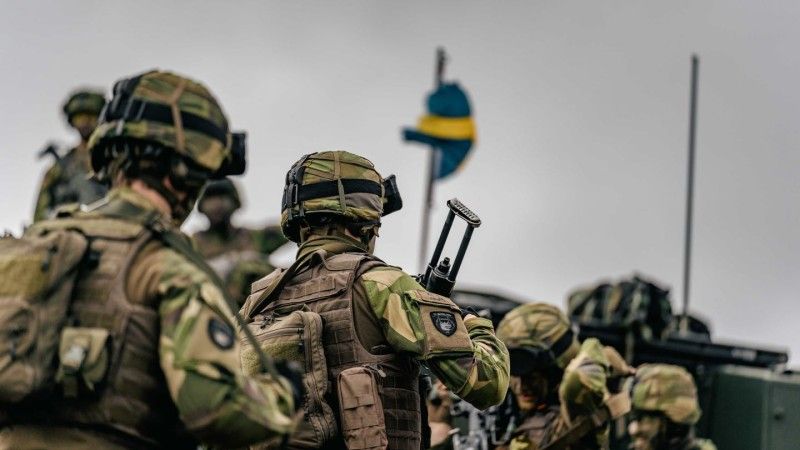
Sweden has undergone a profound transformation in how it perceives its own defence system. For years, it pursued a policy of military non-alignment, which indirectly led to a reduction in military potential and declining defence expenditure. The turning point proved to be the increasingly aggressive policy of the Kremlin. Even without sharing a land border with Russia, Stockholm initiated extensive changes to its doctrine of total defence, based on two pillars: military and civil. Today, Sweden serves as one of the most significant examples for the states of Central and Eastern Europe on how to consistently build civil defence.
The transformation of Swedish security policy is an important reference point for Central and Eastern European states. A country that, just a decade ago, possessed limited military capabilities and had effectively suspended conscription, now plans to reach more than 130,000 soldiers within its wartime structure by 2035 and maintains a network of approximately 65,000 civilian shelters. At the same time, citizens have been obliged to be prepared to survive independently for a week, which clearly demonstrates that total defence is not solely the domain of the armed forces, but a collective effort of the entire society. From the regional perspective, and particularly for Poland, this means the necessity of combining military modernisation with the consistent strengthening of civil defence.
Swedes no longer speak of „peace in the Baltic” but of systemic readiness. Their response is multi-layered: rapid restoration of military capabilities, rigorous citizen self-sufficiency for one week, and a 48-hour readiness regime for shelters. It is a doctrine of a state-society, in which the duties of the individual, local government, and state are defined from the top. The state feels threatened, and the state responds. Russia attacked in 2014, and more than a decade has since passed.
The Evolution of the Swedish Security System
What Sweden used to be most associated with was the concept of neutrality, based on the unilateral commitment not to engage in wars or international conflicts – as Stockholm demonstrated during both world wars. More precisely, after the Cold War, Sweden pursued a policy of military non-alignment militär alliansfrihet), which ended with its full NATO membership on 7 March 2024 (with the ceremonial flag-raising taking place on 11 March 2024).
Sweden continued this policy also during the Cold War, though it proved challenging, as the state played an important geostrategic role for both blocs. Its security doctrine worked effectively until the 1990s. The collapse of the USSR and the bipolar system then implied the need to redefine policy. Sweden chose integration within the European Union, but without NATO membership. A period of geopolitical détente resulted in the abandonment of general conscription and the redirection of resources towards international peacekeeping operations.
A sober diagnosis came in 2014, after Russia’s annexation of Crimea. A series of plans was developed, though their implementation only followed Russia’s full-scale aggression against Ukraine in 2022. The decision on Sweden’s accession to NATO was finalised on 7 March 2024. On that day, Sweden became the 32nd member of the North Atlantic Alliance. This was a step of enormous significance – the country overcame decades of societal reluctance and political restraint towards NATO membership.
Totalförsvaret – The Doctrine of Total Defence
Despite pursuing neutrality for many years, Sweden developed the foundations of total defence, based on four pillars: military, civil, psychological, and economic. Today, it is the basis of the national security system, which relies on both military and civil components.
The first includes the professional army, reservists, and conscripts, all equipped with modern systems. The second encompasses state administration, local authorities, organisations, businesses, and ordinary citizens, who must be prepared to function in wartime conditions. The doctrine is intended to enable territorial defence against armed aggression, ensure sovereignty, protect the population, and maintain the state’s essential functions in times of aggression and war.
In practice, this means that if Sweden is attacked, every citizen aged 16 to 70 is obliged to defend the homeland. Under the Total Defence Duty Act (1994:1809),totalförsvarsplikt applies from the year one turns 16 until the end of the year one turns 70; basic military service is compulsory for citizens aged 19–47.
This obligation is not limited to wartime. One manifestation of Swedish defence strategy is household readiness – meaning preparedness to survive without state assistance for at least a week (a departure from the former 72-hour threshold). The website of the Swedish Civil Contingencies Agency (MSB) and the government portalKrisinformation provide lists of necessary supplies and an official shelter map Swedish Civil Contingencies Agency).
For Swedes, building resilience based on the involvement of both government and society has also proven crucial. This was made possible by the welfare state model, characteristic of the Nordic countries. By ensuring high levels of education, healthcare, and social benefits, a sense of shared responsibility and care for the common good is cultivated.
The Potential of Sweden’s Military Component
The concept was strengthened by the reintroduction of conscription in 2017, applying to both women and men. In 2024, around 7,000 conscripts were trained; the plan assumes at least 10,000 annually by 2030 and around 12,000 annually between 2032 and 2035. The wartime quantitative potential of the armed forces currently stands at around 88,000 soldiers and staff, with a target of 115,000 by 2030 and 130,000 by 2035.
Sweden’s military potential also includes well-developed infrastructure, which continued to grow despite years of neutrality. Consequently, a comprehensive and deeply decentralised system of garrisons, airfields, food depots, and ammunition stockpiles was built, ensuring rapid, secure, and efficient mobilisation nationwide. As a result, Sweden is now developing its position as a hub state, serving as a key logistics base for the North Atlantic Alliance.
On 21 August 2025, the government announced the establishment of NATO’s Joint Logistics Support Group HQ in Enköping, with full operational capability to be achieved by the end of 2027. The centre will support coordination of transport, fuel, ammunition, and spare parts, both in peacetime and wartime.
Measures to strengthen Sweden’s military potential were reflected in the new security strategy for 2025–2030, adopted in December 2024. For Stockholm, the priority is accelerating the production of military units, further modernising the army, developing new technologies, and increasing defence readiness against potential Russian threats.
Undoubtedly, this will be linked with higher defence spending. It is worth noting that in 2024 the country allocated 2.14% of GDP to defence, with the government forecasting further increases to 2.6% of GDP by 2028. In addition, Sweden has committed to meeting NATO’s new target, set at the last summit in The Hague in June 2025, requiring combined investment of 5% of GDP – including at least 3.5% on hard defence expenditure and around 1.5% on related security investments.
Civil Defence as the Foundation of Total Defence
In line with Sweden’s prevailing approach, civil defence begins with individual attitudes and preparedness. The state officially recognises 18 voluntary defence organisations Frivilliga försvarsorganisationer), bringing together around 350,000–380,000 members. They support communications, logistics, medicine, and other specialised tasks within the broad scope of total defence. These organisations operate locally and demonstrate the importance of grassroots initiatives in national defence.
Another key element is the training programme, which goes beyond military matters. Sector-specific exercises are organised for energy, transport, telecommunications, and healthcare. Their aim is to prepare employees of critical industries to work under the pressure of air attacks. As in Finland, youth can also participate – for example, theHemvärnets ungdomsverksamhet programme, aimed at those aged 15–20, provides knowledge of survival, land navigation, first aid, and basic military skills. This programme is an important part of shaping pro-defence attitudes among young people and preparing them for later service in territorial defence structures.
In 2024, the nationwideNationell seminarieövning 2024 (NSÖ 24) – a multi-ministry exercise on transport and casualty treatment coordination – was conducted alongsideCivil Area Medical Operations 2024 (CAMO 24), adapted to NATO requirements.
Critical Infrastructure and Public–Private Partnership
Sweden has a system of civilian shelters, numbering around 64,000–65,000 facilities with a total capacity of approximately 7 million people. This provides protection for about 70% of the population. The shelter network is not designed to cover all citizens; priority is given to areas difficult to evacuate: major cities and agglomerations, as well as regions considered strategic. In peacetime, shelters may serve other functions, but in war or heightened readiness they must be prepared for use within 48 hours.
It is important to note that in Sweden, critical infrastructure, including the shelter system, is usually privately owned. Hence, public–private cooperation is crucial for strengthening resilience. The example of Stockholm shows the necessity of fostering grassroots awareness in strengthening one’s own security. The principle of reciprocity is fundamental here – if the state fulfils its promises by providing an adequate level of public services, citizens will feel responsible for what matters most to them.
Maintenance and 48-hour readiness are the responsibility of the facility owner (usually private or municipal), which is clearly indicated in the official guidelines.
Strengthening Societal Resilience – Institutional Backing
Facing hybrid attacks, Sweden seeks to develop its crisis readiness system. This requires strong institutional support, based on specialised agencies such as the National Defence Radio Establishment (FRA), the Swedish Security Service (SÄPO), and the Swedish Civil Contingencies Agency (MSB).
Particularly noteworthy is the Swedish Psychological Defence Agency (MPF), established in 2022. It is the only organisation of its kind in the Nordic countries, tasked with coordinating resilience-related activities, created to identify, analyse, and support the fight against disinformation in both peacetime and wartime.
The FRA is responsible for signals intelligence and communications security, SÄPO for internal security and counterintelligence, while the MSB plays a key role in civil defence planning and readiness during peacetime and heightened alert.
Poland Has Another Model to Follow
Sweden’s security system is a unique combination of universal civil readiness with dynamically developing armed forces, an extensive shelter infrastructure, broad training programmes, and the activities of pro-defence organisations, supported by strong institutional backing. For Swedes, the foundation has been the doctrine of total defence, meaning the development of both the military armament component (the reintroduction of compulsory conscription, modernisation, and military equipment procurement) and the civil component manifested in intensified civil defence measures. The doctrine is based on high awareness, which ensures that most initiatives are grassroots in nature, while the state supports and sustains their functioning.
Nevertheless, Sweden, like Poland, faces many challenges. Both countries, confronted with the Kremlin’s increasingly aggressive policy, have been forced to redefine their security policies. On 28 November 2024, Prime Ministers Ulf Kristersson and Donald Tusk signed the new Poland–Sweden Strategic Partnership (security and defence, innovation, competitiveness). On 19 February 2025, Ministers Carl-Oskar Bohlin and Tomasz Siemoniak confirmed the deepening of cooperation in civil defence and population protection.
The key lesson from Sweden’s experience is the necessity of rebuilding civil defence – not only in Poland, but across Central and Eastern Europe. For years, Warsaw focused on modernising the armed forces while neglecting to prepare society for crises. Meanwhile, in Sweden, 18 pro-defence organisations bring together more than 350,000 citizens, and the exercise system covers administration, critical infrastructure, and youth. Similar solutions should be implemented across the region to strengthen societal resilience and complement defence spending.
Unfortunately, Poland has much to catch up on, as civil defence has been systematically neglected for years. As a frontline state, it ignored the proper preparation of society for crises. A positive signal is the adoption of the Act on Population Protection and Civil Defence. This has created the proper foundations – now it is time to implement these solutions, which will require Polish decision-makers to develop a long-term strategy for the civil component of security. These solutions are needed now to avoid repeating the worn-out slogan that „winter surprised the road services.”
Poland should follow the example of its northern neighbours. This is primarily linked to the need to raise societal awareness. Paradoxically, everything begins with education, which is the foundation for shaping civic attitudes. Polish authorities, regardless of political affiliation, should guarantee future generations a high level of education. The cornerstone should be increased funding for schooling, science, research, and development. Poland must increase defence spending; yet one must remember that even the best military equipment will not fulfil its role without adequate human resources – conscious and well-educated citizens, who will decide the future of the homeland.
The minimum for Poland is a shift from declarations to action. Within a year, the following must be achieved: an audit of shelters and the introduction of a uniform 48-hour readiness standard; the launch in schools and administration of programmes on „self-sufficiency” in the event of a threat, with basic practical exercises; the introduction of regular exercises in critical infrastructure with the participation of energy, transport, communications, and healthcare operators. All of this should be framed within the logic of Sweden’sTotalförsvaret 2025–2030 – clearly specifying the roles of government, local authorities, the private sector, and citizens.
Sweden as an Example
Sweden’s doctrine of total defence confirms that national security requires a multi-level approach. The combination of a modern army, extensive shelter infrastructure, and a conscious society creates a system difficult to undermine, even in the face of threats from Russia. Poland, as a frontline state, should simultaneously develop its military potential and rebuild civil defence, but other Central and Eastern European countries should follow the same path.
Only then will it be possible to ensure genuine crisis response capacity and fully exploit allied potential within NATO. „När faran kommer måste alla vara redo” (When danger comes, everyone must be ready).
Authors: Dr Aleksander Olech, Amelia Wojciechowska


