












- KOMENTARZ
- WIADOMOŚCI
- OPINIA
Is the new EU's Migration and Asylum Pact an act of securitisation of migration?

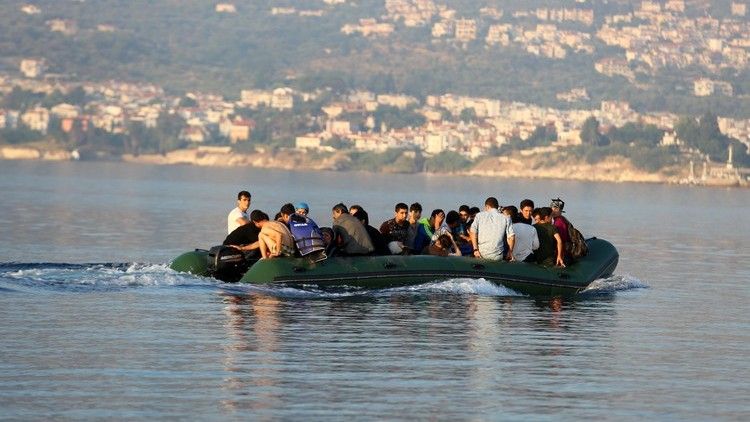
The Migration and Asylum Pact, newly approved by the EU, is a response to the last decade’s experience with irregular migration flows and growing concerns regarding external border security. The new regulations introduce stricter asylum procedures and a new dimension of the solidarity approach, which cause controversy and raise additional questions. Are the established measures aligned with the actual situation?
The 2015 implications
After the 2015 migration crisis, the EU Member States came to the realisation that their migration policies required a drastic change in order to be adequate for future challenges. Uncontrolled migration flows to Europe had led to an overload of the European Union’s asylum system and caused direct migratory pressure, especially on states maintaining the EU’s external borders, like Italy or Greece. According to the Copenhagen School, securitisation occurs when a particular issue is presented as a security threat through the narrative of an influential actor, and this framing is accepted by the relevant audience.
Over the past decade, migration has undergone this exact mechanism. As time has passed, a change in the perception of migration in a political and social context has become evident, as this process is now often perceived as a threat to state security, thereby justifying the use of extraordinary measures.
In 2024, the European Union’s Pact on Migration and Asylum was formally adopted, and the European Commission launched a two-year transition period with a Joint Implementation Plan. The Pact officially came into force on 12 June 2026 and is based on the “flexible solidarity” concept, which assumes that all EU Member States will share the burden of facing increased migratory flows. This will relieve some of the pressure on Mediterranean states. The Pact also forecasts a scenario where certain states, due to their temporary exceptional situation, are exempt from the solidarity mechanism, such as Poland, which has taken in a large number of Ukrainian refugees.
The brand new approach
For the first time, all 27 Member States will have to implement the same rules on border controls, asylum procedures and solidarity mechanisms. Participation is obligatory, but there is some flexibility in implementation. Countries not willing to host asylum seekers can contribute financially or provide operational support. It is a significant change of approach compared to the Dublin system, according to which the country of first entry is responsible for conducting asylum procedures.
What raises controversy are the new procedures at the EU’s external borders. After the first screening, migrants will be divided into two categories. People coming from countries with an average EU-wide refugee recognition rate of 20 percent or less will undergo a new, faster asylum procedure, while the rest of the applicants will have their cases processed in the standard way. This predetermined approach towards certain nationalities creates a risk of violating the individual approach and the non-refoulement obligation that should be granted based on the 1951 Geneva Convention.
The border procedure is supposed to last up to 12 weeks, during which people undergoing it will most probably be detained and deemed not to have officially entered the country. This approach creates a risk of pushbacks and the misuse of deportation. Even though the EU Member States must provide asylum seekers with access to legal guidance, human rights groups warn that there are no regulations regarding its quality.

The return hubs controversy
While the migration pact itself does not include the creation of “return hubs” outside the EU, this possibility is included in the regulation on a common system for returning migrants, which complements the Pact. The Council and the European Parliament reached a deal that allows for the establishment of return centres in third countries, as long as they respect fundamental human rights. The centres are dedicated to people who do not have the right to stay in the EU and can serve as a final destination or a transfer centre to the country of origin or another third country. Together with the hubs, stricter measures regarding expulsion and compliance with authority orders were established.
The return hubs mechanism did not originate solely on the political right; in the past, this solution was pushed by a coalition led by Denmark under a Social Democrat government. However, it was particularly supported by right-wing parties. When the deal was passed in the European Parliament on 17 June, it was accompanied by cheers from the right side of the chamber. The EU Commissioner for Migration, Magnus Brunne, commented after the vote: “This regulation tells everybody that it is us and not the smugglers deciding who can stay in the European Union and who must leave.” As right-wing parties are gaining power in more and more European countries, the tendency to present migration as a threat to national security is growing.

What can the future bring?
The Commissioner for Human Rights of the Council of Europe, Michael O’Flaherty, warned that establishing return centres in third countries creates a risk of developing human rights “black holes”, as it will become harder for the EU to monitor the situation outside its borders. Furthermore, establishing such centres in non-EU countries will most likely cause numerous issues regarding the preparedness of the host country and its capabilities to meet all of the requirements.
The new solidarity model is also not received with equal enthusiasm in all of the EU Member States. Even though the approach was designed with some flexibility, there are already voices suggesting that some countries will not be so willing to choose any of the three available options. For now, Poland is temporarily exempt from participation in the solidarity mechanism, but there is no strong desire to implement it in the future. Taking into consideration Poland’s past opposition to the solidarity approach, the future discussions regarding its role in the common asylum and migration framework could be fierce.
The influence of recent Ceuta events
Both the Pact on Migration and Asylum and the regulation on a common system for returning migrants exemplify the securitisation of migration. Paradoxically, according to the data provided by Frontex, the number of irregular border crossings into the EU in 2026 decreased by almost 40% compared to the previous year. Despite the general decrease in irregular migration flows, the recent events in Ceuta, a Spanish territory in Northern Africa, show that even localised incidents reveal the imperfections of the EU’s cooperative efforts in migration policy and border protection. Because of the freedom of movement within the Schengen area, a single breach in external border protection affects the entire region. A short-term humanitarian crisis, during which nearly 50,000 migrants managed to get to the Spanish enclave from Morocco, gained worldwide attention and led Italy to temporarily reintroduce border controls with Spain. Similarly, France decided to strengthen controls at the border with Spain. The reaction of Spanish Prime Minister Pedro Sanchez, likewise, exhibited typical features of securitisation, as he ordered increased military assistance along the border.
The new regulations regarding asylum procedures and external border protection constitute the toughest migration framework ever implemented. Even a local, isolated increase immediately triggers a pan-European security response, regardless of the overall downward trend. Ceuta empirically confirms that migration policy has already shifted into the domain of security issues.


