












- WIADOMOŚCI
Will arms companies shoot at drones themselves? There's a proposal

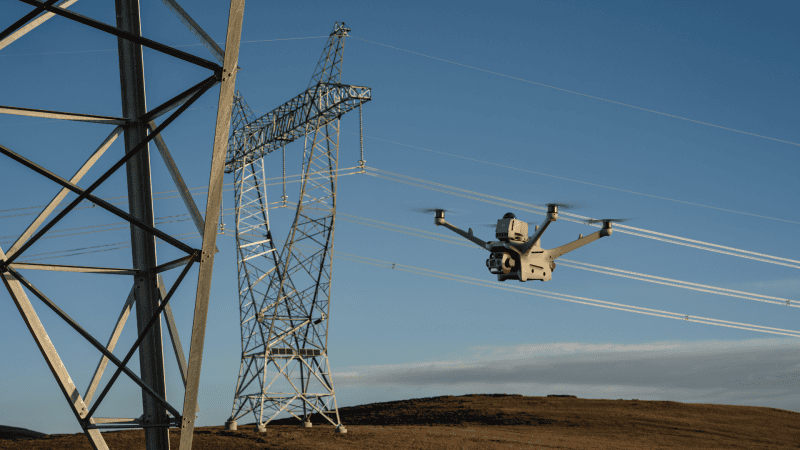
Will the defence industry be treated as critical infrastructure, and will individual companies gain the ability to strike drones flying over their factories? The current geopolitical situation will, sooner or later, force answers to such questions.
European defence companies, including entities supplying weaponry to Ukraine, have become targets for the Russian Federation. This is evidenced by both the increasing number of acts of sabotage and the official position of the Russian Ministry of Foreign Affairs, whose spokeswoman Maria Zakharova explicitly described these factories as a „potential target” for the Kremlin.
Legal change a necessity
The current situation prompts a search for solutions that could significantly contribute to improving the security of not only the infrastructure itself but, above all, its employees. One such idea was recently presented by Marcel Grisnigt. The Executive Vice President of the French-German consortium KNDS appealed in a conversation with „Politico” to European states to recognise military equipment factories as critical infrastructure.
Behind such a change would be a provision allowing defence companies to independently eliminate foreign unmanned aerial vehicles (UAVs) appearing over such infrastructure. According to Grisnigt, the current legal situation means that the managements of individual companies have their „hands tied”, and their defence against drones is limited to informing state authorities about potential threats.
To facilitate such a decision, the KNDS representative stated that his company is capable of developing its own defence measures. What it requires, however, is the removal of legal barriers. „Systems can shoot down a UAV or break the link between the drone and the operator, forcing it to land or fly away. Such powers are usually reserved only for state authorities,” Grisnigt notes.
The member of KNDS management praised the French legal model, specifically this year’s update to the Military Programming Act (Loi de programmation militaire – LPM). Thanks to this, in addition to critical infrastructure operators, defence sector companies will not only be able to engage external entities to protect their facilities but will also be able to use drone neutralisation systems themselves.

European cooperation?
France is currently one of the notable exceptions. The KNDS representative points out that countries such as Germany do not have similar laws. In his view, the current situation requires transnational cooperation. „We need a robust European framework that would link national protection systems into a coherent whole,” said Grisnigt, who would like the European Commission to urgently establish a task force responsible for testing appropriate solutions. He is also of the opinion that the European Union should participate in the costs of strengthening anti-drone protection in individual defence companies across the Old Continent.
Time is running out
Finally, it is worth noting an issue rarely discussed in public debate. The KNDS Vice President referred to 2030 – the year set by the European Union as the moment when the community is to achieve full capability for independent defence against potential aggression from Russia. The ReArm Europe plan, crucial to this objective, envisages allocating nearly 800 billion euros to support the domestic defence industry.
The programme, which includes the SAFE loan instrument among others, may not, however, be fully implemented by the target date. One of the obstacles is the intensifying Russian hybrid attacks and gaps in the European system of protection against them. This is why – according to Grisnigt – legal changes increasing the security of defence plants should enter into force immediately.


