


- WIADOMOŚCI
- ANALIZA
Norway arms itself against Russia. South Korean missiles and Russian coal

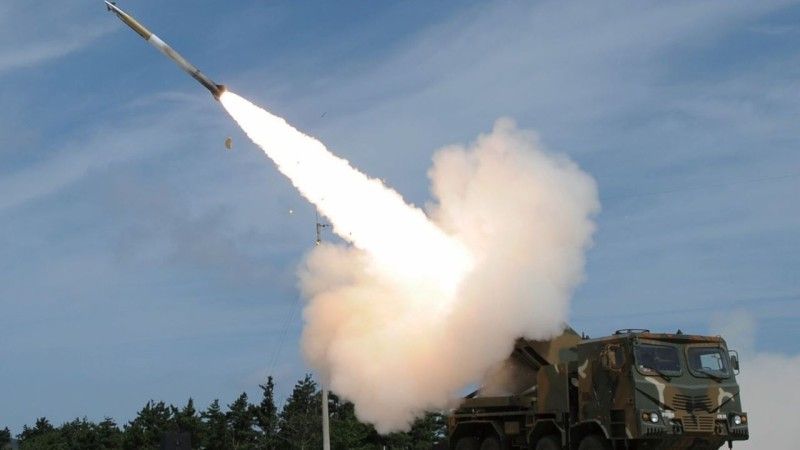
Photo. Hanwha Aerospace UK
Norway is purchasing 16 South Korean K239 Chunmoo multiple rocket launchers, capable of striking targets at distances of up to 500 kilometres. The first systems will be delivered to the Norwegian Army in 2028, with initial operational capability expected a year later. Oslo is joining other Northern European countries that are significantly expanding their military capabilities in response to the Russian threat. Interestingly, Norway is yet another NATO member choosing South Korean weapons, while South Korea itself is increasing imports of Russian energy resources.
Acting Chief of the Norwegian Army Trond Nilsen confirmed that the first Chunmoo launchers will be delivered in 2028, with operators trained in Norway. The systems will be stationed in Bardufoss, in the northern part of the country, allowing Norwegian forces to conduct long-range operations in the Arctic region. Particularly important is Russia’s Kola Peninsula, home to major military bases, Northern Fleet units and infrastructure associated with nuclear deterrence. Missiles with a range of up to 500 kilometres would allow Norway to strike selected targets inside the Russian Federation, including military infrastructure in the Pechenga area. Norway’s wider long-range artillery programme is valued at approximately $2 billion, while the contract with Hanwha Aerospace itself is worth around $922 million.
The purchase of South Korean launchers is only one element of Norway’s military preparations. Oslo is also accelerating the development of the Finnmark Brigade, which is expected to achieve full operational capability in 2032–2033 and comprise approximately 4,000 personnel, including reservists. The formation is responsible for defending the country’s northern region, which directly borders Russia. Norway is investing in K9 artillery, unmanned systems and new reconnaissance capabilities, drawing on lessons from the war in Ukraine. The objective is to establish forces capable not only of defending the border, but also of striking Russian military infrastructure at considerable distances.

Nordic countries expand their long-range strike capabilities
Norway is following the example of Finland and Sweden, which are also significantly increasing defence expenditure and developing long-range strike capabilities. In April 2026, Finland ordered another 112 South Korean K9 self-propelled howitzers for approximately €547 million, while Sweden decided in September to purchase American HIMARS launchers. Stockholm and Helsinki are also strengthening cooperation in rocket artillery. The Nordic countries are therefore preparing to conduct operations beyond their own borders. They are developing the ability to strike enemy command posts, military formations and logistical infrastructure at long distances, before Russia can launch further attacks.
South Korea secures more European defence contracts
Importantly, Norway is becoming another European customer for the Chunmoo system. Poland has already ordered 290 Homar-K launcher modules, a domestic version of the South Korean system integrated with the Polish Jelcz chassis and TOPAZ fire control system. Estonia has ordered nine Chunmoo launchers, while Croatia signed a contract for another 18 systems in September 2026. South Korean Chunmoo systems are also operated by the armed forces of Saudi Arabia and the United Arab Emirates. South Korea is therefore steadily expanding its position in the European defence market, particularly among NATO countries seeking to strengthen their artillery capabilities.
Poland’s industrial involvement is also worth highlighting. In December 2025, another agreement was signed for the production of thousands of CGR-080 guided rockets for Homar-K systems in Poland. Manufacturing is expected to be undertaken by the Polish-South Korean joint venture Hanwha WB Advanced System, with deliveries scheduled to begin in 2030. Importantly, the Chunmoo launchers ordered by Croatia will also use the Polish TOPAZ fire control system, while South Korean manufacturers intend to develop Poland as a production base for other European customers. Poland could therefore become an important part of South Korea’s European defence supply chain, rather than simply an importer of its weapons.

South Korean missiles against Russia?
There remains, however, a serious paradox in South Korea’s relations with the Russian Federation. While more NATO countries are purchasing South Korean weapons to prepare for a potential confrontation with Moscow, Seoul is simultaneously increasing imports of Russian energy resources. According to data from the Centre for Research on Energy and Clean Air, South Korea imported 18 million tonnes of Russian coal between January and August 2026, an increase of 34% compared with the same period in 2025. Russia became the second-largest supplier of coal to the South Korean market, accounting for 22% of imports. Importantly, South Korea has not introduced a ban on imports of Russian fossil fuels.
This creates an interesting, but also dangerous, vicious circle. European countries are spending billions of euros on South Korean weapons intended to deter Russia, while the South Korean economy is increasing its purchases of Russian resources, providing Moscow with additional export revenues. Seoul earns money by selling weapons to NATO countries, while Russian companies continue generating revenue from energy exports to South Korea. Norway is a particularly clear example, as it is purchasing South Korean missiles to strengthen its defences against Russia, whose resources remain an important part of the South Korean economy.
It is difficult to ignore the contradiction between strengthening military deterrence against Russia and maintaining trade that continues to generate revenue for Moscow.


