












- ANALIZA
- WIADOMOŚCI
Norway's underwater wealth. How the land of fjords protects its treasure?

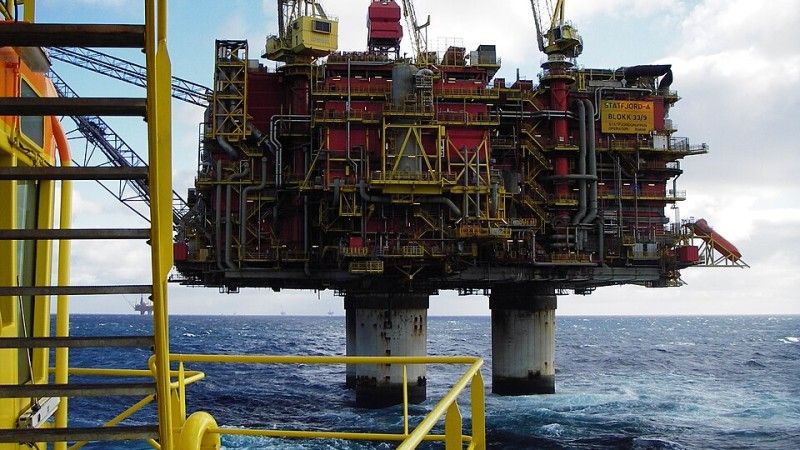
Photo. Marcusroos / Wikimedia Commons
The Norwegian continental shelf supplies approximately 30 percent of the natural gas consumed in the European Union and the United Kingdom. This extraction generates daily revenues exceeding one billion kroner, and its very value forms the foundation of the land of fjords« economy.
The government in Oslo estimates that in 2026, net cash flows from the petroleum sector will reach 686 billion kroner (over 74 billion dollars), representing an increase compared to the previous year. This wealth, however, is increasingly seen by Western intelligence services as the number one target for hostile hybrid activities.
Since the beginning of 2026, Norwegian security services have been sounding the alarm. The head of the Police Security Service (PST), Beate Gangås, stated during the presentation of the annual „National Threat Assessment” report that Norway finds itself in the most serious security situation since the end of World War II. The main source of the threat is Russia, which, despite losses suffered in the war in Ukraine, shows no willingness to change course and is developing long-term military plans, also encompassing northern Europe.
Moscow no longer hides its intentions. At the end of May 2026, the Russian embassy in Oslo issued an official statement threatening an „appropriate military-technical response” to the actions and plans of the Norwegian government, which, in the Kremlin’s view, threaten the security of the Russian Federation.
The Russian Foreign Ministry stated that these plans constitute a „direct threat” and will not remain unanswered. In practice, this means Norway can expect an intensification of both espionage activities and potential acts of sabotage targeting its underwater infrastructure, ranging from drilling platforms to subsea pipelines and fibre-optic cables.

The saboteur's arsenal. From GPS to cyberattacks
The methods employed by hostile states are becoming increasingly sophisticated. In April 2026, the Swedish government officially accused a pro-Russian hacker group of carrying out a cyberattack on a combined heat and power plant in western Sweden, which paralysed its operations.
Norway is also recording a systematic increase in incidents related to so-called hybrid warfare. Last week, the strongest ever GPS signal disruptions were recorded in the north of the country, hindering navigation for ships and aircraft.
Norwegian military intelligence (Etterretningstjenesten) warns that Russia will continue heightened espionage activities in 2026, focusing on Oslo’s support for Ukraine and on critical infrastructure in the Far North and the Arctic. Intelligence services fear that, using civilian vessels, the Russians may be mapping the seabed, preparing the ground for potential attacks on strategic installations.
An additional problem is the attempts to recruit Ukrainian refugees by Russian intelligence services. There are about 100,000 of them in Norway, and individuals with families in occupied territories are particularly vulnerable to blackmail.

Frigates, submarines and a British alliance
Norway is not remaining passive in the face of these threats. The government in Oslo has allocated an additional 115 billion kroner (approximately 44 billion zlotys) for the technical modernisation of its armed forces by 2036.
The priority is the construction of a new fleet. Work is underway on four (with an option for two more) modern Type 212CD submarines, which will replace the ageing Ula-class vessels. These submarines, built in cooperation with Germany at the TKMS shipyard, are 73 metres long and are designed to patrol Arctic waters.
At the same time, Norway is purchasing new Type 26 frigates from Britain and new deck-based helicopters for anti-submarine warfare. In March 2025, the then Minister of Defence, Tore Sandvik, and his British counterpart, John Healey, announced a tightening of cooperation in the protection of underwater infrastructure.
The two ministers visited the British seabed monitoring vessel RFA Proteus and the Norwegian coast guard vessel Bison in the port of Bodø, just inside the Arctic Circle. Norway, which has so far based its security on American guarantees, is now turning towards its closest neighbour, the United Kingdom, in the face of uncertainty over US engagement.
See also 

Baltic Pipe and the Norwegian security bubble
Experiences from the Baltic Sea show just how vulnerable underwater infrastructure is. The damage to the Nord Stream and Balticconnector pipelines demonstrated that even key elements of the European energy system can fall victim to sabotage. Norway has drawn conclusions from these events.
As assured by the transmission system operator in 2022, the Baltic Pipe pipeline connecting Norway with Poland now has the same level of security as the maritime infrastructure in Norway, a country with the longest history of offshore oil and gas extraction in Europe.
Cooperation within NATO in this area is being intensified. In October 2024, Germany and Norway signed a declaration on strengthening the Alliance’s role in protecting critical underwater infrastructure. Under this initiative, the Maritime Centre for Critical Underwater Infrastructure (CUI) was established, and Norway offered to create one of five regional hubs for the Far North.


