- KOMENTARZ
- WIADOMOŚCI
- WAŻNE
France brings Norway under its deterrence

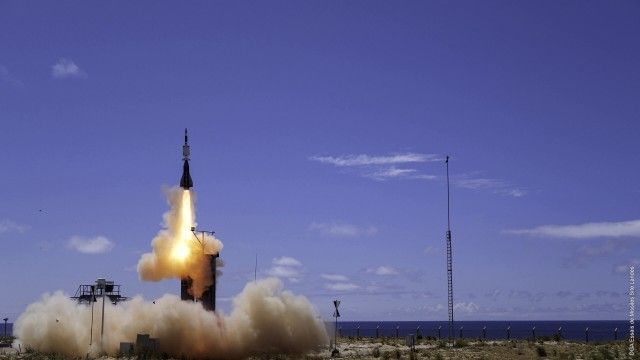
Photo. A.Derewiany/Armée de l'Air et de l'Espace
France and Norway have signed the Narvik Agreement, but the most important part is not the bilateral defence clause itself. The real political signal is that Oslo is joining the French discussion on „advanced deterrence”, which means that Macron’s nuclear initiative is slowly becoming a European format, not only a French speech from Île Longue.
France is not offering Europe a classic nuclear umbrella like the United States. Paris is doing something more cautious, but politically very important: it is building a circle of states ready to discuss how French nuclear deterrence can contribute to European security. The initial group included Germany, Belgium, Denmark, Greece, the Netherlands, Poland, the United Kingdom and Sweden. Norway is now joining this process, which matters because Oslo is one of the most important European states in the High North and in the maritime dimension of NATO security.
The Narvik Agreement also has a wider military meaning. France and Norway commit to supporting each other if necessary, including in the military domain, and the agreement covers hybrid warfare, maritime security, space cooperation, cybersecurity, support for Ukraine and defence industry cooperation. This is not an empty declaration. It is meant to create mechanisms for planning, training, stockpiling and faster coordination in a crisis.
For Norway, this is part of a broader strategy of diversifying security partnerships. NATO remains the foundation of Norwegian security and the United States remains the main ally, but Oslo clearly understands that it must strengthen ties with key European powers. In recent months Norway has also signed defence agreements with Germany and the United Kingdom. Now France joins this group, and this shows that Northern Europe is preparing for a more difficult security environment.
The Baltic states are watching this process carefully. Finland and the Baltic countries have also shown interest in the French deterrence initiative, but they remain cautious on nuclear issues. This is understandable. For countries directly exposed to Russia, every discussion about nuclear deterrence is both necessary and politically sensitive. They want stronger European security guarantees, but they also know that French deterrence will not automatically replace the American nuclear umbrella.
For France, Norway is a very important addition. Paris wants to show that its nuclear deterrent is not only a national instrument, but also a political tool for shaping European security. By bringing Norway closer, France strengthens its position in the High North, links its deterrence debate with maritime security, and presents itself as one of the few European powers able to think simultaneously about nuclear weapons, conventional forces, defence industry and strategic geography.
This also connects with other European security agreements. Poland and France signed their treaty on 9 May 2025, and Poland and the United Kingdom have now also concluded a security treaty. These agreements do not replace NATO, but they create additional layers of political and military cooperation. Europe is slowly building a dense network of bilateral and regional commitments because nobody wants to wait until Washington decides how much it will still do for the continent.
The key point is that France is moving early and wants to define the terms of the European deterrence debate. It knows that uncertainty over U.S. guarantees creates space for Paris. It also knows that no other EU state can offer the same nuclear argument. Norway’s decision does not mean that Europe is now under a French nuclear shield. It means that Macron’s proposal is no longer abstract. It has partners, meetings, exercises, intelligence discussions and political momentum.
Can we expect the Narvik Agreement to be read as more than a French-Norwegian document? For now, it looks like another step in France’s attempt to build influence in Northern Europe and shape the wider debate on European defence. The United States remains indispensable and NATO remains central, but France wants to be the country that Europeans call when they start asking what happens if American guarantees become less predictable. The growing number of countries signing defence treaties with France — including Norway, Poland and Greece — shows that Paris has become a crucial European security partner. The question is whether this direction will continue after the 2027 presidential election in France.