












- WIADOMOŚCI
Rearming on credit: Merz warned over Germany’s debt

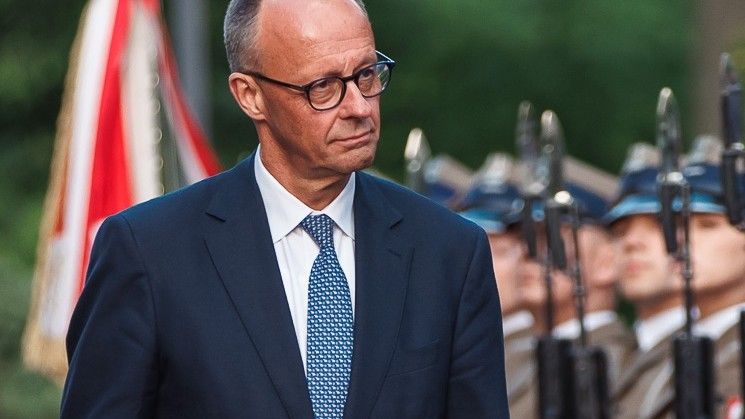
Germany’s economic advisers have urged Chancellor Friedrich Merz to curb defence borrowing, warning public debt could reach 98% of GDP by 2040 under the current model.
In its 11 November report, the independent Council of Economic Experts stressed that while Germany must strengthen its defence capabilities, permanently funding rearmament through debt will drive up interest costs.
Berlin loosened its constitutional debt brake in 2025 in response to the Russian military threat and doubts over US security guarantees. Under the revised rules, defence and related security spending above 1% of GDP is exempt from the limit, which ordinarily caps federal structural borrowing at 0.35% of GDP.

Merz’s coalition plans to spend up to €780bn on defence over the five years to 2030 as Berlin works towards NATO’s 3.5% core defence spending target, according to the Financial Times. Alongside this, a separate €500bn fund finances infrastructure and climate projects through borrowing.
From 2031, the council wants the exemption threshold raised by 0.25 percentage points a year, a shift that would require more spending to be covered by regular revenues or savings elsewhere. The advisers want this timetable written into the constitution during the current parliamentary term.
Under that path, the annual funding gap in the federal budget would reach 4.6% of GDP in 2040. To address the shortfall, the advisers propose cutting subsidies and reforming social insurance, though they warn that tax increases may be needed once other options are exhausted.
On 13 November, the Bundestag’s budget committee approved a 2027 package featuring €210.4bn in total new borrowing, a figure that includes the infrastructure and defence funds. Although the measure still requires full parliamentary approval, it would mark the second-highest annual borrowing total since the Second World War.


