


- WIADOMOŚCI
- KOMENTARZ
Drones and commercial technology are changing the battlefield in Ukraine

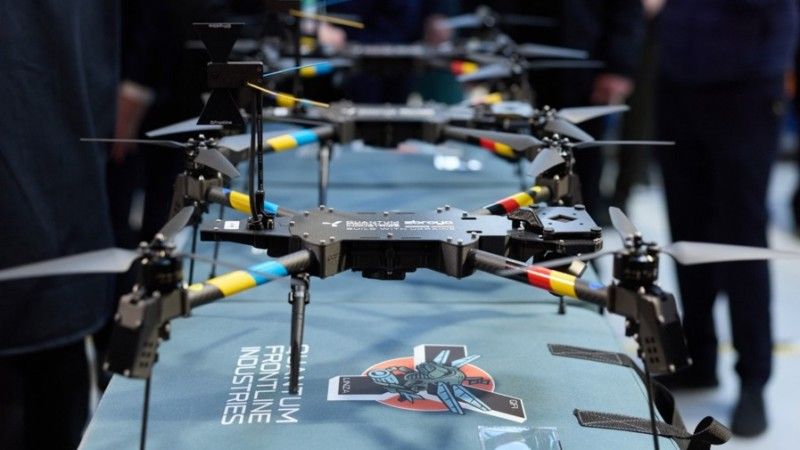
Photo. president.gov.ua
The war in Ukraine is the first conflict on this scale in which commercial technologies have been used systematically as part of military operations. Drones, satellite services and digital systems have changed reconnaissance, targeting and communications. Their impact depends on how quickly armed forces can adapt them and integrate them with conventional capabilities.
Uncrewed aerial systems have become one of the defining features of the conflict. Alongside larger platforms such as the Bayraktar TB2, both sides use small FPV drones. Their low cost, small size and potential for rapid modification make them suitable for mass use by relatively small teams.
An FPV drone may cost from several hundred to around 2,000 US dollars. It can damage or destroy equipment worth far more, including armoured vehicles, artillery positions, communications equipment and elements of military logistics. This cost difference has forced armed forces to reconsider how they design and protect expensive platforms.

Drones also form part of the chain linking detection to attack. They can locate a target, help identify it and pass information to the unit carrying out the strike. Connecting reconnaissance drones with artillery and precision weapons has shortened the time between finding a target and engaging it.
Their widespread use has made the battlefield more visible and reduced the ability to conceal large concentrations of troops and equipment. This has increased the risk of massing forces and made counter-drone systems a more pressing requirement. Air defences designed to deal with aircraft and missiles are not always suited to countering large numbers of inexpensive drones.
Commercial satellite services have also become part of the military environment. After Russia’s invasion, Ukraine received thousands of Starlink terminals. They helped maintain communications as Russian attacks damaged conventional telecommunications infrastructure, supporting both public authorities and military units.

Commercial satellite imagery has widened access to information about troop movements and battlefield damage. Data that once largely depended on state intelligence capabilities can now also be analysed by private companies, researchers, media organisations and open-source intelligence communities. This has changed the information environment surrounding the war.
The conflict has also increased the volume of data collected by military sensors, satellites, drones, communications systems and open sources. Artificial intelligence can help identify patterns in enemy activity, analyse satellite imagery, support logistics and assist operational planning. Human decision-making remains central, while the use of these systems raises questions about legal responsibility, data security and control over autonomous capabilities.

The battlefield in Ukraine brings artillery, tanks and defence production together with FPV drones, commercial satellite services and digital systems. The technology has changed how forces detect and engage targets, but it has not displaced conventional military capabilities.


