












- WIADOMOŚCI
- KOMENTARZ
Russians boast of intercepting „explosive goggles”. Reheated FSB story?

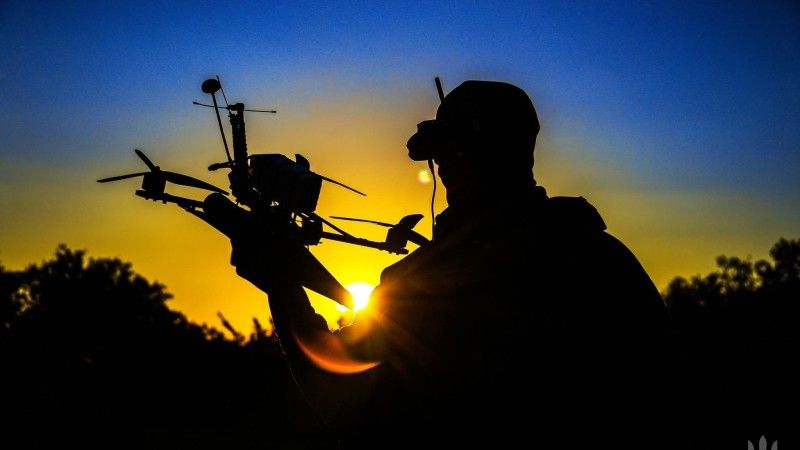
Ukrainian special services attempted to supply Russians with goggles containing internal explosive charges. The operation was intended to eliminate as many FPV drone operators as possible.
The Ukrainians argue that the FSB is boasting about a “success” from nearly two years ago because it has no new achievements to its name. The Press Office of the Federal Security Service (FSB) of the Russian Federation reported the foiling of a “series of acts of sabotage and terrorism planned by the Ukrainian special services”. The FSB explained that the Ukrainians planned to “use improvised explosive devices (IEDs) hidden in FPV goggles (used for operating drones) which were to be delivered to Russian military personnel in the special military operation zone under the guise of humanitarian aid”.
The “conspiracy” allegedly failed thanks to the vigilance of a soldier from the Volgograd region. After receiving two pairs of FPV goggles from a volunteer, this soldier, acting in accordance with military counter-intelligence guidelines, reportedly requested that the FSB subject these devices to an expert examination. According to the official communiqué, “thanks to X-ray analysis, pyrotechnicians determined that the Ukrainian special services had replaced the cooling fans in the FPV goggles with improvised explosive devices”. These charges were designed to detonate the moment the FPV goggles were switched on, which would have resulted in the deaths of the soldiers.
As a result of immediate actions taken by the FSB in various regions of the Russian Federation, the security services reportedly seized a batch of “booby-trapped” FPV goggles that had been sent by the Ukrainians via the Russian postal operator “Russian Post” (Pochta Rossii). The investigation revealed that “Ukrainian intelligence agents, posing as patriots and using anonymous Telegram messenger accounts, established contact with representatives of Russian humanitarian organisations and charitable foundations, seeking to deliver the aforementioned weaponry to units of the Russian Ministry of Defence”.

The Russians also reported that the Ukrainians, when contacting volunteers, “did not disclose their personal data, phone numbers, or professional affiliations, and refused to switch to the ‘Max’ messenger for voice calls”, while simultaneously demanding “video recordings in which Russian soldiers express their gratitude” as a mandatory condition. According to the FSB, the Ukrainians assumed “that volunteers would subsequently deliver the FPV goggles – equipped with improvised explosive devices – to units of the Russian armed forces, specifically to drone operators directly participating in combat operations against the Armed Forces of Ukraine”.
Thus far, the investigative department of the FSB Directorate for the Volgograd region has initiated a criminal case and begun searching for individuals involved in sending the FPV goggles with improvised explosive devices. An appeal was also issued to representatives of volunteer and charitable organisations, as well as to private individuals, “to ensure that the humanitarian aid they receive comes from verified sources and to inspect shipments for the presence of explosive charges or toxic substances”.
It was recalled, based on previous experience, that Ukrainian special services may use various objects to hide explosive charges, including perfume sets, portable power banks, portable speakers, decorative figurines, religious items, car parts, paving slabs, or even heated shoe insoles.

The Ukrainians point out that the FSB’s November announcement concerns a situation already reported on in February 2025. At that time, information emerged that Ukrainian special services had delivered “trap-goggles” to Russian drone operators, which eliminated at least eight Russians.


