












- WIADOMOŚCI
Missiles instead of butter. Israel sets a record for military spending

 Add as preferred on Google
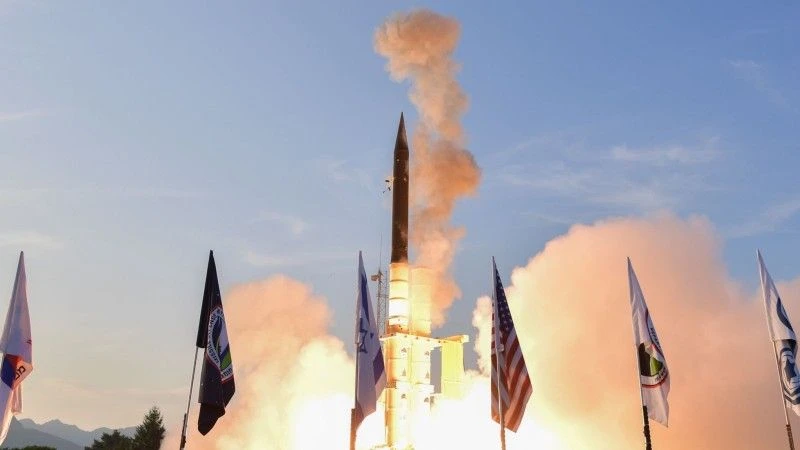
Israel has decided to increase military spending by a further 17.3 billion shekels (around $5 billion). The decision raises this year’s defence budget to an unprecedented level of about $55 billion, Breaking Defense reports.
The cost of waging war: Israel’s huge expenditure
Israel’s defence spending rose sharply after the Hamas attack and the outbreak of the wider conflict in the Middle East in October 2023. As recently as 2022, before Hamas’s invasion, Israel’s national defence spending stood at 76 billion shekels, or around $22 billion—equivalent to roughly 85–90 billion zlotys—according to SIPRI. Other estimates put it at 58 billion shekels, or $17–18 billion. The figure given by SIPRI amounted to “only” 4.34 per cent of the country’s GDP.
Two years later, SIPRI estimated Israel’s defence spending at 8.47 per cent of GDP, equivalent to $45.9 billion or nearly 170 billion shekels. In 2025, it was $43.7 billion, or 166 billion shekels—7.8 per cent of GDP. This year’s budget is set to be even higher. Breaking Defense reports that it initially stood at $45 billion, but two additional funding tranches worth around $5 billion each were approved in September and November, along with extra funding for Apache Guardian helicopters. This year’s budget will be a record, equivalent to 200–220 billion zlotys, depending on the exchange rate. It is also worth remembering that Israel continues to receive some equipment funded by the United States.
What will Israel spend this record sum on, and how will it fund the huge budget?
Alongside funding for ongoing military operations, money is being allocated to long-term projects. Defence Minister Israel Katz said the latest tranche would go towards long-term procurement under the “Blue and White” strategy. The programme aims to make Israel more self-sufficient in defence production by investing in domestic industry. The funds will go towards air and missile defence, attack helicopters, space technology and classified programmes, among other areas.
According to Breaking Defense, Director-General of the Ministry of Defence Amir Baram said the ministry was also finalising further contracts for ammunition, interceptor missiles for Arrow systems, David’s Sling and Iron Dome, as well as new combat systems. The aim is to maintain the Israel Defense Forces’ (IDF) current operational readiness while carrying out a ten-year programme of technical modernisation. The additional defence funding was financed through reallocations within the state budget.

This was achieved by reducing funding originally allocated to other ministries, including transport, education and national security. It was previously reported that the cuts would include social spending in areas inhabited by Arab Israelis, but that is likely to be just one area affected.
Israel’s Ministry of Defence is behind on payments to the domestic defence industry
Despite record spending on equipment procurement, Israel’s Ministry of Defence is struggling with payment arrears to the domestic defence sector. In its third-quarter financial report, state-owned Israel Aerospace Industries (IAI) appealed to the ministries of defence and finance to settle outstanding obligations urgently, as they are affecting the company’s current results.
The scale of Israel’s defence spending shows how costly operational engagement can be—even when the conflict is not, in practice, being fought on the country’s own territory, and despite receiving allied support in many costly areas, such as air defence, not only through equipment supplies but also through the direct involvement of allied forces.
Israel’s defence budgets and GDP
It is worth noting that high military spending is nothing new for Israel. According to SIPRI, it exceeded 10 per cent of GDP every year through 1994, and 7 per cent of GDP through 1997; the first recorded spending below 5 per cent of GDP came only in 2019. It is clear that Israel, as a country facing a high level of threat, has consistently maintained high levels of military spending, despite receiving some costly equipment—aircraft, ships and air-defence systems—with financial support from the United States and other allies (Germany).
How Israel’s defence spending will be funded in the coming years remains an open question, as that will be decided by the new government formed after this year’s Knesset elections. However, US announcements of plans to limit funding for Israeli defence could put the military budget under even greater pressure.


