












- WIADOMOŚCI
Nuclear brinkmanship around the Baltic. Russia issues threats, while the Nordics seek to ease tensions

 Add as preferred on Google
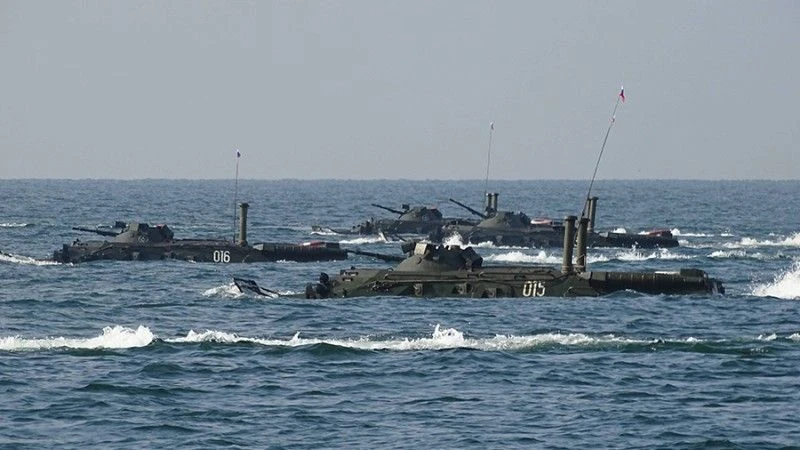
Finland’s and Norway’s leaders – using a Russian oligarch as an intermediary – arranged talks with Vladimir Putin to ease the recent rise in tensions in the Baltic Sea.
Finnish President Alexander Stubb and Norwegian Prime Minister Jonas Gahr Støre reportedly intervened over the situation in the Baltic Sea to protect the region from a potential conflict with Russia, the Wall Street Journal reports. The politicians wanted to assure Vladimir Putin that they had no intention of cutting Russia off from a shipping route of vital importance to it (60 per cent of Russian maritime transport passes through the Baltic Sea). The two Nordic leaders’ response was intended to calm tensions after Ukrainian drones struck a Russian cargo ship near Finland several days earlier.
Russia threatens
“Any blockade of the Baltic Sea or the Kaliningrad region could not be prevented by conventional means,” warned Aleksandr Voloshin, a former head of Putin’s administration. In his view, Russia’s involvement in the war in Ukraine meant the Kremlin “would have no choice” but to respond to a blockade with “immediate pre-emptive nuclear strikes”.
Finland explains
“We have no intention of blockading the Baltic Sea in peacetime; you can rely on that; we will act in accordance with the law,” Stubb reportedly told Putin during a telephone call on 27 October, according to the WSJ. The Finnish president’s direct intervention was prompted by fears of escalation, including those raised by Voloshin. Stubb also did not want his message to “get stuck” at ambassador level. That is why he asked one of the Russian oligarchs to help mediate.
US concerns
Washington was also concerned about Russian strikes. Several weeks ago, Pentagon officials suggested that the Baltic states’ defence ministers soften their confrontational rhetoric towards Russia. The seriousness of the situation was underscored by the fact that, in May, Moscow passed legislation allowing the use of military force to protect commercial vessels. What is more, in August Vladimir Putin threatened a military response to any European action targeting Russian Federation tankers, and in September the Kremlin sent NATO a letter declaring its readiness to launch pre-emptive nuclear strikes “in defence of interests in the Baltic Sea – even without a prior attack on Russian territory”.

Further escalation?
The Kremlin welcomed the intervention by the Finnish president and Norwegian prime minister, and Putin praised both leaders for their actions. The issue resurfaced recently when Ukrainian drones struck a Russian commercial vessel in Russian waters, from where it drifted into Finnish territorial waters. Kremlin spokesperson Dmitry Peskov commented on the attack, saying it had heightened tensions in the Baltic Sea. He added that Russia expected the Baltic states to use their contacts with Ukraine to prevent it from launching further attacks in the future.


