












- WIADOMOŚCI
- KOMENTARZ
Britain prepares 100,000 former soldiers for war. NATO exercise planned for 2027

 Add as preferred on Google
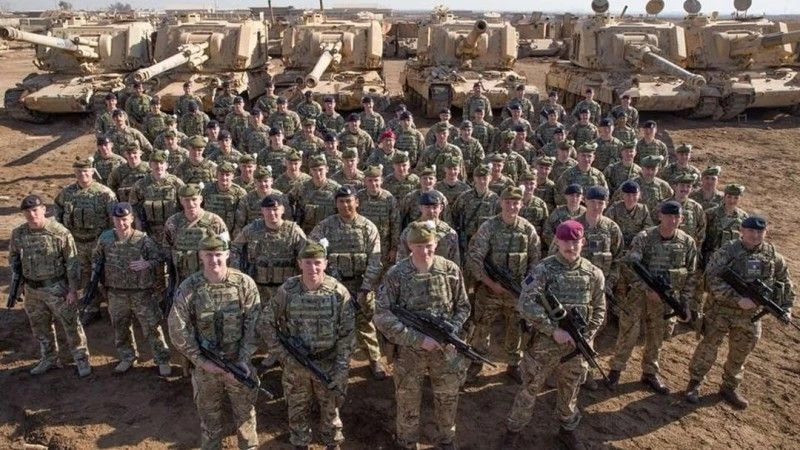
Photo. MOD UK/Instagram
The British Ministry of Defence has contacted approximately 100,000 former military personnel who could be recalled to service in the event of war. London is updating its mobilisation plans, reviewing the skills of former soldiers and preparing to involve strategic reservists in NATO exercises. The government is also seeking to increase the maximum recall age to 65. Britain is preparing its armed forces for the possibility of a large-scale military conflict.
The Telegraph reported that the Ministry of Defence had begun contacting members of the Strategic Reserve, which includes former personnel from the British Army, Royal Navy and Royal Air Force. The letters ask recipients to update their contact details and provide information about their current employment and professional qualifications. Some are also being offered opportunities to participate voluntarily in military training and exercises.

Defence Secretary Wes Streeting confirmed the initiative, describing it as a necessary precaution given the deteriorating security environment. Importantly, the letters do not constitute mobilisation orders. The British government is assessing how many former service personnel could realistically return to military duties and what skills they could contribute.
However, preparations extend beyond updating personnel records. On 27 October, the Ministry of Defence confirmed plans to invite up to 1,000 strategic reservists to participate in NATO’s Steadfast Defender exercise in spring 2027. They would train alongside regular troops and active reservists, allowing the British military to assess how former personnel could be reintegrated into operational structures.
London is pushing for mobilisation
Another important development concerns the Armed Forces Bill 2026, which proposes increasing the maximum age for recalling former service personnel from 55 to 65. The legislation would also allow reservists to be recalled for preparations for military operations, rather than only in circumstances involving national danger, emergencies or an attack on the United Kingdom.
These changes are particularly relevant given the size of Britain’s armed forces. As of July 2026, the UK had approximately 137,500 regular military personnel and just over 32,000 volunteer reservists. The Strategic Reserve represents an additional pool of experienced personnel, although many would require further training before returning to military service.
The initiative also reflects changes taking place across NATO. Under the emerging NATO 3.0 approach, European allies are expected to assume greater responsibility for the continent’s conventional defence. This will require not only additional military equipment and higher defence budgets, but also larger reserves and the ability to sustain operations during a prolonged conflict.
The British are therefore addressing a problem that concerns other European NATO members: how many former soldiers can actually be brought back into service, equipped and assigned to military units when they are needed? Maintaining a register of reservists is one thing. Knowing their current capabilities and being able to deploy them is another. But the third, and perhaps most important, question is whether the UK would actually be willing to send its soldiers to fight Russia on NATO’s eastern flank.


