












- WIADOMOŚCI
- ANALIZA
Norwegian Army identifies seven priorities. New concept until 2040

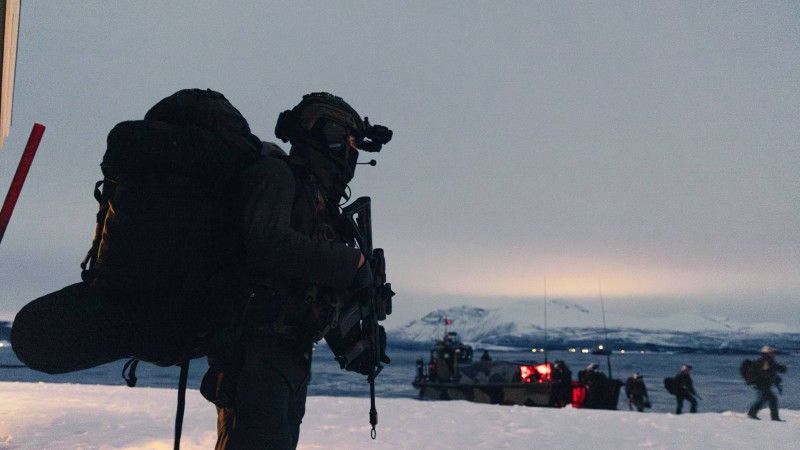
The Norwegian Army has presented its development concept, Morgendagens Hær, which translates as The Army of Tomorrow. The document sets the direction for the army’s development up to 2040 and focuses on seven priority areas. These include increased firepower, artificial intelligence, electronic warfare and unmanned systems.
The concept has been developed against the backdrop of a deteriorating security situation and lessons learned from modern land warfare. The Norwegian Armed Forces emphasise that the war in Ukraine demonstrates, among other things, the importance of drones, electronic warfare, long‑range precision weapons and closer integration of sensors and weapon systems. Army Chief Major General Lars S. Lervik said in a statement published by the Norwegian Armed Forces that it is not possible to wait until all the answers are known before starting to develop the army. He stressed the need to learn faster, test new solutions and translate experience into operational capability.
7 priority areas
The seven priority areas are increased firepower, a data‑driven army, adaptive protection and deception, manoeuvre in the electromagnetic spectrum, AI‑assisted sensor‑to‑effector networks, cooperation between manned and unmanned systems, and endurance in a prolonged conflict.
Increased firepower means the ability to engage targets at greater distances and with greater precision. A data‑driven army involves using information from various sources to make faster and more accurate decisions on the battlefield. Adaptive protection and deception include both physical protection and activities in the electromagnetic spectrum aimed at concealing one’s own actions from the enemy.
Manoeuvre in the electromagnetic spectrum is the ability to conduct warfare in the radio frequency range, disrupt enemy communications and protect one’s own communication systems.
AI‑assisted sensor‑to‑effector networks involve combining data from various sensors and automatically passing it to weapon systems, shortening reaction time. Cooperation between manned and unmanned systems assumes the integration of drones and other unmanned vehicles with traditional military units. Endurance in a prolonged conflict means the ability to conduct operations over an extended period without losing operational effectiveness.
See also 

Cooperation with the defence industry
The Norwegian Army also wants to change the way it cooperates with the defence industry. Companies will be involved in procurement processes at an earlier stage and will contribute to developing solutions based on operational needs.
The concept also calls for dedicated processes for rapid innovation, early prototypes and systematic field trials. This is intended, among other things, to make it easier for small and medium‑sized enterprises to supply the Norwegian Armed Forces.
For fully developed products, common and standardised solutions will be prioritised. The Army favours materiel commonality with Nordic countries and other close allies, as well as joint procurement where appropriate.
This approach is intended to increase interoperability and reduce costs in the longer term. Norway has cooperated with other Scandinavian countries for years within the NORDEFCO framework, and the new army concept is in line with these efforts.

Significance of the concept and next steps
Morgendagens Hær replaces an earlier concept from 2021. The document is not a detailed plan for future procurements but is intended to guide priorities, experimentation activities and long‑term capability development. The concept is intended to help make decisions about investment directions and technological development in the coming years.
The Norwegian Army is adapting to the changing security environment. The growing importance of digital technologies, unmanned systems and electronic warfare requires a new approach to training, equipment and organisation. The Morgendagens Hær concept is intended to ensure that the Norwegian Army is prepared for the challenges the future will bring. Implementation of the concept will be a gradual process and will include both equipment modernisation and changes in command structure and soldier training.


