- WIADOMOŚCI
- WYWIADY
Could Russia attack NATO? Estonian general identifies two dangerous scenarios

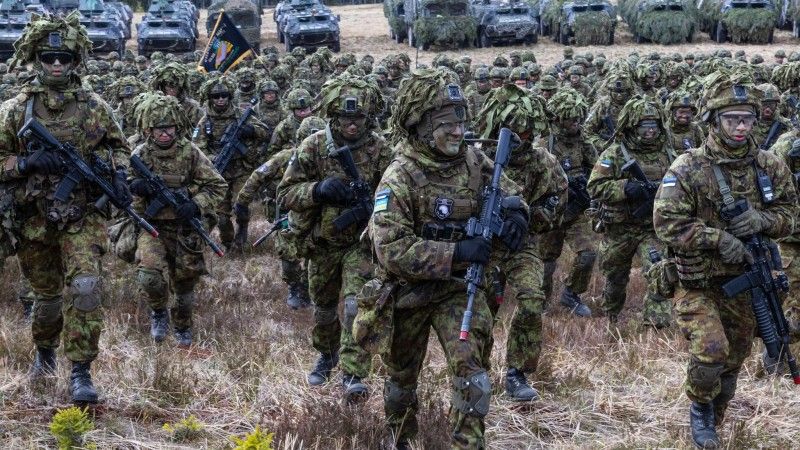
Photo. Sõdurileht / Facebook
Russia has suffered heavy losses in Ukraine, but that does not make it harmless. Retired Estonian Major General Veiko-Vello Palm warns that Moscow could see an opportunity if NATO fails to respond quickly and together — and points to a vulnerable seam in the Alliance’s Baltic command structure.
In an interview with Dr Aleksander Olech for Defence24.com, Maj. Gen. (Ret.) Veiko-Vello Palm discusses the Russian threat to Estonia and the wider Baltic region, NATO’s readiness for a high-intensity conflict and the lessons of Ukraine. He also explains why Europe needs to rethink weapons production and industrial resilience and outlines three priorities for defence cooperation between Poland and the Baltic states.

Dr Aleksander Olech, Defence24.com: How do you assess the Russian military threat to Estonia and the Baltic states today? Has the war in Ukraine reduced Russia’s ability to threaten NATO, or is Moscow already rebuilding capabilities that could become a serious challenge in the coming years?
Maj. Gen. (Ret.) Veiko-Vello Palm: For Estonia, the military threat is straightforward: Russia is the only existential threat, and our defence planning has been based on that assessment for decades. What worries me is not a lack of discussion about the Russian threat; quite the opposite, more Europeans now acknowledge it. But I am not convinced that everyone who says this actually believes it, or at least believes in the immediacy of that threat. It is a little like telling someone who eats too much sugar every day that, if he continues, he may eventually develop diabetes. He understands the concept perfectly well. He agrees that diabetes is dangerous. He may even tell others that people should eat less sugar. And then he takes another piece of chocolate. The problem is that the consequence remains theoretical and distant, while today’s piece of chocolate is real. I sometimes see the same psychology in our approach to Russia. We recognise the threat intellectually, but many of our decisions still suggest that, somewhere deep inside, we treat the actual consequences as distant and theoretical.
For Estonia, this is not an abstract debate. We are simply too close to Russia and too small. The same is true, to varying degrees, for several other countries on NATO’s eastern flank. Any major disturbance in Russia, any escalation, and particularly any Russian miscalculation can have a disproportionately large impact on us. A larger country further away may have strategic depth, time and room to correct an error. Estonia has very little of any of these. For years, another misconception made that situation even more difficult: the idea that the security problem somehow lay partly with us. There used to be a strange tendency to look at our region and say: if your security environment is so bad, surely the problem cannot be entirely Russia’s. Perhaps you have also done something wrong. And then the implicit answer was that others would come and help us organise our countries better, moderate our behaviour, or improve our relationship with Russia. It was essentially the geopolitical equivalent of telling a rape victim that perhaps her skirt was too short. That thinking was complete nonsense, of course. Fortunately, there is much less of it today, although it has not disappeared entirely.
The truth is much simpler: the poor security situation in our region is created by Russia. One hundred per cent. Estonia, Latvia, Lithuania, Poland or Finland cannot solve that fundamental problem by behaving differently. The security environment will improve only when Russia itself changes. Until Russia changes, our task is to survive, but survival does not mean sitting quietly and waiting. It means being so well prepared – militarily, politically and societally – that Russia itself believes that if anyone in Moscow has a stupid idea, the consequences will be immediate and extremely painful. That is the essence of deterrence. It is not enough that we believe we can defend ourselves. Russia must believe it too.

One dangerous misconception is that Russia’s enormous losses in Ukraine mean it has ceased to pose a serious military threat. Russia can be weaker than it was before the war and still be extremely dangerous to us. Russia continues to use military force, continues to rebuild its military capabilities and continues to frame its relationship with the West in terms of confrontation. Parts of Western societies are increasingly tired of the war, and there is more talk of peace. Everybody wants peace, myself included, but the terms matter. At the moment, I see very little evidence that Russia understands peace as a compromise in which it accepts the sovereignty and choices of its neighbours. The Russian proposition still looks much closer to: give me what I want now, and be prepared to give me more when I want more. That would not be a sustainable peace; it would merely be an intermission.
That is why I am wary of trying to predict when Russia might attack NATO. The more useful question for a defence planner is under what conditions Moscow might believe that such an attack could succeed. I see two particularly dangerous conditions. First, if Moscow believes NATO will be unable to produce a sufficiently rapid and unified political and military response. Second, if Russia believes it can achieve surprise and create a military fait accompli before the Alliance can react effectively. Our task is to prevent those conditions from arising, rather than predict the date of the next war.
Dr Aleksander Olech: What is the most important lesson Estonia and the other Baltic states should draw from the war in Ukraine? Is it primarily about manpower, ammunition, air defence, drones, logistics, or the ability to sustain a long conflict?
Maj. Gen. (Ret.) Veiko-Vello Palm: I would challenge the premise slightly, because there is no single decisive lesson or capability. Modern warfare is a system. Command, intelligence, fires, manoeuvre, protection, air defence and sustainment are interdependent. You can have excellent drones, but without ammunition they achieve little. You can have ammunition, but without sensors and functioning command systems you cannot employ it effectively. You can have both, but without logistics you cannot sustain them. And ultimately somebody still has to hold the ground. If I had to single out two lessons from Ukraine, however, they would be mass and speed. War consumes an extraordinary amount of everything: people, ammunition, equipment, drones, fuel, spare parts and entire organisations. Ukraine has again demonstrated something European militaries had largely been allowed to forget during several decades of relatively small expeditionary operations: in a high-intensity war, quantity matters enormously. But I am always slightly uncomfortable with the famous phrase that “quantity has a quality all of its own”. It is too simplistic. A large amount of useless equipment remains useless.
For Estonia, this also has consequences for procurement. We need to reconsider the logic that has guided much of our defence procurement for years: that what primarily matters is price and delivery time. In peacetime, this can look economically rational. In a major war it can become a strategic vulnerability. I do not mean that Estonia should try to become self-sufficient in everything. That would be neither possible nor sensible. But we need to be much more deliberate about what must be produced in Estonia, what must be available in our immediate region, and which supply chains we are prepared to depend on during a war. This is also a lesson for the West more broadly. It is difficult to consider your ammunition supply genuinely secure if the explosives needed to manufacture that ammunition come from the other side of the world. That creates an additional defence problem. You are no longer only defending your territory and your military forces. You also depend on the security of global supply routes, ports, shipping, production facilities, and political relationships thousands of kilometres away.
What we preserve at home cannot be limited to assembly, although manufacturing capacity is important in itself. Putting a drone together does not necessarily require years of training. Configuring that drone to operate effectively in a heavily contested electronic-warfare environment is a completely different matter. That requires engineers, operators, testing, accumulated experience and, in some areas, very high levels of education. Most importantly, it requires practice. The critical national capability is therefore not only the ability to manufacture things. It is the ability to understand, modify and improve them. If you lose that competence, having an assembly line is not enough. In war, yesterday’s drone may no longer work tomorrow because the enemy has changed frequencies, tactics or countermeasures. You need people who understand why it stopped working and can change it quickly.
There is also a tendency to confuse innovation with developing a new drone or testing a new technology. Those things are necessary, but they are not innovation in themselves. Innovation is implemented change. The real challenge is organisational. We need readiness to change – not as an exceptional response to a crisis, but as part of the normal way our Defence Forces, government and industry operate. Ukraine demonstrates this every day. A successful tactic, frequency, drone, protection measure or technical solution immediately creates a countermeasure. That countermeasure creates another adaptation. The cycle never stops. An organisation that waits for the battlefield to stabilise before introducing the perfect solution will always be behind.
At the same time, Ukraine accepts a level of risk in innovation that we cannot simply reproduce in peacetime. Ukraine is at war. If a new and insufficiently tested technology creates a risk of injury, that risk has to be weighed against the much greater risk of being killed by an enemy using better technology. Under those circumstances, accepting a very high level of technological and operational risk is entirely rational. Our situation is different. European societies understandably have a much lower tolerance for serious training accidents in peacetime. We cannot simply import wartime Ukrainian risk acceptance into every peacetime activity.
If introducing a new munition or combat system requires several years of testing before soldiers can actually use it, then the battlefield may have changed several times before the testing process is complete. I do not claim to have a perfect answer to this problem, but I think we need to reconsider what constitutes sufficient evidence of safety and performance. Particularly with lethal systems, we should be more willing, where technically and legally appropriate, to rely on component-level qualification and accumulated evidence instead of automatically repeating the entire end-to-end explosives qualification chain for every modification. The objective should not be to remove safety requirements. It should be to understand which tests genuinely reduce meaningful risk and which procedures we repeat simply because that is how the system has always worked. We have to balance two risks: the risk of introducing something too early and the risk of introducing it too late. For decades, our peacetime systems have concentrated overwhelmingly on the first. Ukraine demonstrates the potentially fatal consequences of the second.
For this reason, innovation cannot be confined to one unit somewhere inside the defence organisation. Readiness to change has to be part of the DNA of the entire system – the Defence Forces, procurement, government, research institutions and industry. In a prolonged war, what matters is who can still fight on day one hundred — who can produce what they consume and adapt faster while doing so.
Dr Aleksander Olech: Is NATO’s current posture sufficient to defend the Baltic region? What should change in terms of allied forces, command arrangements, reinforcement plans and infrastructure to make deterrence more credible?
Maj. Gen. (Ret.) Veiko-Vello Palm: Judging by public discussions and reporting, NATO’s approach to the Baltic region has changed fundamentally. Not so long ago, much of the discussion was about reassuring the eastern flank. Allied presence was largely about demonstrating solidarity. Today, we are talking about something much more serious: preparing to fight and win a real war. That is progress, but NATO’s readiness cannot be measured simply by counting allied troops, headquarters or equipment. What matters is whether they can operate as a single fighting force. Any allied unit arriving in the Baltic region should be able to integrate into the existing defence system almost immediately. Command relationships, communications, intelligence, fires, logistics and infrastructure must already be prepared and regularly exercised. We cannot afford to spend the first days of a crisis figuring out how to work together.
See also 

There is a famous saying attributed to Eisenhower: “Plans are nothing; planning is everything.” I think this is particularly relevant here. We can spend years developing detailed defence plans, but the circumstances of a future war will inevitably differ from our assumptions. The real value of planning lies in creating shared understanding, relationships and the ability to adapt quickly. One issue that genuinely worries me is NATO’s command structure in our region. The boundary between two NATO Joint Force Commands runs through the Baltic Sea. Every military commander knows that boundaries between formations are potential vulnerabilities. When planning an attack, you deliberately look for seams between enemy units, because that is where coordination and responsibility can become less clear. And now we have such a seam in one of the most strategically important areas for the defence of the Baltic states. I sincerely hope that this will eventually be addressed by changing the command arrangements themselves, rather than simply promising better coordination between the two headquarters. Cooperation is necessary, but it is not a substitute for clear and coherent command responsibility.
We should also use an important advantage that we already have. Russia may choose when to attack, but it must come to us. We are already here. We know the terrain and can prepare our future battlefield today. The Baltic Defence Line is a good example. It must not become merely a construction programme of bunkers and obstacles. It has to be an integrated military system connecting fortifications, minefields, surveillance, artillery, drones, electronic warfare, air defence and logistics. An obstacle not observed and covered by fire is simply an engineering problem for the attacker.
The Baltic Defence Line must also involve society as a whole. Local governments, state agencies, private companies, infrastructure operators and hospitals all have essential roles. Roads must remain usable and be repaired when damaged. Heavy machinery, construction materials and fuel must be available. Hospitals must be prepared to receive military and civilian casualties, while municipalities must maintain essential services and support military operations. These responsibilities cannot be improvised after a crisis begins. They must be assigned, resourced and exercised in peacetime, together with the military. Preparing the defensive system in advance can reduce the time needed to establish a fortified battalion position from approximately two weeks to just one or two days. For Estonia, that difference can be decisive. And the system must connect across national borders, with the Baltic states sharing both their preparations and practical experience. Ultimately, deterrence is not about how impressive our plans look. It is about whether Russia believes we can fight effectively from the very first moment of a conflict.
See also

Dr Aleksander Olech: How far should Europe go in rebuilding mass and preparing its societies for high-intensity conflict?
Maj. Gen. (Ret.) Veiko-Vello Palm: Preparing society for war does not mean militarising it. It means ensuring society can keep functioning during a war. There is a psychological challenge here. Constantly talking about war can create anxiety, and one natural response to fear is to ignore the problem. But avoiding the subject does not make the danger disappear. I believe people are often most afraid of what they do not understand. A good friend of mine organised a visit for Estonian healthcare professionals to Ukraine to see how civilian healthcare was functioning under wartime conditions. Before the visit, there was considerable fear and uncertainty. Afterwards, the attitude was completely different. People returned confident and determined. They had seen what war actually meant for their profession and concluded: we can manage under similar conditions, but we know what we need to change and prepare beforehand.
A high-intensity war would affect every part of society. Hospitals must treat casualties, municipalities must keep essential services running, companies must maintain infrastructure, and industry must continue producing. We cannot expect the armed forces to do all of this. For Estonia, with our limited manpower, this division of responsibilities is especially important. Every soldier assigned to a task that a civilian organisation could perform is one less soldier available for military operations. But civilian organisations need clear responsibilities, the necessary authority and practical experience before a crisis begins.
The same principle applies to military mass. Mass is not simply the number of soldiers, weapons or vehicles. It is also the capacity to keep them operational. Consider military vehicle maintenance. In wartime, we want damaged or broken equipment repaired as close to the fighting units as possible. That requires a distributed network of companies with the necessary skills, equipment and experience. But such a network cannot be created overnight. In peacetime, it means signing maintenance contracts with many different companies, including small contracts and trial assignments, so that they learn to work with military equipment and understand our requirements. From a purely financial perspective, this may be more expensive than concentrating all maintenance in one large facility. It creates additional administrative work and sacrifices some economies of scale.
But the cheapest peacetime solution is not necessarily the most effective wartime solution. We need to start evaluating procurement decisions not only by price, but also by the military capability and resilience they create. The logic extends to industrial production, transport, construction and other services. We need more companies capable of supporting defence, and we need to exercise that capability while we still have time. We need to make different decisions today, including some that seem less economical, so our countries can keep functioning and fighting when normal conditions disappear.
Dr Aleksander Olech: Has Europe focused too much on sophisticated, expensive platforms while neglecting mass production?
Maj. Gen. (Ret.) Veiko-Vello Palm: I would be careful with generalisations, because individual weapon systems need to be assessed case by case. The fact that a weapon system is expensive or produced in small quantities does not necessarily mean it cannot be manufactured in much larger numbers at a significantly lower unit cost. Sometimes the problem is simply insufficient orders. Unfortunately, in many other cases, the system was never designed for affordable, large-scale production. If we develop a weapon system with performance as the overriding priority and only start thinking about production volumes and costs afterwards, we should not be surprised when scaling becomes difficult or prohibitively expensive.
But not every weapon system should be mass-produced. Some high-end capabilities are inherently complex, expensive and available only in limited numbers. We absolutely need them. The British 20–40–40 approach offers one useful way of looking at this: a relatively small proportion of high-end capabilities, a larger proportion of affordable reusable systems, and a substantial proportion of inexpensive, often expendable capabilities. We also need to be more demanding about what we call battle-winning technology. If a country has twenty tanks or thirty artillery pieces, these systems may be extremely valuable, but their technological sophistication does not compensate for their limited numbers. We need to understand what military effect they can actually deliver and for how long.
That does not mean producing as many weapons as possible. It is about having enough weapons to achieve the required military effect, absorb losses, sustain operations and continue fighting. A weapon system that performs brilliantly in a demonstration but is available in quantities sufficient for only a few days of fighting may be an impressive technological achievement. It is not necessarily a meaningful military capability. Equally, producing thousands of inexpensive weapons that cannot survive the battlefield or defeat their intended targets achieves very little. The relevant question is not simply whether a weapon is cheap or expensive. It is how much effective combat power we can generate and sustain with the resources available.
This should fundamentally influence how we define military requirements. If a capability must be employed in thousands or tens of thousands, then unit cost, production rate, supply-chain resilience and ease of replacement are not secondary industrial considerations. They are essential military performance requirements. The real mistake is not buying expensive weapons. It is buying weapons without being clear about the military effect we need, the quantities required to achieve it, and whether we can afford to sustain that effect in war.
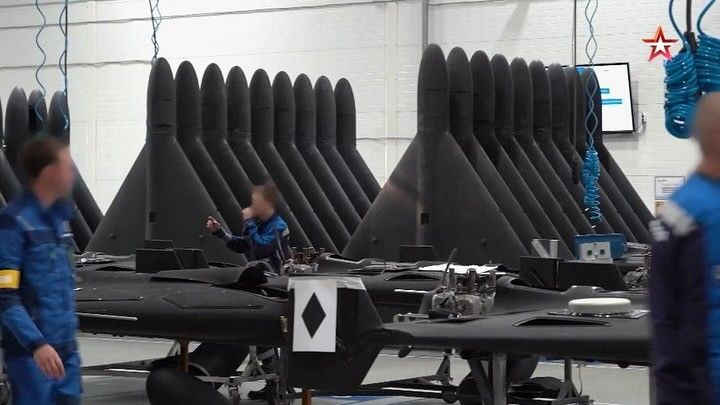
Dr Aleksander Olech: You are involved in Frankenburg Technologies and Wolfram Europa. What role can new defence companies play in rebuilding Europe’s industrial capacity, particularly in ammunition, explosives, warheads and mines? How can Europe turn innovation into production at scale?
Maj. Gen. (Ret.) Veiko-Vello Palm: Frankenburg Technologies and Wolfram Europa address different parts of the same problem: Europe needs to rethink not only what weapons it develops, but also what it considers an acceptable solution. At Frankenburg, we started developing an affordable counter-drone missile because we recognised a requirement that traditional procurement systems had not yet properly formulated. A few years ago, nobody was seriously asking for interceptors that could be manufactured in enormous quantities at a price that made sense against cheap drones. The technology was not necessarily the obstacle. The requirement itself was missing. With Wolfram Europa, we are addressing another part of the same problem. Europe has spent decades reducing its explosives production capacity and allowing essential industrial capabilities to disappear. We assumed that future wars would require relatively small quantities of ammunition and that global supply chains would provide whatever we needed.
Many European defence companies are rightly proud of being the tip of the spear. They develop extraordinarily sophisticated weapons, pushing technology to its limits and aiming for 99.99% performance. They have every reason to be proud. We need those capabilities, and we will continue to need them. At Frankenburg and Wolfram Europa, we approach the problem differently. We may be satisfied with a solution that delivers 80% of the desired performance, provided we can manufacture it in sufficient quantities, at an affordable price, and get it into service quickly. This does not mean lowering quality standards. Our products can still be sophisticated, technologically advanced and manufactured to demanding specifications. The starting point is different. We do not automatically assume that every weapon must meet every conceivable requirement before it becomes useful.
Imagine facing a serious battlefield problem without any effective solution. A company approaches you with a new weapon system. There are limitations. It needs at least some visible light. It cannot operate in very strong winds or heavy rain. And, for some inexplicable reason, it does not work on Saturday evenings. A traditional Western procurement response might have been: Interesting, but this does not meet our requirements. Come back when it also works in complete darkness and a snowstorm.
But a week has 168 hours, and until now you have had no solution for any of them. Now somebody offers you a weapon that can solve the problem for 130 of those 168 hours. My reaction would be: Excellent. Get it into service. Then we have two options. We can improve the existing system to cover more conditions, or we can develop another, complementary system that covers the remaining 38 hours. This approach is not appropriate for every weapon system or safety-critical requirement. But it illustrates a fundamental difference in how we think about military capability. We should stop asking only whether a weapon meets every requirement and start asking how much of the operational problem it can solve today.
At Frankenburg, the challenge is to produce affordable interceptors in quantities that correspond to the scale of the drone threat. At Wolfram Europa, we are developing capabilities in Latvia to manufacture and fill warheads and mines, develop new products and ultimately produce explosives. The ambition is European, not merely Latvian. We are not simply trying to recreate the industrial capacity Europe had thirty years ago. We want to combine modern technology with production methods designed for affordability and scale.
New defence companies can play an important role because they are often more willing to question established requirements and accept that an imperfect but useful solution today may be more valuable than a theoretically perfect solution years from now. For this to work, governments must change as well. Procurement must allow for faster introduction, continuous improvement and larger production volumes. Industry needs real orders, not just expressions of interest. A successful prototype is not yet an industrial capability. Manufacturing thousands of reliable products requires investment, qualified people, suppliers and functioning production processes. We should ask whether a system that addresses 80% of an urgent operational problem today may be more valuable than one that promises 99.99% performance but arrives too late or in too few numbers.

Dr Aleksander Olech: If you were advising Poland and the Baltic states, what three capabilities or areas of cooperation should they prioritise over the next five years?
Maj. Gen. (Ret.) Veiko-Vello Palm: I would focus on three areas that would make our armed forces more effective together, even if they are not politically attractive investments. The first is genuine interoperability across all our command-and-control systems — and I mean all of them. Not just the systems used by our national headquarters, but those operating at different levels of command, across different services and between allied formations. We should be able to exchange information automatically, without manually transferring data between incompatible systems or creating separate arrangements every time a new allied unit arrives. We should go a step further. Our military systems must also communicate with civilian networks and information systems. Modern warfare does not take place in an isolated military environment. We depend on civilian infrastructure, telecommunications, transport and other services. We need to exchange relevant information with these systems securely and reliably. This is not primarily a technological challenge. Much of the technology already exists. It is a question of common standards, organisational decisions and the willingness to abandon national or institutional solutions that do not work with others.
My second priority would be the large-scale introduction of artificial intelligence. I believe AI will drive the next major leap in military capability, so we should stop treating it mainly as an experimental technology confined to a few specialist projects. I would start with command and control. AI can help process enormous quantities of information, identify relevant developments, support decision-making and reduce the administrative burden on commanders and staffs. It can also help overcome something surprisingly persistent in multinational operations: language barriers. Perhaps we can finally stop using NATO’s unofficial third language – broken English. Joking aside, the ability to translate, interpret and exchange information rapidly between national systems and personnel could significantly improve multinational operations.
We often discuss unmanned platforms as though removing the human operator from the vehicle is the main achievement. But replacing a crew with a remote operator does not necessarily solve our manpower problem. To employ unmanned systems in truly large numbers, we need increasing levels of autonomy, which makes AI essential. Of course, decisions about the use of lethal force require appropriate human control, legal safeguards and clear responsibility. But that should not prevent us from automating the many other functions that consume manpower and slow down operations.

My third priority is to clarify what the armed forces must provide to society during a crisis and what support they can expect in return. We need a shared understanding of what information civilian authorities, infrastructure operators, emergency services and the wider population require from the military during a crisis or war. The armed forces will have information about threats, damaged infrastructure, dangerous areas, and the security situation that others need to continue functioning. We must be prepared to share the relevant information quickly, in usable formats and at the appropriate level of classification. The more effectively civilian organisations perform their own functions, the more our armed forces can concentrate on fighting the enemy.
Some years ago, I argued that an allied formation should be able to deploy anywhere within allied territory while moving perhaps only one-third of its normal logistical footprint. The remaining support should, wherever practical, come from the host nation. I call this “living off the land”, not in the traditional military sense of requisitioning whatever is available, but by using prearranged support from the host nation. Consider an Estonian unit deploying to Poland. Why bring an entire medical support structure if it can rely on Poland’s extensive, capable hospital network? Conversely, if a Polish unit deploys to Estonia, does it really need to bring all its mechanics, recovery equipment and heavy engineering machinery? Some of those services could be provided by Estonian military and civilian organisations. And surely we do not need to transport water and fuel across Europe as though we were deploying to Afghanistan.
Naturally, this requires advance planning, agreements, financing arrangements and practical exercises. Host-nation resources cannot simply be assumed to be available, particularly when the host country is also fighting a war. The potential benefit would be enormous. We could deploy combat power faster, with fewer vehicles and personnel tied up in support functions. Our aim should be to move fighting capability without transporting an entire self-contained support system behind every formation. Poland and the Baltic states will never have unlimited resources. But we can become much more effective by using the systems, people and infrastructure we already have as one integrated regional capability.
Veiko-Vello Palm is a retired Major General of the Estonian Defence Forces with more than 30 years of military service, during which he held a number of senior positions, including Deputy Chief of Defence, Chief of the General Staff, Commander of the Estonian Division and Commander of the 1st Infantry Brigade. Since retiring from active service in 2024, he has worked in the European defence industry and currently serves as a Member of the Management Board of Frankenburg Technologies, which develops cost-effective counter-drone missile systems, and as Chairman of the Supervisory Board of Wolfram Europa, a defence company focused on explosives, advanced munitions and warheads.