












- ANALIZA
- WIADOMOŚCI
Estonia’s conscription no-show rate falls to 2%. This is how a threatened society prepares for war

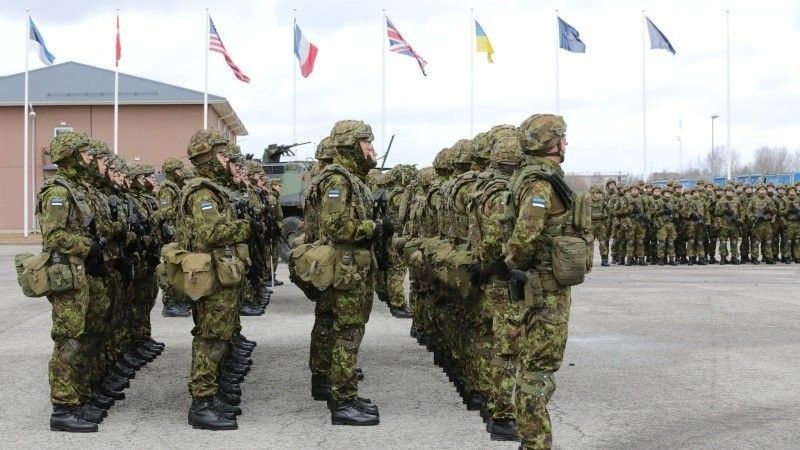
Photo. Sõdurileht/Facebook
Estonia’s military conscription no-show rate fell to 2 percent in 2025. At first glance, this looks like a small administrative statistic. In reality, it says much more about Estonia’s defence culture, its sense of threat from Russia and the way Tallinn is rebuilding compulsory military service into a more demanding system of national readiness.
Estonia has compulsory military service. This is the starting point that should not be lost in the numbers, because for Tallinn, conscription is not a symbolic attachment to the past, but one of the foundations of national defence. A small state bordering Russia cannot build its military security only on a professional army, allied presence and procurement. It also needs trained reserves, social acceptance of military duty and a system able to mobilise people quickly if the security situation deteriorates. Moreover, we have all heard about the threat from “Narva” (by the way, this is not true).
The latest figures show that this system works. According to the Estonian Defence Resources Agency, the share of call-up selectees who failed to report fell from 6.6 percent in 2023 to 4 percent in 2024 and then to 2 percent in 2025. In absolute terms, only 63 people failed to report last year. That is not just a bureaucratic improvement; it shows that the Estonian state is able to enforce military obligation and that most young men treat conscription as a normal part of civic responsibility.

There is a coercive element, and Estonia does not hide it. Fines can be imposed on those who fail to attend the required medical assessment without justification, and the ceiling is set to increase from €640 to €1,280. Payment of the fine does not remove the obligation to appear before the medical commission. If repeated fines do not work, the state can also seek the suspension of a driving licence or other permits. This means that military obligation is connected to real consequences in civilian life. We also observe what is happening in Ukraine, where young men are forced to serve.
But the Estonian model is not based only on punishment. The Defence Resources Agency has also simplified the procedure. Young people can choose when and where to attend the medical assessment; part of the health documentation can be checked digitally, and the process is less burdensome than before. This is important. Estonia is not only making it harder to avoid conscription. It is also making it easier for those who want to fulfil their obligation to do so without unnecessary administrative friction.
The security context explains why this matters. Estonia does not treat Russia as a theoretical risk. In its 2026 National Security Concept, Tallinn describes Russia as the greatest threat to Estonia and to Euro-Atlantic security. This perception shapes the entire defence system. Conscription is therefore not only a manpower mechanism. It is part of a wider answer to a state that, from Estonia’s perspective, has already shown in Ukraine that it is ready to use force to change borders and destroy the European security order.

This is also why Estonia is changing the model of service. From 2027, conscript service will last 12 months for everyone. The first half of the year will be used for basic and specialist training, while the second half is intended to keep already trained units in a state of actual readiness. This is a significant change. Estonia is moving away from a model in which conscripts are trained and quickly released into the reserve, towards a system in which trained units contribute to real military readiness during service.
The reason is also technological and connected with recent procurements. Estonia is acquiring and integrating more complex capabilities, including rocket artillery, medium-range air defence, C4ISR and new sensor systems. These systems cannot be operated properly after only short basic training. They require longer preparation, better specialists and a conscription model that can produce usable military units, not just individual reservists. This is one of the most important lessons from the war in Ukraine, where mass still matters, but mass without trained operators, data, fires and command systems is not enough. This is also a challenge that will be faced in Poland.
From 2027, Estonia plans to call up 4,100 conscripts a year. They will not all go into traditional infantry structures. Hundreds will be directed to the air force, navy, Cyber Command, Support Command, Special Operations Command and intelligence structures. This shows how the character of conscription is changing. It is no longer only about filling land units. It is also about producing people for a technologically more demanding defence system.

There is, however, a longer-term problem. Estonia may have very low no-show rates, but it still has unfavourable demographics. The country may soon struggle to fill all required conscript places with men alone. Women can volunteer, but compulsory service applies to men, and the number of female volunteers remains limited. This means that the future challenge may not be unwillingness to serve, but the size of the population from which Estonia can draw.
That is why the 2 percent figure is important, but it should not be read in isolation. Estonia has built a system in which compulsory military service is enforced, socially accepted and increasingly connected to real readiness. The state punishes avoidance, reduces administrative obstacles and reforms the content of service because it understands the strategic environment around it. For Estonia, conscription is not an old institution maintained out of habit. It is a practical answer to the Russian threat and to the reality that, on NATO’s north-eastern flank, defence still begins with the ability of society to mobilise. In Tallinn, everyone is ready for Russia, and this is the reality that every Estonian has already accepted.


