- WIADOMOŚCI
- ANALIZA
NATO will cut Russia off from the Baltic. We are talking about hours

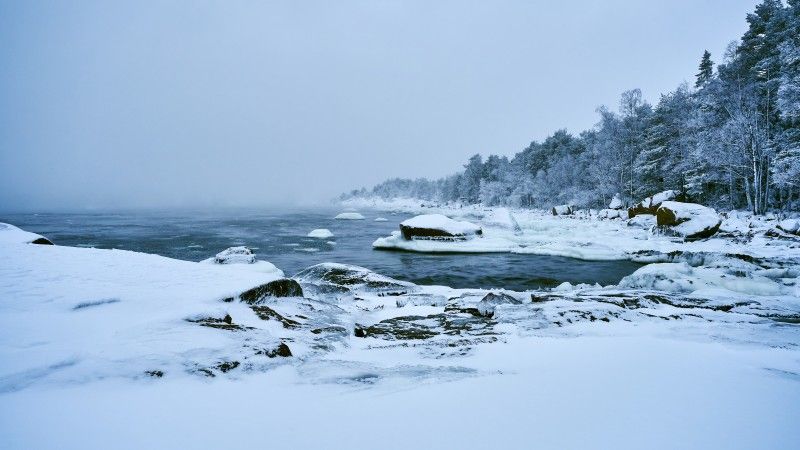
Estonian Foreign Minister Margus Tsahkna stated that, in the event of a Russian attack on a NATO member state, the Alliance could close Russia’s exit to the Baltic Sea through the Gulf of Finland within a few hours. This is not just a political declaration, but another element of a scenario in which the Baltic Sea becomes one of the first areas of confrontation between NATO and the Russian Federation.
In European defence planning, the Baltic Sea is increasingly treated not as a rear area, but as a battlefield. This is determined by the short distances between NATO states and Russia, the presence of the Kaliningrad Oblast, the military importance of St Petersburg, the proximity of Finland and Estonia and the concentration of critical infrastructure. In the event of war, Russia would not have to begin with a classic land attack against the Baltic states. A more likely scenario would involve hybrid operations, sabotage, cyberattacks, attempts to disrupt shipping, pressure on ports, missile strikes and actions using the maritime component.

The Baltic as the first field of confrontation
This is precisely why such statements by allies are so important. The Estonian minister says directly that if Russia attacked NATO and Article 5 were triggered — here the Nordic states, the Baltic states and Poland would react immediately — the Alliance would have the ability to close the exit from the Gulf of Finland within a few hours. This would mean cutting off one of Russia’s most important maritime arteries. Russian vessels leave St Petersburg through this route, the Baltic Sea maintains the connection with the Kaliningrad Oblast, and the route itself also matters for Russian exports of raw materials. For Moscow, this is a first-order theatre of war and, at the same time, an area important for the economy, logistics and demonstration of force.
It must be stressed, however, that this is not a declaration of a pre-emptive blockade. We are referring to a situation in which Russia begins military action against NATO. This is very important, because Moscow has for years portrayed the Alliance as an offensive structure, while the logic of this declaration is exactly the opposite. If Russia strikes, it will lose freedom of action in the Baltic Sea. In practice, NATO is telling Russia that the war will not be fought only where the Kremlin chooses the point of attack. Interestingly, Western countries — with France at the forefront — see the Baltic Sea precisely as the region of the first clash.
Closing the Gulf of Finland would have significance beyond the military dimension. The Baltic Sea is one of Russia’s last exits to the West. The Black Sea has already been largely constrained by the war against Ukraine, including Kyiv’s actions and Turkish control over the straits. If, in conditions of war with NATO, Russia also lost freedom of exit from St Petersburg to the Baltic Sea, it would lose its connection with the Kaliningrad Oblast, which would in any case be eliminated within several dozen minutes by strikes from Poland.
The whole discussion fits into a broader scenario that has been appearing in European military analyses for months. Russia would begin the conflict below the threshold of full-scale war, striking critical infrastructure, ports, energy systems, communications, undersea cables, civilian vessels and selected military targets precisely in the Baltic Sea.
The aim would be to paralyse the reaction of the Baltic and Nordic states, as well as to create political pressure on Western countries before the open phase of the conflict. That is why it is increasingly assumed that the fight for the Baltic cannot be based only on defending one’s own coastline. It must include the rapid limitation of Russian freedom of action at sea.
Frontline states as the first strike
In such a scenario, frontline states would be of key importance. Estonia, Finland, Lithuania, Latvia, Poland, Sweden, Denmark and Norway would have to maintain infrastructure, ports, logistics, coastal defence and freedom of military movement. Support from the largest European states, including France, Germany and the United Kingdom, would be necessary, but the first hours of the conflict would belong to the countries of the region. They would have to delay Russian actions, secure routes and maintain the ability to receive allied support.
The use of very large forces is assumed. In the European variant, this means around 12 divisions, or 40–50 brigades, with a total of around 200,000 soldiers. This would require at least 1,500 tanks, more than 3,500 infantry fighting vehicles, around 1,000 pieces of tube artillery and nearly 400 rocket launchers. In the air, 300–350 combat aircraft would have to be committed, together with early warning, refuelling and reconnaissance aircraft, as well as several thousand medium-range precision strike assets.
The maritime component would be one of the main elements of the response. Surface ship groups, air defence of critical infrastructure, anti-submarine warfare and the maintenance of freedom of navigation would be needed. Russia could attempt to block ports, attack the coast and slow down the reaction. NATO’s response would therefore have to include both defence and offence. NATO significantly surpasses Russia in military power.
Taking away Russia's ability to decide the strike
The most important point, however, is that the Estonian declaration changes the way the Baltic is viewed. It is no longer only a question of how NATO will defend the Baltic states against a Russian strike. The more important question is how quickly the Alliance will be able to take away Russia’s ability to operate at sea. If Moscow started the conflict, closing the Gulf of Finland could become one of the first steps towards limiting the Russian fleet, exports and connection with Kaliningrad.
This is also a significant political signal. Frontline states do not want to wait passively for Russian escalation. In their thinking, defence is no longer only about absorbing a strike and waiting for support. Defence also means an immediate strike against Russia’s ability to wage war. Closing Russia’s exit to the Baltic Sea would be exactly such an action: not symbolic, but directly military.
For Poland, this discussion has direct significance. The Baltic Sea is one of the most important areas of our security, and Russian activity in the region is not limited to the Kaliningrad Oblast. If the Baltic and Nordic states openly speak about closing Russia’s access to the Baltic Sea in the event of war, Warsaw should treat this not as rhetoric, but as an element of operational planning. First, the elimination of the Kaliningrad Oblast; then blocking an attack from Belarus, as well as support for the Baltic states in the context of the Baltic Sea.
Russia may want to start a confrontation in the Baltic, but it has no guarantee that it will control its course. After Finland and Sweden joined NATO, the balance of power in the region changed significantly in favour of the Alliance. The Gulf of Finland is no longer a safe corridor for Russia, but a place that, in wartime conditions, can be quickly closed by NATO states. This is one of the most important changes on NATO’s north-eastern flank. Russia must take into account that it will meet resistance.