- ANALIZA
- WIADOMOŚCI
Russia will attack in the Baltic. Europe is planning how to manage without the US

French thinking about security – increasingly shared by other Western European countries – is moving towards one fundamental assumption: Europe must be prepared to defend the continent without the United States.
European defence and military planning are already considering scenarios based on almost complete European self-reliance and no direct US participation, including in the defence of the Baltic Sea region.
What initially appeared mainly in French thinking is now increasingly visible in Western and Nordic military assessments. Transatlantic relations are considered less predictable, while the United States is viewed not only as an ally, but also as a political, economic and military competitor. Europe’s dependence on American technologies, intelligence, military equipment and data is also being raised as a problem. All of this is gradually reducing confidence in the United States as the ultimate guarantor of European security.
As a consequence, Paris, while maintaining consultations with its Allies, is preparing for the broadest possible degree of European autonomy, based on national and European capabilities. Defence scenarios no longer automatically assume that American forces will participate in NATO operations, including in the Baltic region. In such a situation, European countries would have to defend the region themselves, with the main burden falling on frontline states supported by the largest Western European militaries, including France, Italy, Spain and the United Kingdom.
This is no longer merely an academic or political debate. Increasingly detailed options are being considered in Europe in case the scale or character of the American presence on the continent changes. Such possibilities are being discussed both in Paris and in Washington. It is therefore important that these scenarios also become part of the debate in Warsaw.
The Baltic as a battlefield
The Baltic Sea is regarded as one of the most likely areas for a rapid escalation of a conflict with Russia. This is due to the short distances between NATO territory and Russia, the concentration of Western critical infrastructure in the region and Russia’s considerable ability to conduct missile strikes and use its naval component for offensive operations.
One scenario assumes that a conflict could begin at sea, with attempts to block ports, missile strikes and hybrid activities – sabotage, subversion and cyberattacks – against the Baltic states before an open land confrontation develops.
The scenarios foresee intensive use of Russian naval capabilities, including submarines, combined with attacks against energy infrastructure and command systems. Europe’s response would have to combine land, air and maritime forces, with particular emphasis on coastal defence, anti-submarine warfare and maintaining freedom of navigation in the Baltic Sea.

Europe's capabilities
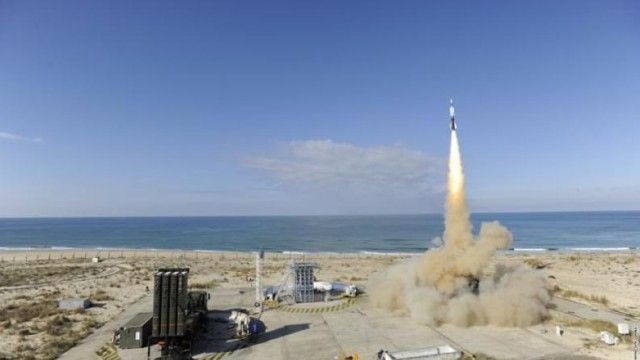
European missile defence capabilities remain insufficient, particularly on the eastern flank. The number of available defensive systems is too small in relation to the potential scale of the threat. There is also the question of Russia using thousands of unmanned systems.
Under these conditions, some scenarios envisage not only defending Allied territory, but also rapidly reducing Russian military capabilities in the immediate Baltic region. For this reason, concepts intended to slow or block a Russian offensive through strikes against military capabilities in Kaliningrad are assessed positively as a way of buying time for the broader Allied response.
Other proposals, particularly from the Baltic states, go further and include strikes much deeper into Russian territory, for example against targets around St Petersburg. The Nordic countries also take part in these discussions, although they would prefer to place greater emphasis on coastal defence.
A purely “European” plan for the defence of the Baltic Sea basin would require significant land, air and maritime forces. However, logistics would remain one of the main limitations. Current assessments indicate that Europe’s ability to move troops and equipment remains insufficient compared with what would be required and would depend heavily on support from the largest European states. The deployment of French forces to NATO’s eastern flank and the Baltic region alone could take approximately 8 days, depending on France’s involvement in other conflicts and military exercises.
At the beginning of March, amid the increasingly tense situation in the Middle East, France decided to move the aircraft carrierCharles de Gaulle to the Mediterranean while it was operating in the Baltic. The US-Israeli war against Iran demonstrated that, despite increasing French interest in the Baltic region, Paris cannot permanently concentrate its most important military capabilities on a single direction.
Under the “European” scenario, responsibility for the defence of the Baltic Sea region would fall primarily on the frontline states: Poland, the Baltic countries, Finland, Sweden, Denmark and Norway. Their task would be to delay Russian forces, defend their territory and maintain logistics. France, Germany and the United Kingdom, supported by Belgium and the Netherlands, would provide additional capabilities, particularly in aviation, naval forces, command, reconnaissance and reinforcement.
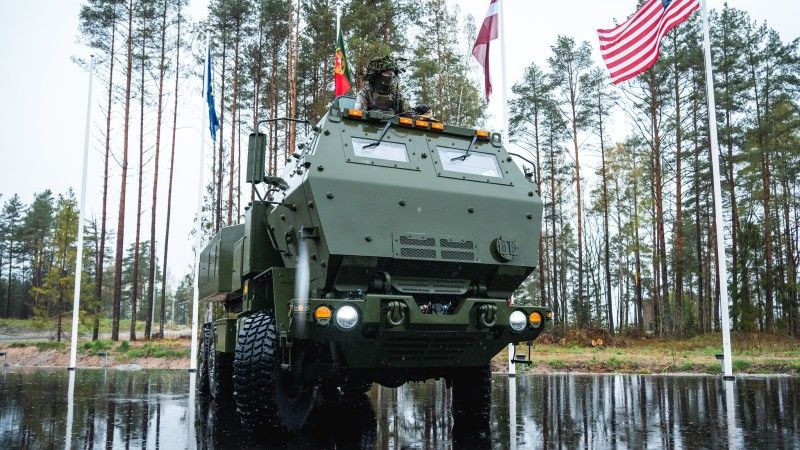
It is estimated that such a European defence of the Baltic region could require approximately 12 divisions, comprising 40–50 brigades and around 200,000 troops. These forces would need at least 1,500 tanks, more than 3,500 infantry fighting vehicles, around 1,000 tube artillery systems – mainly 155 mm howitzers – and almost 400 rocket launchers.
The air component would require approximately 300–350 combat aircraft, together with around 20–30 early-warning, reconnaissance and aerial-refuelling aircraft, as well as several thousand medium-range precision-guided weapons. The maritime component could include one carrier strike group and up to four surface groups capable of mine warfare, anti-submarine operations and protecting critical infrastructure.
See also 

Europe without the United States
The new approach means preparing Europe for a scenario in which it has to defend itself without the American security umbrella – potentially including the nuclear dimension. This does not mean abandoning NATO. It means trying to ensure that European defence planning is no longer entirely dependent on political decisions taken in Washington.
The problem is that Europe still lacks a coherent command structure and the full capabilities required to manage an operation of this scale without significant American participation.
The White House is already openly discussing proposals to reduce the American military presence across NATO’s eastern flank. At the same time, the Trump administration has repeatedly made clear that European allies are expected to assume much greater responsibility for their own security.
For Washington, China remains the principal long-term challenge, while Europe is important primarily in the context of Russia’s war against Ukraine. The objective remains to reduce tensions and reach some form of agreement, with considerably greater pressure being placed on Kyiv than on Moscow. Equally important are efforts to reopen relations with Minsk, which is increasingly viewed as a separate channel towards Moscow and as a state that could potentially be moved further away from Beijing.
Relations between Paris and Washington have reached their lowest point in years, as have the personal relations between Emmanuel Macron and Donald Trump. In France, there are increasingly strong arguments that Europe should not assume that the United States will come to its defence.
However, in my view, the French perspective is too one-sided and largely ignores the continuing American presence in Poland, Romania and Estonia. There are still more than ten thousand US troops deployed across NATO’s eastern flank, constantly rotated and maintained by Washington. The political competition between France and the United States must also be taken into account.
The concept of “European defence” is therefore no longer purely theoretical for Western and Northern Europe. Specific scenarios, exercises and discussions with Allies, including countries on NATO’s eastern flank, are emerging. The Baltic has been identified as one of the areas where Russia could strike and where European unity would be tested. It would also become the area in which the Allied response would have to be demonstrated – from sending troops and equipment to the possible activation of NATO Article 5 or another form of tangible military assistance.
Once again, there is growing pressure on Central and Eastern European states to develop their capabilities not simply as a supplement to the US presence, but as part of a strictly European defence system. This represents a fundamental change in thinking about the security of the continent, particularly in the face of repeated Russian acts of sabotage and interference. Plans are now being developed for a European response to a Russian attack without direct US participation. This is an important step in European defence cooperation.