












- WIADOMOŚCI
- ANALIZA
France and Türkiye reopen defence channel. SAMP/T is the obvious test

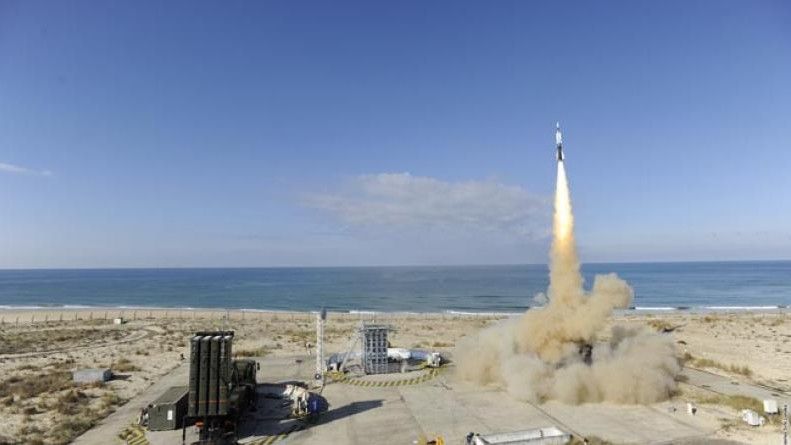
Photo. French MoD
France and Türkiye have signed a defence cooperation roadmap at a moment when both countries need each other more than they would publicly admit. The document does not confirm a SAMP/T deal, a Meteor arrangement or a technology-transfer package. It does, however, create a political channel at exactly the moment when Ankara is trying to rebuild its air-defence architecture and Paris is looking for a stronger role in Türkiye’s modernisation after years of tension.
The roadmap was signed after high-level talks in Paris between senior Turkish and French defence officials. Officially, the language is quite cautious and it covers bilateral defence relations, military cooperation, strategic dialogue and regular contacts oriented towards concrete results. There is no public list of programmes, no value, no timetable and no formal confirmation that SAMP/T is included. That distinction is important. A roadmap is not a contract. It is a framework that makes future contracts easier.
Still, the timing is not accidental. The most obvious programme in the background is SAMP/T NG. France, Italy and Türkiye have been circling this issue for years. The initial cooperation on a long-range air-defence system began in 2017–2018, but the political atmosphere later became toxic because of Syria, Libya, Greece, Cyprus and the Eastern Mediterranean. Now the subject is back. Emmanuel Macron said in July that technical work with Italy and Türkiye was continuing, while Reuters reported that France had softened its earlier opposition to a possible sale.
For Ankara, the logic is clear. Türkiye is building its own layered air-defence concept under the Steel Dome framework, but it still needs a credible high-end system able to deal with more demanding missile threats and to operate inside a NATO environment. The Russian S-400 purchase did not solve this problem. It created another one. It pushed Türkiye out of the F-35 programme, triggered sanctions and left Ankara with a system that is politically costly, difficult to integrate with NATO and increasingly inconvenient for its wider modernisation plans.
This is why the recent Russian signals on S-400 matter. Moscow has indicated that the Turkish systems could potentially be transferred to a third state friendly to Russia. If such a solution were ever accepted, it could help Ankara address one of the main obstacles to returning to the F-35 track. That would not automatically produce a SAMP/T deal, but it would fit into a broader Turkish attempt to repair its position inside the Western defence ecosystem while keeping freedom of manoeuvre.
If SAMP/T NG becomes part of this process, the issue will not be a simple sale of launchers from France to Türkiye. Ankara will want technology, industrial participation and integration into its own architecture. That has been the Turkish approach for years. The likely question is not whether Türkiye buys an air-defence system from Europe, but on what terms. If the package includes Turkish industry, Steel Dome integration and a meaningful transfer of know-how, the political significance will be much greater than the number of batteries.

For France, this would also be more than an export opportunity. SAMP/T NG brings Thales, MBDA and Eurosam into the discussion through radar, command-and-control, the Aster missile family, integration, sustainment and future upgrades. A Turkish programme would therefore support French industry at a time when European air and missile defence is becoming one of the central questions for NATO states. It would also allow Paris to re-enter a Turkish defence market where political tensions have often blocked industrial logic.
The relationship has already started to move in that direction. Safran and Baykar signed a strategic partnership in May covering electro-optical systems, navigation, synchronisation, guidance and guided weapons, with Euroflir to be integrated on the Bayraktar TB2. That is not a normal buyer-seller relationship. It is co-development. It shows that French industry is already entering parts of the Turkish defence ecosystem, not only offering finished products from outside.
Meteor is another part of the background, though probably not the main new prize. Türkiye’s Eurofighter package already includes advanced weapons, and France matters in the Meteor programme through MBDA. Turkish sources are right to connect the roadmap with earlier discussions on SAMP/T and Meteor, but Meteor should be treated more as a sign of political normalisation around advanced technology transfer than as the centre of the new roadmap.
The wider political context is more complicated. France and Türkiye are not suddenly aligned everywhere. In NATO, both are still involved in a difficult dispute over the South Caucasus. Paris has blocked a new partnership plan with Azerbaijan, while Ankara has blocked the parallel renewal of Armenia’s plan in response. This comes at a moment when both Baku and Yerevan are seeking closer links with the Alliance and Russia’s grip on the region is weaker than before. That contradiction is important. France and Türkiye can deepen bilateral defence dialogue while still obstructing each other in NATO when national interests collide.

This is why the roadmap should not be oversold as a political reset. It is not the end of rivalry between Paris and Ankara. It is an attempt to manage it. France and Türkiye know that they disagree on several regional files, but they also know that the defence-industrial environment has changed. Russia’s war against Ukraine, the return of missile threats, the weakness of European stockpiles and the need to rebuild air defence have created new pressure. In such conditions, even difficult partners start looking for practical arrangements.
The most important question is therefore not simply whether France will sell SAMP/T to Türkiye. The real question is whether Ankara and Paris are preparing a wider package, for instance, air defence, industrial participation, advanced missiles, drone technologies and a political mechanism for regular defence dialogue. If that happens, the roadmap will not be remembered as a symbolic document. It will mark Türkiye’s deeper return to the European defence-industrial space and France’s attempt to turn a difficult NATO partner into a major customer and cooperation partner.


