- WIADOMOŚCI
- ANALIZA
Qatar turns to France to counter Shahed drones. Another defence deal in the making?

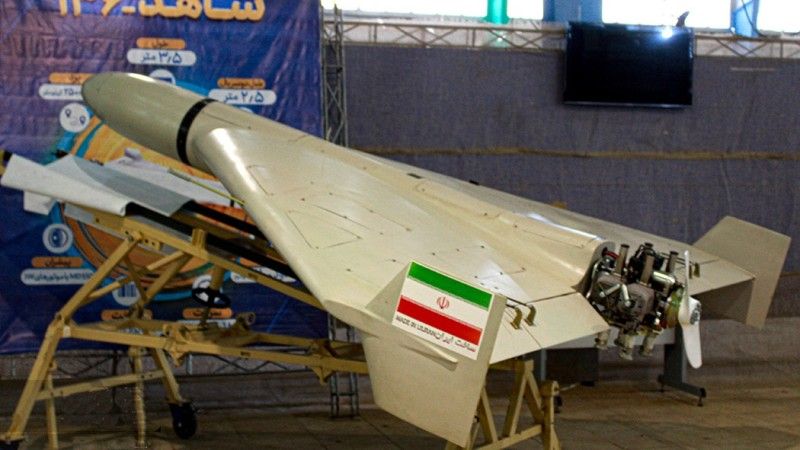
Photo. Fars Media Corporation, licencja CC BY 4.0, commons.wikimedia.org
Qatar is considering French-made autonomous interceptors to strengthen its defences against Iranian-designed Shahed drones and their Russian Geran derivatives. Harmattan AI, backed by Dassault Aviation, has signed an agreement with Qatar’s Barzan Holdings to evaluate the Gobi Tempest system. The move could expand decades of French-Qatari military cooperation, although no acquisition contract has yet been signed.
The memorandum of understanding, announced on 6 November 2026, covers cooperation on very short-range air defence (VSHORAD) and autonomous military systems. Barzan Holdings, Qatar’s national defence industry company, will assess the Gobi Tempest interceptor through demonstrations and testing before determining whether to proceed with procurement. The system is designed primarily to counter larger unmanned aerial vehicles, including attack drones comparable to the Iranian Shahed and Russian Geran families.
According to Harmattan AI, Gobi Tempest can reach a maximum speed of 310 km/h, has a range of 12 kilometres and can be ready for take-off within five seconds. The 4.4 kg interceptor is launched from a dedicated container and uses autonomous guidance to approach its target, with an explosive payload available for the final engagement. Its development reflects the growing demand for cheaper alternatives to conventional surface-to-air missiles, particularly against large-scale attacks involving relatively inexpensive drones.
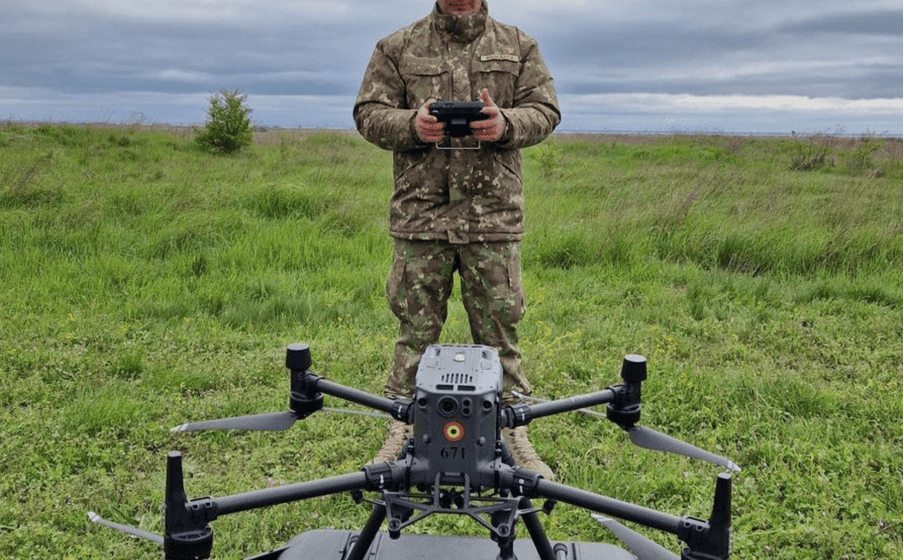
The French company has expanded rapidly, supported by Dassault Aviation, which led a $200 million funding round in January 2026. The partnership also covers artificial intelligence technologies for future combat aircraft, including the Rafale F5. Harmattan AI has already conducted interception trials with French and allied forces, while France has separately ordered the smaller Gobi Zephyr interceptor. However, successful demonstrations do not establish Gobi Tempest’s effectiveness against coordinated mass attacks under combat conditions.
France is hardly a newcomer to Qatar’s defence market. Paris dominated Qatari arms imports throughout much of the 1990s and early 2000s, supplying military equipment including Mirage fighter aircraft. The relationship subsequently expanded through major contracts, notably Qatar’s purchase of 24 Dassault Rafale fighters in 2015 for €6.3 billion, followed by another 12 aircraft in 2017 for approximately €1.1 billion. The combined Rafale orders reached €7.4 billion, making France one of Doha’s most important defence partners alongside the United States.
Military cooperation between the two countries continues to develop. During President Emmanuel Macron’s visit to Doha on 21 October 2026, France and Qatar agreed to strengthen their defence relationship, including further cooperation involving the Rafale and renewed negotiations over French-made armoured vehicles. A letter of intent involving KNDS France and John Cockerill Defense reopened discussions on the VBCI programme, previously associated with a potential acquisition of around 490 vehicles. That agreement, like the Harmattan AI memorandum, does not yet constitute a confirmed order.

For Qatar, the French proposal addresses a problem that expensive conventional air defence systems cannot solve economically: intercepting large numbers of relatively cheap attack drones. For France, it offers another opportunity to expand a military relationship built over decades.
However, the decisive issue is not the number of agreements signed in Doha, but whether Gobi Tempest can reliably intercept Shahed-type drones during sustained attacks. There are some doubts as to whether French technology can deliver such capabilities…