- WIADOMOŚCI
- KOMENTARZ
Turkey’s defence pact with Qatar is a bid to replace Washington in the Gulf

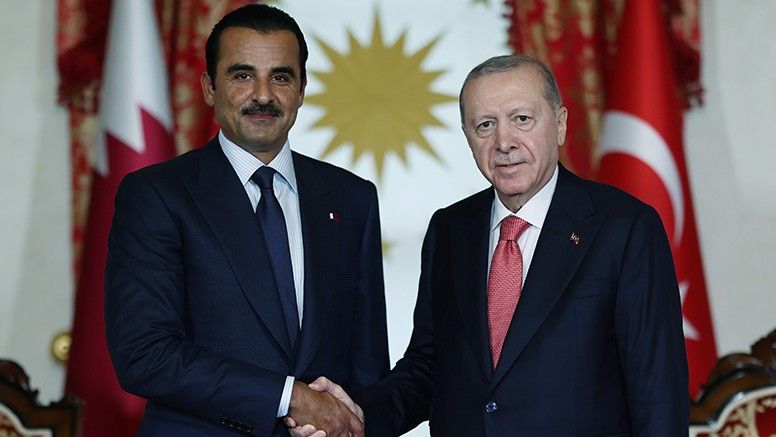
Photo. Presidency of the Republic of Türkiye
Friday’s (13th November 2026) signing of a mutual defence agreement in Istanbul between Turkish President Recep Tayyip Erdoğan and Qatari Emir Sheikh Tamim bin Hamad Al Thani is being presented by both capitals as the natural next step in a decade-long partnership.
Beneath the familiar diplomatic language of brotherhood and regional stability, however, lies a much sharper geopolitical shift. By formalizing a commitment to adopt a unified stance against external armed aggression, Ankara is moving decisively to fill the security vacuum left by eroding confidence in American defence guarantees across the Persian Gulf.
The agreement (concluded during the 12th session of the Türkiye-Qatar High Strategic Committee) extends far beyond ceremonial cooperation. Alongside accords on trade, education, and diplomatic mediation, the defense pact lays the groundwork for joint military exercises, intelligence sharing, defence-industrial integration, and the potential deployment of Turkish air-defence systems and weaponry to Qatar. While Turkish troops have been stationed on Qatari soil since the 2017 Gulf blockade, elevating that presence into an explicit mutual-defence framework alters the strategic equation.

Timing explains the urgency. In the wake of the conflict involving Iran and Washington’s diminishing appetite for open-ended regional policing, Gulf states have been forced to confront an uncomfortable reality: long-standing U.S. security umbrellas no longer guarantee insulation from regional escalation. For Doha – wealthy, exposed, and hosting critical energy infrastructure, diversifying its security guarantors is no longer optional.
For Erdoğan, the payoff is equally clear. Ankara is systematically weaving a network of overlapping security pacts across the Muslim world. The Istanbul deal follows last week’s parliamentary ratification of a trilateral defense pact with Saudi Arabia and Pakistan (linking NATO’s second-largest army with the Islamic world’s sole nuclear power) as well as October’s multilateral „Badr” defense memorandum uniting Turkey, Qatar, Pakistan, and Indonesia.

Rather than relying on Western-led security structures, Ankara is positioning itself as the indispensable military broker from the Eastern Mediterranean to the Arabian Peninsula. Yet the strategy carries real risks. By underwriting Qatar’s defence against external attack, Turkey is tying its own security credibility to one of the world’s most volatile neighborhoods. If deterrence holds, Erdoğan cements Turkey’s status as the Gulf’s new power broker. If a regional crisis puts those guarantees to the test, Ankara will discover just how costly it is to step into Washington’s shoes.