












- WIADOMOŚCI
- KOMENTARZ
The EU is preparing for hybrid attacks with fatalities. What about NATO?

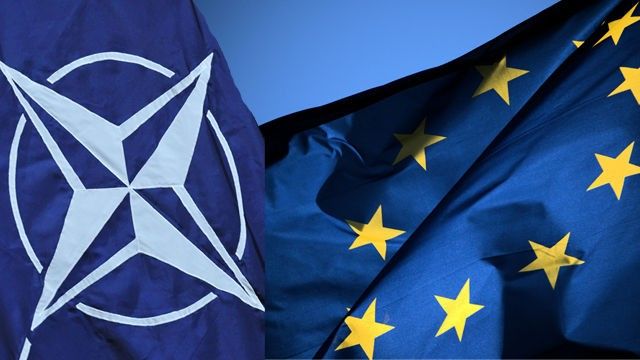
EU Member States are holding confidential talks regarding the response to Russian hybrid attacks in the event of fatalities. The division of competences between the European Union and NATO remains an issue in these matters.
As reported by Politico, talks on a crisis scenario have been taking place privately for several weeks. Discussions gained momentum following the discovery of a drone with an explosive charge at Leipzig airport, a fire at a Polish Starlink station, and attempts to place incendiary devices in air parcels within the EU and the UK.
“We must be prepared for something serious. Unfortunately, the events in Leipzig showed us that a very serious incident causing numerous casualties cannot be ruled out,” said a senior EU diplomat, quoted by Politico.
EU's competences overlap with NATO?
Thus far, Russian hybrid activities have not caused fatalities in an EU or NATO country. According to Politico, pressure on NATO and the EU will significantly increase after the first death resulting from an attack is recorded. The Union’s preparations for such a scenario are already sparking discussions regarding the division of its competences with the North Atlantic Alliance.
The EU is said to be considering mechanisms including the deployment of EU crisis response teams, triggering emergency funds for affected states, and coordinating crisis communication at the highest EU level. However, some capitals and experts warn that excessive involvement of the European Commission in security matters risks duplicating the tasks of the North Atlantic Alliance. “There is a risk of creating great chaos at all decision-making levels, which would delay response time,” said NATO spokesperson Oana Lungescu in an interview with Politico.

There are also concerns regarding the possible leak of classified EU data to the media or its interception by the Russian side. European Commission President Ursula von der Leyen proposed the creation of an “emergency security protocol,” which would be included in the new European Security Strategy, scheduled for publication in November. Some diplomats suggest relying on existing EU Integrated Political Crisis Response (IPCR) mechanisms rather than creating new structures.
The NATO spokesperson is convinced that the optimal solution would be a clear division of roles: NATO should be responsible for intelligence sharing and military deterrence, while the European Union should focus on civilian crisis response and economic support.

What is clearly missing?
It should also be added that the mechanisms proposed by the Union are merely reactive tools. They cover situations where an EU citizen has already died. They do not offer preventive measures that could thwart such an attack or ways to actively exert pressure on the Russian Federation. Decisions made thus far, such as those regarding the imposition of sanctions, do not ensure security for either the Union or Ukraine. Despite all efforts, the war in Ukraine not only continues, but Russian hybrid attacks within the Union are also intensifying.


