- WIADOMOŚCI
- ANALIZA
Palantir targeted by Russian intelligence

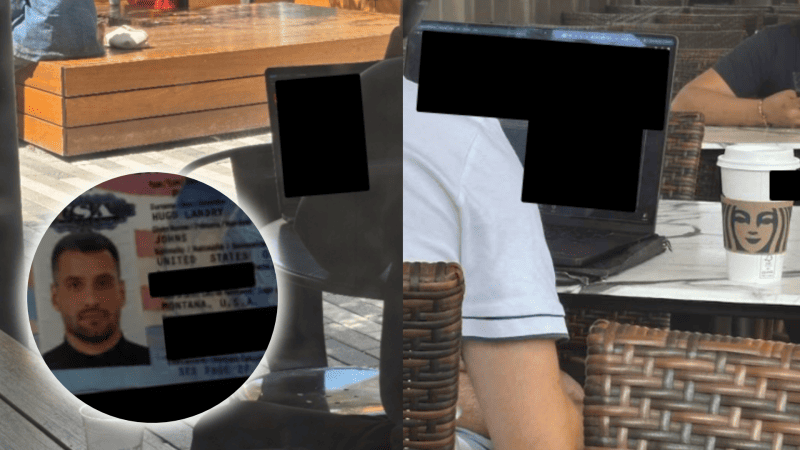
Photographs of laptop screens, home addresses, detailed employee profiles, and information about their families — according to the US prosecution, such materials were gathered as part of an operation targeting a technology company supporting Ukraine. Igor D’iu (Игорь Андреевич Дью), a Russian national, is facing trial in a federal court for, among other things, acting on behalf of the Russian government and stalking a company employee. Court documents describe the firm without naming it; however, Reuters, ABC News, and the Financial Times point to Palantir Technologies.
On 3 September 2026, a company employee left the office in Palo Alto and drove towards San Francisco. A silver Lexus began following her car. The woman changed her route and entered a shop car park, but the driver continued to follow her. According to a sworn statement by Winston Wong, an FBI Special Agent from the San Francisco field office, the driver tracked her for nearly 50 km (approx. 31 miles). The woman called the 911 emergency number. The Lexus driver drove away when she established contact with a police patrol in San Francisco.

The employee provided the police with a description of the car and part of the registration number. CCTV footage showed a Lexus matching the description following her from the office. The same vehicle had appeared near the company on the two previous days. Another employee reported that on 2 September, the car followed her after she left work. Palo Alto police traced the owner of the rental vehicle and subsequently obtained a photo of D’iu’s Russian driving licence and his telephone number.
In a telephone conversation with Palo Alto police on 4 September, D’iu confirmed that he had been driving the Lexus the previous day. He claimed he followed the woman because he wanted to ask her on a date. He also maintained that he had arrived in the US on a tourist visa.
Recruitment via Telegram and assignments in California
According to D’iu’s account cited by the FBI, he was recruited via Telegram to gather information in the US. One of his contacts provided him with a ticket from Istanbul to Mexico City. Travel records indicate that the flight took place on 7 June. D’iu stated that in Mexico, he was put in touch with a facilitator who helped him cross the US border. According to the prosecution, he entered the US illegally. The FBI found no official record of his entry. The first signal from D’iu’s phone in the United States, recorded in data analysed by the FBI, was recorded on 31 July near McAllen, Texas. From 19 August to 4 September, signals from his phone were recorded for extended periods near the company’s Palo Alto office.
According to the prosecution, the handlers provided D’iu with instructions via Telegram and financial support. Upon arrival in the US, they instructed him to buy laptops, mobile phones, wireless networking equipment, and remote access software. In a café near the Palo Alto office, D’iu allegedly identified company employees and photographed their laptop screens while they were working. According to the FBI statement, he forwarded the photos to his handlers. The published document includes photographs from his Telegram account. Some shots show open laptops on tables, while others show screens photographed at an angle. Most of the content visible on the screens has been redacted. The FBI did not state what device was used to take the photos or whether employees noticed the photography.

The handlers also instructed him to place his own laptop in designated locations near the company’s office. They intended to connect remotely to his computer and, through it, attempt to harvest data from employees in the vicinity. According to D’iu, the tasks initially required staying in a designated spot for a few minutes, later increasing to up to three hours. In the published documents, the FBI did not state whether employee data was obtained in this manner.
After speaking with the police, D’iu left for Reno, Nevada. According to his account, his Telegram contacts told him to leave California and later return because they found no tasks for him in Reno. FBI agents observed his return to the San Francisco Bay Area on the evening of 22 September.
In September this year, the FBI also intercepted two parcels from Kyrgyzstan addressed to the alias “Hugo Landry Johns”. In the first, they found a forged California identity document, and in the second, a US passport and a Social Security card. The FBI determined that the passport was authentic and originally belonged to another person. It had been altered to include D’iu’s photo and the details of the alias. According to D’iu’s account, the documents were arranged by his handlers.

Photo. United States Attorney’s Office, Northern District of California
FBI found employee profiles and home addresses
During a search on 8 October, the FBI seized approximately $18,000 in cash (approx. £14,200), two laptops, two phones, and two Russian passports. Among the seized materials was a notebook with ten addresses, at least five of which corresponded to the residences of company employees. According to D’iu’s account cited by the FBI, he received $15,000 in cash on three occasions for performing the tasks.
The FBI also found profiles of at least three employees. These contained data on their families, education, and careers, as well as assessments of their strengths and weaknesses. D’iu stated that he received these profiles from his handlers. Telegram messages included an instruction to check whether the specified individuals lived at four given addresses. The FBI linked all these addresses to company employees.
Four federal charges
D’iu was detained on 30 October. He first appeared in federal court on 2 November. The indictment was filed with the court on 17 November and includes four charges. These are conspiracy to act as an agent of a foreign government, acting as such an agent without prior notification to the U.S. Attorney General, stalking under the federal interstate stalking statute, and identity document fraud. According to a prosecution statement updated on 19 November, D’iu remains in federal custody, and the next hearing is scheduled for 24 November.

The prosecution in this case is being handled by the National Security, Cyber, and Special Prosecutions Section of the U.S. Attorney’s Office for the Northern District of California and the Counterintelligence and Export Control Section of the National Security Division of the U.S. Department of Justice.
Acting in the US as an agent of a foreign government without the required prior notification to the Attorney General carries a penalty of up to ten years in prison under 18 U.S.C. § 951(a). The prosecution must demonstrate that D’iu agreed to act under the direction or control of a foreign government or its official and actually acted in that capacity in the US without the required notification.
The stalking charge concerns the tracking of the employee driving from Palo Alto to San Francisco. Her journey took place within the borders of California. The FBI statement cited D’iu’s own travels from Mexico to the US and between California and Nevada as the international and interstate elements of the case. The prosecution must prove that D’iu travelled with the intent specified in the statute, for example, with the intent to harass or intimidate. It must also show that during or as a result of the travel, he engaged in conduct that caused substantial emotional distress, was an attempt to cause it, or could reasonably be expected to cause it.
See also 

Why the prosecution points to Russia
According to federal prosecutor Craig H. Missakian, the charges describe an operation supported by the Russian state. It was allegedly targeted at employees of an American company due to its assistance to Ukraine. When D’iu asked who he was working for, his contacts reportedly replied “the motherland”. They instructed him to gather information about the company because, according to them, it supplied Ukraine with weapons used against Russia. D’iu suspected that his contacts were acting on behalf of the Russian government.
Special Agent Winston Wong of the FBI’s San Francisco field office, who is leading the case, assessed that the manner of contacting D’iu, recruiting him, and assigning him tasks matched the practices of Russian intelligence services and their intermediaries. In his view, the choice of targets was consistent with the interests of these services in the war against Ukraine. In publicly available documents, the prosecution did not name a specific Russian service as the organiser of the operation.
Wong cited the case of Héctor Alejandro Cabrera Fuentes, a Mexican national sentenced in Florida in 2022. According to the Department of Justice, Fuentes accepted a task from a man he believed to be a Russian official. He was to determine where a person who had previously provided the US authorities with information about the Russian government parked their car. The court sentenced him for acting on behalf of a foreign government without the required notification to the U.S. Attorney General.
See also

Palantir and support for Ukraine
An anonymous Reuters source familiar with the case identified Palantir Technologies as the company whose employees were followed. Palantir’s cooperation with Ukraine has been publicly documented since June 2022. At that time, the Office of the President of Ukraine reported a conversation between Volodymyr Zelenskyy and the company’s CEO, Alex Karp, regarding defence cooperation.
In February 2023, Reuters described the use of Palantir software for targeting by the Ukrainian military. Then-Deputy Prime Minister Mykhailo Fedorov spoke about gathering data on Russian troop movements and the use of this information by the Ukrainian command. In January 2026, the Ukrainian Ministry of Defence listed Palantir among the partners launching the Brave1 Dataroom, an environment for testing and training AI models for military needs. These examples illustrate the nature of the company’s publicly documented technological support for Ukraine.
When supporting Ukraine exposes employees to surveillance
According to the prosecution, the reason for the interest in the company was its assistance to Ukraine. The tasks described by the FBI included gathering information about the company’s work and checking data on specific employees. The detailed profiles and instructions to verify addresses indicate that the handlers were also interested in their lives outside the company.
See also

From a counterintelligence perspective, the origin of the profiles is significant. According to D’iu, the handlers provided them to him. The assignments in California may therefore have served to verify and supplement information already available to the organisers. Such material can facilitate establishing contact, recruitment attempts, or exerting pressure. Public records leave open the question of whether and how the collected data was used.
The case was brought to light thanks to the report by the employee who noticed the car following her. The police cross-referenced her account with CCTV footage and established the driver’s identity. The D’iu case demonstrates that the threat to a company supporting Ukraine’s defence can also extend to the safety of its employees outside the workplace.