- WIADOMOŚCI
- ANALIZA
- KOMENTARZ
The colour of Poland's strategy is blue
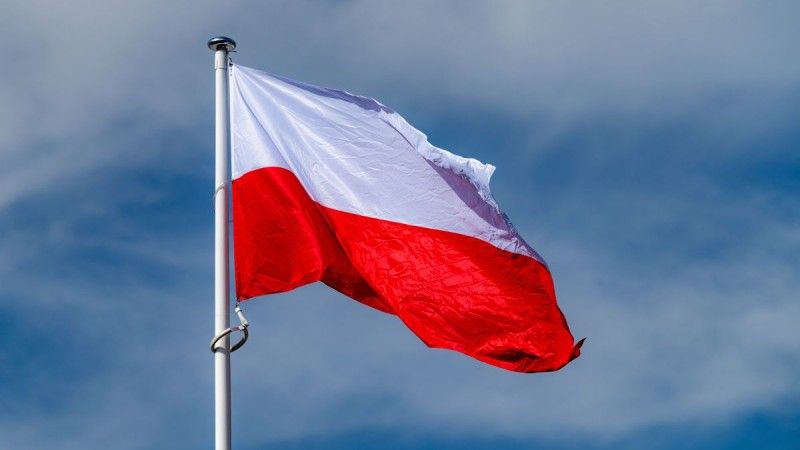
Poland’s future should not change course with every election. Democracy, NATO, the European Union and the Baltic region should form the permanent foundations of its national strategy. Some countries enjoy geographies that solve many of their strategic problems. Britain has the sea. The United States has two oceans. Switzerland has mountains. Poland has history.
Few European nations have paid such a high price for strategic isolation, miscalculation and instability in the international order. The partitions of the eighteenth century, the destruction of the Second Republic, decades behind the Iron Curtain and Russia’s renewed aggression against its neighbours all point to the same conclusion: geography cannot be changed, but its consequences can be managed.
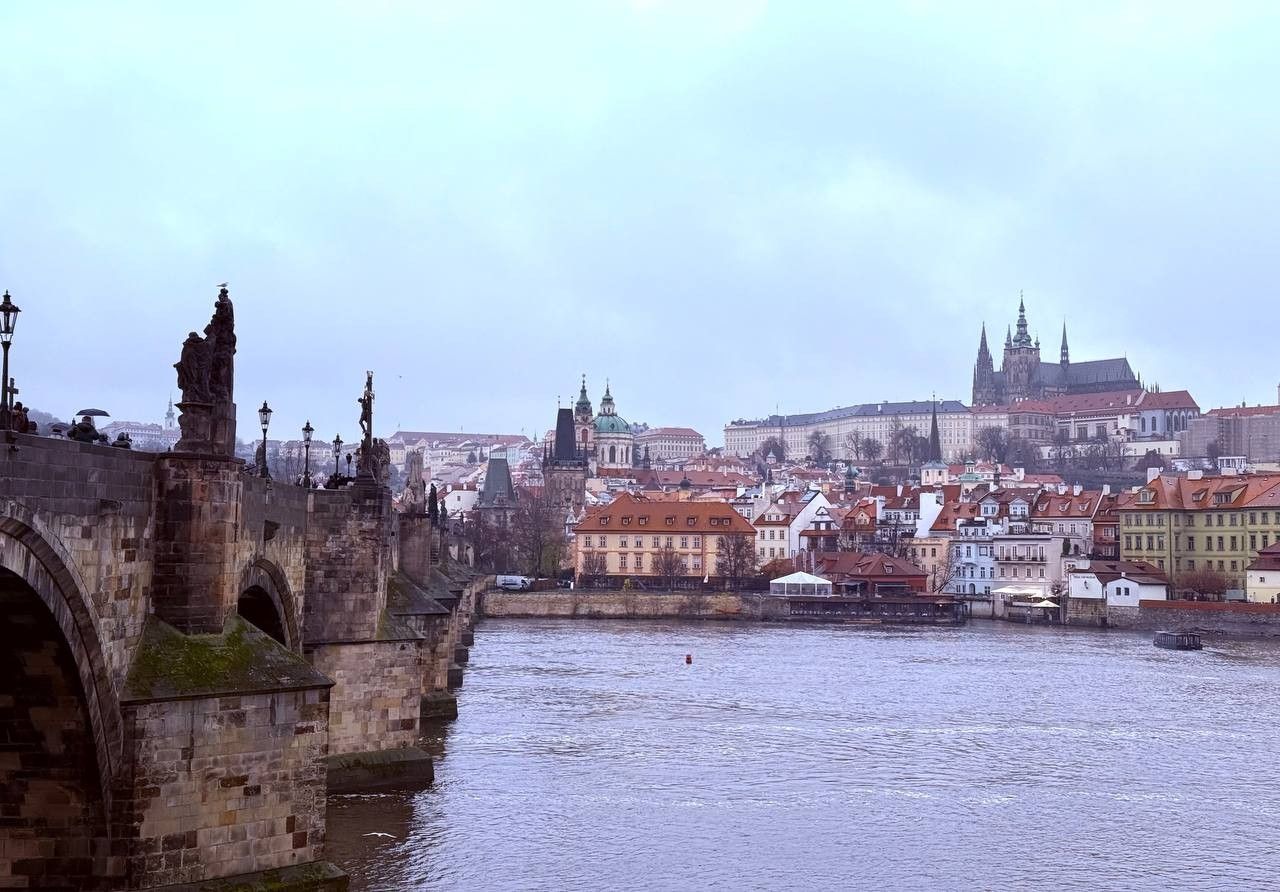
That is perhaps the central lesson of modern Polish history. Independence is not merely the possession of a flag, a government and recognised borders. It is the ability to preserve freedom, security and prosperity over generations. And that ability depends on strategic choices.
Politics, by its nature, is argumentative. Democracies are meant to disagree about taxes, public spending, social policy and economic reform. Voters should be free to choose between competing visions of government. Yet not every question should be reopened every four years.
Successful states are rarely united by permanent political consensus. They are united by a permanent sense of strategic direction. Governments change, but the national compass remains fixed.
For Poland, that compass should rest upon four foundations: democracy, NATO, the European Union and the Baltic region. Their common colour is blue. Not the blue of any political party. Nor simply the blue of European and Atlantic flags. Rather, it is the colour of Poland’s decision to anchor itself within a community of democratic governance, collective security, economic openness and international cooperation. These are not separate policy preferences. Together they form the architecture of Poland’s success.
Democracy as a source of strength
Democracy is often taken for granted precisely because, for most Poles, it has become an ordinary fact of life. In contemporary debates, it is sometimes treated as a procedural matter, less important than economic growth, national power or geopolitical competition. Yet for Poland, democracy is not a luxury attached to prosperity. It is one of the reasons prosperity became possible in the first place.
The country’s modern history offers ample evidence. The Solidarity movement demonstrated that freedom, dignity and civic participation were not imported aspirations but deeply rooted national traditions. The transformation of 1989 marked far more than the replacement of one political system with another. It represented Poland’s return to a political order in which governments are accountable, laws matter and citizens possess rights beyond the reach of temporary majorities.
Critics often argue that authoritarian systems are more efficient. They point to states that build infrastructure faster, make decisions more quickly and avoid the frustrations of public disagreement. There is some truth in this observation. Authoritarian governments can move rapidly. The problem is that they also make mistakes rapidly.
A political system that suppresses criticism frequently loses the ability to recognise failure. A state that cannot remove ineffective leaders peacefully often struggles to correct its errors before they become crises. Democracies may move more slowly, but they possess a strategic advantage that authoritarian systems frequently lack: the capacity to learn, adapt and renew themselves without violence or instability.
The same institutions that protect liberty also create trust. Investors commit capital where contracts are enforced. Entrepreneurs innovate where laws are predictable. Researchers and businesses flourish where information circulates freely and courts remain independent. In the twenty-first century, democratic governance should not be seen as a constraint on national power. It is one of its principal sources.
NATO and the end of strategic loneliness
The second pillar is NATO.
For centuries, Poland occupied one of Europe’s most exposed geographical positions. Its security depended largely on the intentions of stronger neighbours and the uncertain commitments of distant powers. The twentieth century revealed the dangers of such vulnerability with devastating clarity.
Membership of NATO transformed that reality. For the first time in modern history, Poland became part of a permanent security framework based not on temporary alignments but on treaty obligations, integrated military planning and collective defence.
See also 
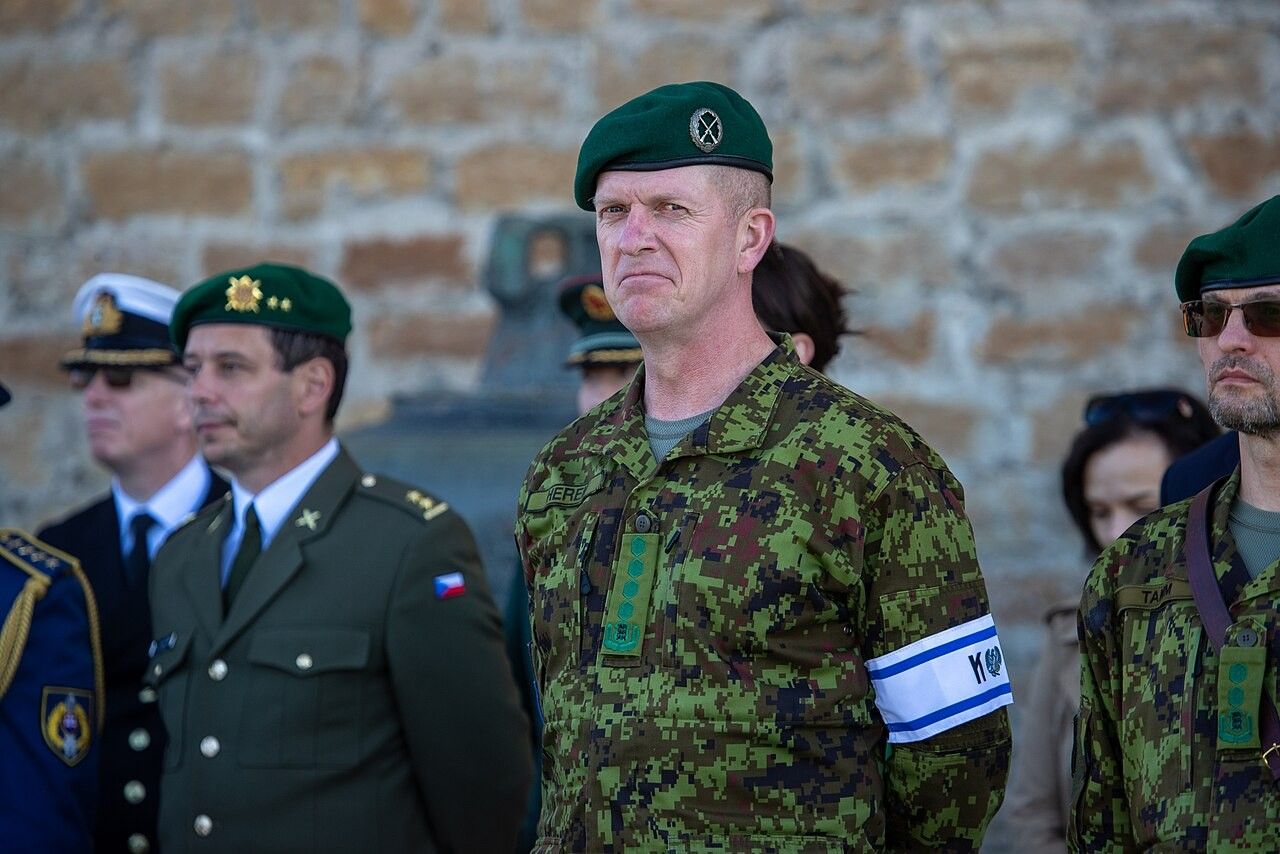
The significance of that achievement has only become clearer since Russia’s full-scale invasion of Ukraine. The war shattered the illusion that conventional military aggression had become a relic of Europe’s past. It reminded the continent that hard power still matters and that the international order cannot be sustained by declarations alone.
Some argue that Europe should pursue strategic autonomy and rely less on the United States. There is merit in strengthening European defence capabilities. European nations must assume greater responsibility for their own security. Yet for Poland this is not an alternative to NATO. It is a contribution to NATO.
European capabilities and transatlantic cooperation are complementary rather than competing projects. The Alliance combines American power, Canadian engagement and European resources into a security structure that no individual state could replicate on its own. Most importantly, it provides credibility.
Deterrence works not because military force exists, but because potential adversaries believe that force will be used if necessary. NATO’s integrated command structures, military planning and collective defence commitments create precisely that belief.
For Poland, NATO is therefore more than a military alliance. It is the strategic environment within which national security becomes possible.
The European Union and the meaning of sovereignty
If NATO anchors Poland’s security, the European Union magnifies its influence.
Few subjects generate more controversy in European politics than the relationship between sovereignty and integration. The debate is often presented as a binary choice: either nations govern themselves or authority is transferred to Brussels. The reality is less dramatic and more consequential.
In today’s world, sovereignty is measured not merely by the number of decisions a state takes independently, but by its ability to shape events beyond its borders. Trade, technology, energy markets, financial regulation and industrial competition increasingly operate on a continental and global scale. No medium-sized European country can influence these forces alone as effectively as it can collectively.

For Poland, the benefits of membership are visible everywhere. Infrastructure has improved, investment has accelerated and economic integration has expanded opportunities for businesses and workers alike. Yet the greatest benefit is not financial. It is political.
The European Union gives Poland a voice in shaping the rules governing one of the world’s largest economies. It provides influence over decisions concerning trade, energy security, technological standards, sanctions and industrial policy.
Critics are right to observe that integration requires compromise. No member state obtains everything it wants. But compromise is not the opposite of sovereignty. It is often how sovereignty is exercised.
The alternative is rarely complete independence. More often it is accepting standards, regulations and geopolitical realities determined elsewhere. The real choice facing Poland is therefore not between sovereignty and cooperation. It is between helping shape common rules and merely adapting to decisions made by others.
In an era increasingly defined by competition between continental powers, scale matters. A medium-sized European state acting alone can achieve much. Acting as part of a political and economic bloc of hundreds of millions, it can achieve far more.
Looking north
The fourth pillar is perhaps the least obvious and therefore the most important.
For generations, Polish strategic thinking has been shaped by the east-west axis. Given the country’s history, this focus is entirely understandable. Yet the twenty-first century increasingly demands attention in another direction. North.

The Baltic Sea is no longer simply a body of water on Poland’s northern border. It is becoming one of Europe’s most dynamic strategic regions, linking some of the continent’s most innovative economies, most technologically advanced societies and most committed advocates of democratic governance.
The transformation has accelerated in recent years. Finland and Sweden’s accession to NATO fundamentally altered the security landscape of Northern Europe. The Baltic is increasingly encircled by allied states whose interests in defence, infrastructure, energy and trade are deeply connected.
For Poland, this presents a historic opportunity. The country is emerging as a key logistical and economic hub linking Scandinavia, the Baltic states, Central Europe and, increasingly, a future reconstructed Ukraine. New transport routes, energy projects, digital infrastructure and defence cooperation are creating forms of regional integration whose significance extends far beyond the Baltic coastline itself.
Some observers argue that Poland’s strategic focus must remain fixed exclusively on its eastern border. They are correct about the challenge but mistaken about the conclusion. Precisely because the eastern flank remains critical, Poland benefits from being embedded within a wider network of northern partnerships that strengthen regional resilience. The Baltic dimension does not replace traditional security priorities. It reinforces them.
Historically, the Baltic was often regarded as Poland’s northern frontier. Today it should be viewed as a gateway. The nations that shape the future of the Baltic region will play an increasingly important role in shaping the future of Europe. Poland possesses both the geography and the capabilities to be among them.
A blue compass
The four blue pillars are not independent choices. They are elements of a single strategic logic. Democracy creates resilience. NATO guarantees security. The European Union expands influence. The Baltic region offers opportunity and direction in an increasingly important geopolitical space. Together they have helped produce the most successful period in modern Polish history: a Poland that is freer, safer, wealthier and more influential than any previous generation could reasonably have imagined.
This success was neither accidental nor inevitable. It was the result of decades of decisions that recognised a fundamental truth: geography endures, and wise nations build institutions, partnerships and alliances capable of turning geography from a vulnerability into an advantage.
The central question facing Poland is therefore not what government voters choose at the next election. It is whether future governments, regardless of ideology, continue to understand the foundations upon which Poland’s security, prosperity and influence rest.
History offers a clear warning. Poland has often been at its weakest when isolated, divided from its natural partners or left to navigate great-power competition alone. History offers an equally clear lesson. Poland has prospered whenever it successfully embedded itself within wider communities of security, commerce and shared political values.
The choice, therefore, is not between independence and cooperation. It is between strategic confidence grounded in reality and illusions that history has repeatedly exposed. In an age of renewed geopolitical rivalry and growing uncertainty, Poland does not need to reinvent its place in the world. It has already found it.
Governments will change. The map will not. And while elections should determine who governs Poland, they should never obscure where Poland belongs. Governments may change their colours. Poland should not change its compass.